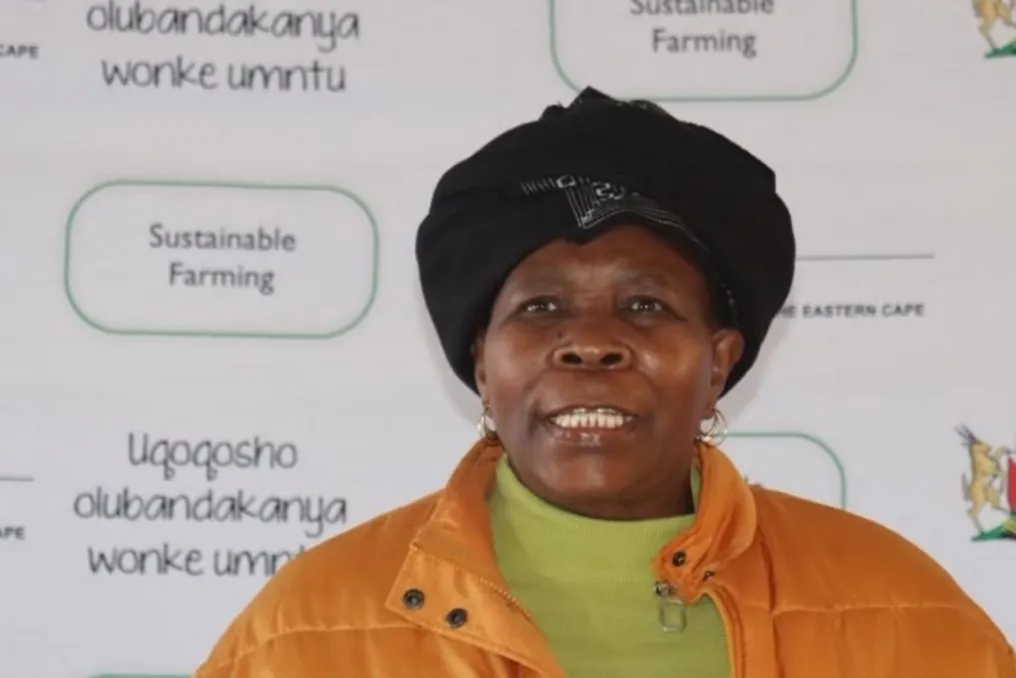
Eastern Cape Government invests R1.4 million to support local sheep farmers
Read more
Food For Mzansi
foodformzansi.co.za

Eastern Cape Government invests R1.4 million to support local sheep farmers

The Eastern Cape Minister of Agriculture, Nonceba Consive, announced an investment of R1.4 million. These funds are designated for the construction of a fully equipped facility that will include a dipping tank, sanitary facilities, an office, temporary animal processing structures, and fencing.

The investment handover ceremony took place in the village of Ngonyama. Consive, together with the executive mayor of the local municipality of Mbashe, Dr. Samkelo Jandwa, handed over the sum to the Ngonyama Sharing Shed.

The association, established in 2017, has 48 members, including 23 women and 25 men. Furthermore, the department donated 10 Dorper Merino rams to improve the quality of wool raw material.

Last season, farmers processed 3,409 sheep, resulting in the production of 19 bales of wool, which were sold to CMW in Gqeberha for R98,342.

Before the department provided funding, members of the Masibambisane Sheep Farmers Association had to travel more than 15 kilometers to reach the shearing station in Xeni settlement, located in another district.

The association's chairperson, Mtutuzeli Vaisi, expressed satisfaction that the government provided them with the necessary facility. He noted that they previously used their residential homes for shearing sheep. Vaisi expressed hope that the new facility would allow for an increase in both the quality and quantity of wool produced.

He also added that the rams provided by the department in 2022 improved the quality of the flock, and they are now producing high-quality wool. Consive urged farmers to continue producing quality wool, emphasizing that this investment should contribute to their transformation into independent commercial farmers.

Consive stated that farmers should develop and have the opportunity to export their own wool for greater profit, instead of simply supplying it to others. She noted that this structure should encourage them to work on community development and participation in the province's economic growth.

Consive appealed to the public to cooperate with the police in combating livestock theft, insisting that residents should not be afraid to report suspicious activity.

Jandwa strongly urged the community to take care of the state investment, stressing that the structure must be used for shearing, as this generates economic benefit, and not for other purposes. He warned: 'The community must not turn sheds into churches and kindergartens; you must use them for what they are intended for.'

Similar stories

Western Cape agriculture development depends on markets, water resources, and financing
Read more
foodformzansi.co.za

Western Cape agriculture development depends on markets, water resources, and financing

On the second day of the Nampo Cape event in Bredasdorp, the role of new markets, ensuring water security, and access to financial resources for the growth of Western Cape agriculture were discussed. Organizers Food For Mzansi and Land Bank held a luncheon discussion, gathering a panel of participants.

Participants in the discussion included Sahumzi May, Chief Agricultural Economist at Land Bank; Mathiana Mzi, Regional Head of Commercial Banking and Transformation for the Cape region at Land Bank; Gianni Stridom, CEO of Agri Western Cape; and farmer Aldrink October from Kaapschon Boerdery & Ander.

May explained the opportunities for growth in the province's agricultural sector despite the possibility of another El Niño event, as well as the potential opened up by new markets. He noted that the Western Cape has existing infrastructure, including ports, but optimization of processes is necessary for development. May emphasized that there are already secured markets creating growth opportunities, and realizing this potential requires the involvement of both commercial and developmental parties to attract funding for development. China was named among the new markets that have been opened.

Furthermore, May pointed to the possibility of increasing water collection after periods of heavy rain and flooding in the province. He suggested that building infrastructure for reserving and collecting this water would contribute to irrigation development, allowing for the expansion of cultivated areas to meet market demand.

Farmer October highlighted the importance of water access and the difficulties associated with transporting it between different parts of the farm. He spoke about having a large reservoir at the winery and a small one at another farm, as well as having winter and summer water. The summer reservoir was located in the lower part of his farm in Overberg and required pumping water to the upper part, which was estimated at approximately R250,000, but investment was necessary for survival during the season.

Meanwhile, Mzi stressed the importance of banks acting as trusted advisors who understand the background, plans, and needs of farmers. He stated that when a bank becomes a trusted advisor, the farmer gives the bank a chance to understand their motivation, current challenges, and future expansion plans, allowing the bank to propose a solution that meets the client's needs.

However, Stridom urged farmers to remain optimistic and hopeful for the next season, noting the resilience of those who continue to produce food despite numerous industry challenges. He also highlighted several key commodities that could have an interesting future, including the wine industry. Stridom warned that the grain sector is under serious pressure, and structural change is necessary—whether in timing structure, pricing, or transport differentials. Otherwise, he warned, regions could lose their position in grain production.

Popular