
Differences in Slang Between Gen Z and Gen Alpha: From 'Rizz' to 'Aura'
Read more
Aaj Tak
www.aajtak.in

Differences in Slang Between Gen Z and Gen Alpha: From 'Rizz' to 'Aura'

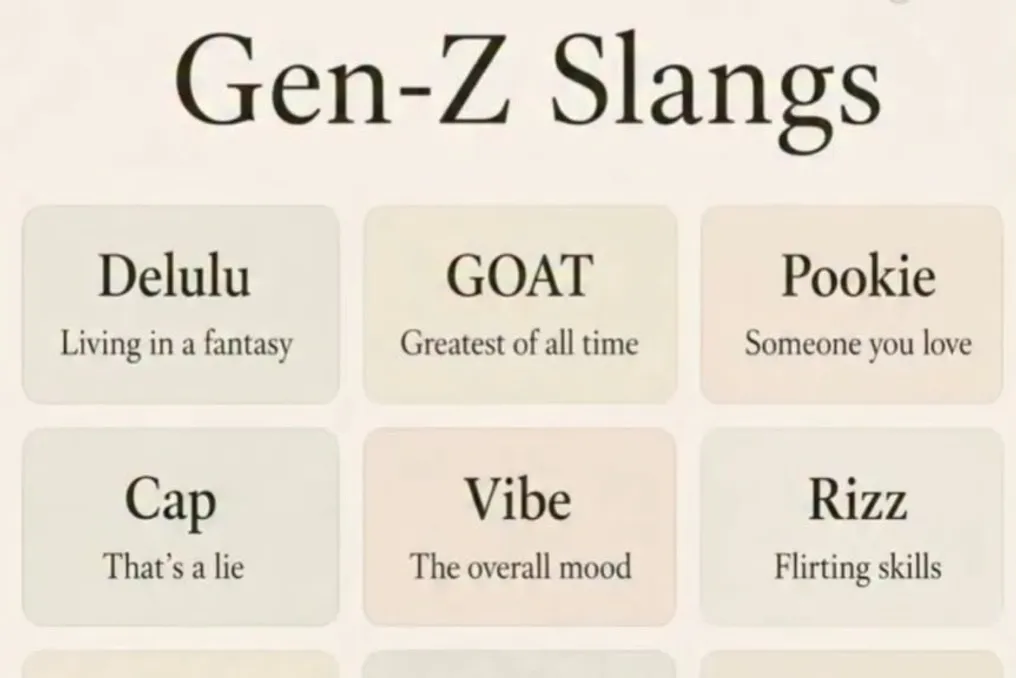
Each generation possesses its own unique communication style, and especially in the era of the internet and social media, youth language is undergoing rapid changes. Words popular among Gen Z, such as 'rizz', 'drip', and 'no cap', are gradually being replaced by new and different terms in Gen Alpha communication. This shift in slang demonstrates how the internet and social media continuously transform our spoken language.

Comparing 'Rizz' and 'Aura'

The term refers to the ability to charm or attract attention. Gen Z uses 'rizz' to describe a person's ability to easily influence others, for example: 'Look at his 'rizz', he can easily influence anyone!'. Meanwhile, Gen Alpha applies 'aura' to indicate a person's presence and influence, saying: 'He just has a different 'aura', everyone watches him wherever he goes!'

Thus, while Gen Z uses 'rizz' to characterize charisma and the ability to attract people, Gen Alpha uses 'aura' to describe a person's aura and influence.

Comparing 'Drip' and 'Sigma'

These words relate to appearance—stylish, confident, or impressive. Gen Z evaluates appearance through 'drip', noting: 'Did you see his clothes? What amazing 'drip' he has!'. In turn, Gen Alpha often uses 'sigma' to describe someone who is considered self-sufficient, unconventional, or imposing, as in the example: 'He looks like a true 'sigma', his manner of behavior is special!'

For Gen Z, 'drip' serves as a way to praise excellent fashion style or sense of fashion, whereas in Gen Alpha's lexicon, 'sigma' is applied to those perceived as confident, different from others, or influential.

Comparing 'No Cap' and 'Skibidi'

These expressions are used to affirm the truth or describe something in an unusual or funny way. Gen Z uses 'no cap' to emphasize the truthfulness of what is said, for example: 'No 'no cap', I ate the best food of my life!'. Gen Alpha, on the other hand, applies 'skibidi' to something strange or amusing, as in the phrase: 'His manner of behavior is just 'skibidi', nothing is clear!'

'No cap' in Gen Z internet language is used to emphasize the truthfulness of a statement. And 'skibidi' is a term related to Gen Alpha internet culture, often used in the context of something bizarre, funny, or absurd.

Who are Gen Z and Gen Alpha?

Generation Gen Z generally includes people born approximately between 1997 and 2012. The next generation, known as Gen Alpha, covers children born roughly from the early 2010s to 2024. Both generations grew up in the age of the internet and digital technologies, but their childhood and experience interacting with social media differ, which is reflected in their language and slang.

Similar stories

When and how to use new Gen Z slang words: From Rizz to Mogging
Read more
www.aajtak.in

When and how to use new Gen Z slang words: From Rizz to Mogging

The communication of Generation Z features numerous new words that may be unfamiliar to those hearing them for the first time. Internet culture, memes, music, and social media have significantly altered the language of this generation. Slang expressions such as Rizz, Drip, No Cap, Ate, and Left No Crumbs have moved beyond being purely online terms and have become part of casual conversations among friends. These words are characterized by their ability to convey a complete reaction using just a few words instead of long explanations.

Rizz: When it comes to charm

The word Rizz is used to describe someone's ability to flirt or attract attention. If a person can impress a conversational partner without much effort, they are said to have 'Rizz'. For example, the phrase 'He made her laugh in two minutes, he has Rizz' means it applies to charisma, confidence, or flirting skills.

Drip: When the look is flawless

Drip is used to describe stylish and fashionable clothing or a person's overall appearance. If an outfit looks very impressive, one might say: 'Look at his Drip.' This expression is primarily used in the context of fashion, clothing, and personal style, for instance: 'His Drip today is fire.'

No Cap means absolute truth, stated without hesitation or embellishment. When Gen Z says 'No Cap,' it implies that what is being said is sincere, without lies, doubt, or exaggeration. It is used to emphasize the truthfulness of one's statement or to present something completely openly. For example: 'No Cap, I saw the best movie of my life.'

Ate: When someone exceeded expectations

If someone performs, showcases an outfit, gives a speech, or accomplishes something exceptionally brilliantly, Gen Z might say: 'She ate.' Here, 'Ate' does not mean 'to eat,' but rather signifies performing something at the highest level. Example: 'She performed so well on stage, she ate!'

Left No Crumbs is a stronger form of 'Ate.' It means that a person handled something so wonderfully that there were no flaws in their work. (In other words, they succeeded completely). Example: 'Her look on the red carpet? She ate and left no crumbs.'

Mogging: When someone overshadows everyone else

The word Mogging is used when one person significantly surpasses another in comparison regarding appearance, physique, style, or overall charisma. In social media, this is often seen in internet battles and comparisons based on looks. For example: 'He outshines everyone in this photo.'

Skibidi: Random internet atmosphere

Skibidi does not have one fixed meaning. It became popular through internet memes and is most often used to humorously describe some random, strange, or chaotic situation. If a friend suddenly behaves very unusually, you might ask: 'What was that Skibidi moment?' This sounds more natural in informal, meme-style conversations.

The main rule of slang is context

The enjoyment of Gen Z slang lies not only in memorizing these words but also in knowing how to apply them in the appropriate context. It is not necessary to insert Rizz, Drip, or Ate into every conversation. Although the popularity of these words originated from internet culture, their correct usage is only possible when they organically fit the situation. Thus, Gen Z is not just changing its vocabulary; it is transforming the very approach to expressing thoughts.

Generation Z openly discusses therapy, changing attitudes towards mental health
Read more
yourstory.com

Generation Z openly discusses therapy, changing attitudes towards mental health

Previously, therapy was considered a topic reserved for private conversations, personal crises, or serious mental health issues. However, an entire generation is changing this perception today. Generation Z discusses therapy more openly than any previous generation, addressing topics such as anxiety, burnout, boundaries, self-esteem, and emotional well-being on social media, in educational institutions, and even in workplaces.

A notable aspect of this shift is not just the increase in young people seeking help, but that they are contributing to the normalization of conversations about mental health. For many members of Generation Z, therapy is no longer seen as a last resort; instead, it is increasingly viewed as a tool for increasing self-awareness, personal growth, and emotional resilience.

Studies and mental health experts note that Generation Z is more likely to openly discuss their mental state and seek professional support compared to previous generations. This generation has come of age during a period of rapid technological change, economic uncertainty, global crises, and constant digital connectivity.

Social media provides opportunities for connection but simultaneously subjects young people to pressure from comparison, unrealistic expectations, and a continuous stream of information. Many specialists point to these factors as the cause of rising anxiety and stress levels among young adults. Unlike older generations, Generation Z spends most of its life in an online environment where achievements, lifestyles, and opinions are constantly displayed.

One of the biggest differences between Generation Z and older generations is their view on therapy. Instead of waiting until problems become overwhelming, many young people view therapy as a proactive step to maintain emotional well-being. For Generation Z, therapy is often equated with physical exercise or healthy eating—a way to improve overall quality of life.

Many seek professional help not only for mental health issues but also for personal development, learning communication skills, stress management, and self-discovery. Social media has played a significant role in changing attitudes toward therapy. Influencers, content creators, celebrities, and mental health professionals regularly share experiences and educational material related to emotional well-being.

As discussions about anxiety, depression, burnout, and coping strategies become more visible, seeking help seems less frightening. Young people see others openly talking about therapy, which helps reduce the stigma that was often associated with mental healthcare in previous generations.

Generation Z places great emphasis on understanding emotions and improving self-awareness. Many are interested in learning about healthy relationships, boundaries, communication skills, and personal growth. This generation is often more willing to question traditional notions of success, productivity, and emotional expression. Rather than ignoring stress or emotional difficulties, they look for tools that help them cope effectively with challenges.

Previous generations often grew up in environments where discussing mental health was not encouraged. Emotional problems were sometimes dismissed as weakness or considered something that should remain private. Generation Z is helping to change this narrative background.

Open conversations about therapy are becoming more common among friends, classmates, and colleagues. These cultural changes encourage more people to seek support without fear of judgment. The growth of online therapy platforms, mental health apps, and virtual consultations has simplified access to professional help. Young people can now connect with therapists from home, making mental healthcare more convenient than ever.

Digital mental health services have removed many traditional barriers, including the need for travel, scheduling difficulties, and limited local access to specialists. This increased accessibility has contributed to the growing acceptance of therapy among the younger generation.

Perhaps the most significant change is that therapy is no longer viewed exclusively as a reaction to severe mental health problems. Many members of Generation Z use therapy for better self-understanding, navigating life transitions, improving relationships, and building resilience. This broader view of therapy reflects a growing recognition that mental health exists on a spectrum. Seeking support is increasingly seen as a sign of self-awareness, not a sign of weakness.

Generation Z talks about therapy more than ever because it is redefining what mental healthcare means. Growing up in a complex, rapidly changing world, they have made emotional well-being a priority, and social media, increased awareness, and improved access to care have helped reduce stigma. By embracing therapy as a tool for growth, rather than just a crisis solution, Generation Z is transforming the conversation about mental health. Their openness contributes to shaping a culture where seeking help is seen not as a weakness, but as an important step toward a healthier and more balanced life.

Popular