Mathe-Valarivan pair lost in the mixed rifle shooting final at the 2026 Asian Games
Read more
Aaj Tak
www.aajtak.in

Mathe-Valarivan pair lost in the mixed rifle shooting final at the 2026 Asian Games

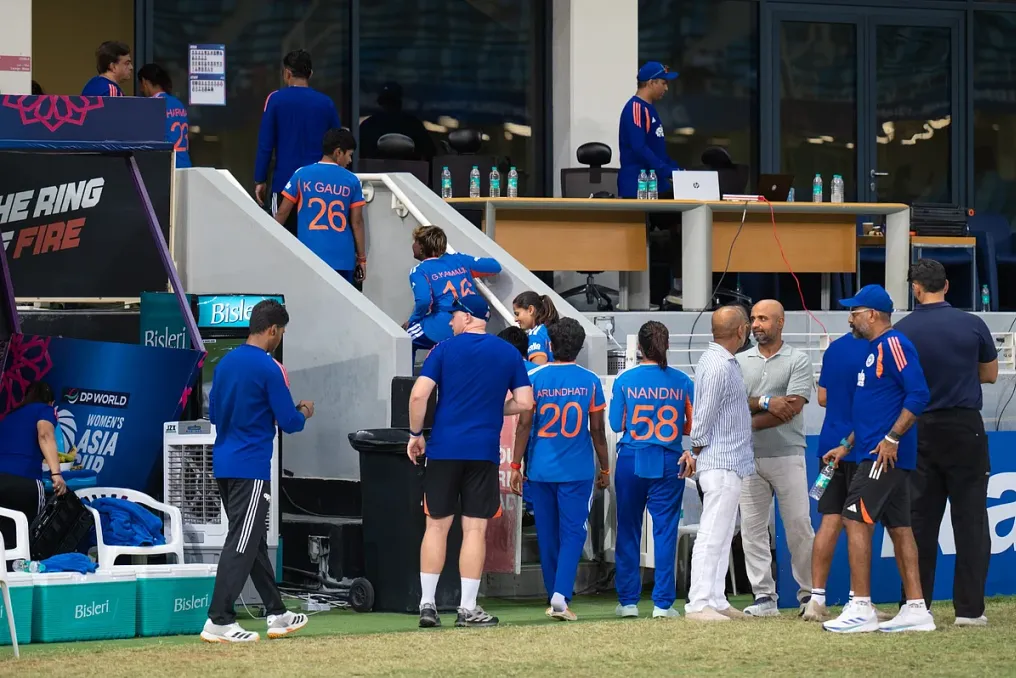
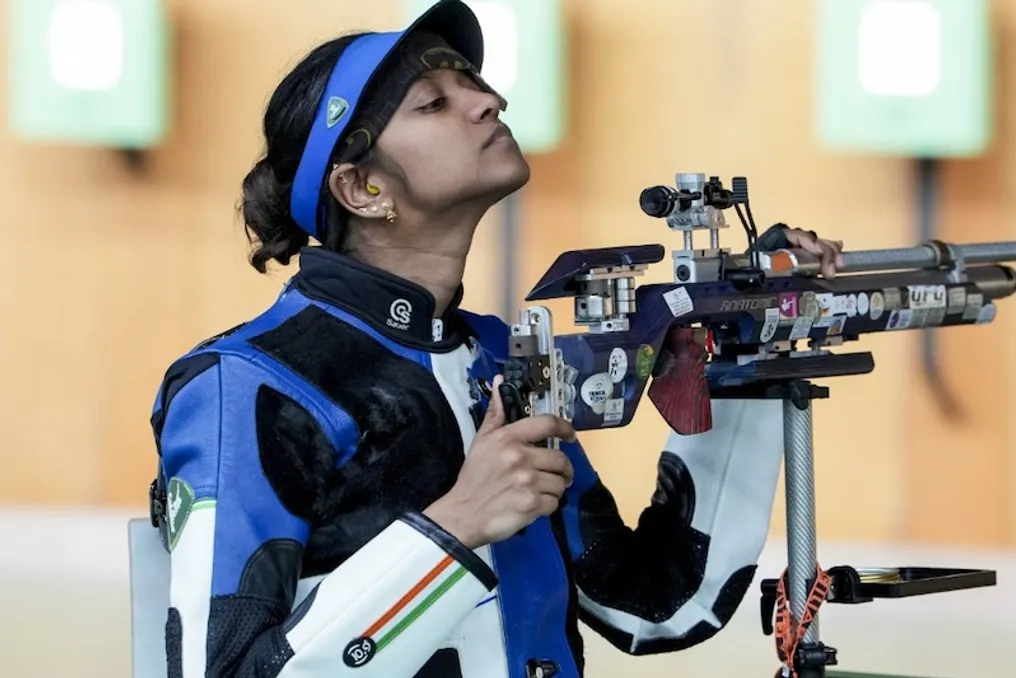
At the 2026 Asian Games, held on September 22nd (Tuesday), the Indian team had hopes of winning another medal in shooting. However, the pair Elavelnil Valarivan and Parta Rakesh Mane failed to win a medal in the final of the 10-meter air rifle team event, finishing in fourth place.

In the final, the Chinese pair Wang Zifei and Shen Lihao won the gold medal with an impressive score of 507.1 points, which set a world record. The silver medals were awarded to the South Korean pair Ban Hyojin and Park Hajun, who scored 502.9 points. Third place was taken by the host nation's pair, Oki Hanakawa and Misaki Nobata, with a score of 439.7 points.

Elavelnil Valarivan already has a rich track record at these Asian Games: she won an individual silver medal in 10-meter air rifle shooting and also helped India win silver in the team event.

Parta Rakesh Mane also demonstrated excellent results at these Games. He was part of the Indian team that won silver in the men's 10-meter air rifle team event.

Before the team final, the pair Elavelnil and Parta showed high results, taking second place in the qualification with a total score of 634.6 points. Despite being considered strong contenders for a medal, the Indian pair finished in fourth place in the actual medal match.

China set a new world record with 638.9 points and took first place. After this, the pair Elavelnil and Parta advanced to the final. The final results were as follows: China — 507.1 points, South Korea — 502.9 points, Japan — 439.7 points, India — 376.3 points.

Similar stories

Indian Team Wins Silver Medal in Shooting at Asian Games 2026
Read more
www.aajtak.in

Indian Team Wins Silver Medal in Shooting at Asian Games 2026

Indian shooters demonstrated outstanding performance at the Asian Games 2026, securing their first medal for the country on September 20 (Sunday). India won the silver medal in the team event of 10-meter air rifle shooting.

The Indian team consisted of Ilavelil Valarivan, Sonam Maskar, and Vidarsa Kochulamkal Vinod. These three shooters delivered excellent results, earning India the silver award.

At the Aichi Prefectural General Shooting Gallery range, the Indian team scored a total of 1898.0 points after six shooting series, placing second.

The gold medal was won by the Chinese team, comprising Jifei Wang, Jiayu Han, and Yuchen Du, who scored a record 1904.2 points. The bronze medal went to the Japanese team, including Hinata Taichi, Misaki Nobatu, and Shiori Hirata, with a score of 1897.1 points.

Indian shooters Ilavelil Valarivan and Sonam Maskar also qualified for the individual final in 10-meter air rifle shooting. In the qualification round, Sonam Maskar placed third with 634.1 points, and Ilavelil placed seventh with 633.5 points. The leader in the qualification was Jifei Wang from China with a score of 636.8 points.

In the 10-meter air rifle team event, the Indian squad showed strong play from the beginning. The team successfully reached the podium, demonstrating accurate shooting under pressure. Thanks to the combined efforts of the three athletes, including Ilavelil Valarivan, who has extensive international experience, as well as Sonam Maskar and Vidarsa Vinod, India managed to win silver in this discipline.

Shooting remains one of the main sports bringing medals to India at the Asian Games. This success of the Indian shooters in Nagoya is important for the country's overall medal tally. The results of the Indian shooters at the Asian Games 2026 raise expectations for future medals.

India defeats Japan 57:59 and advances to the Asian Games semi-finals
Read more
www.aajtak.in

India defeats Japan 57:59 and advances to the Asian Games semi-finals

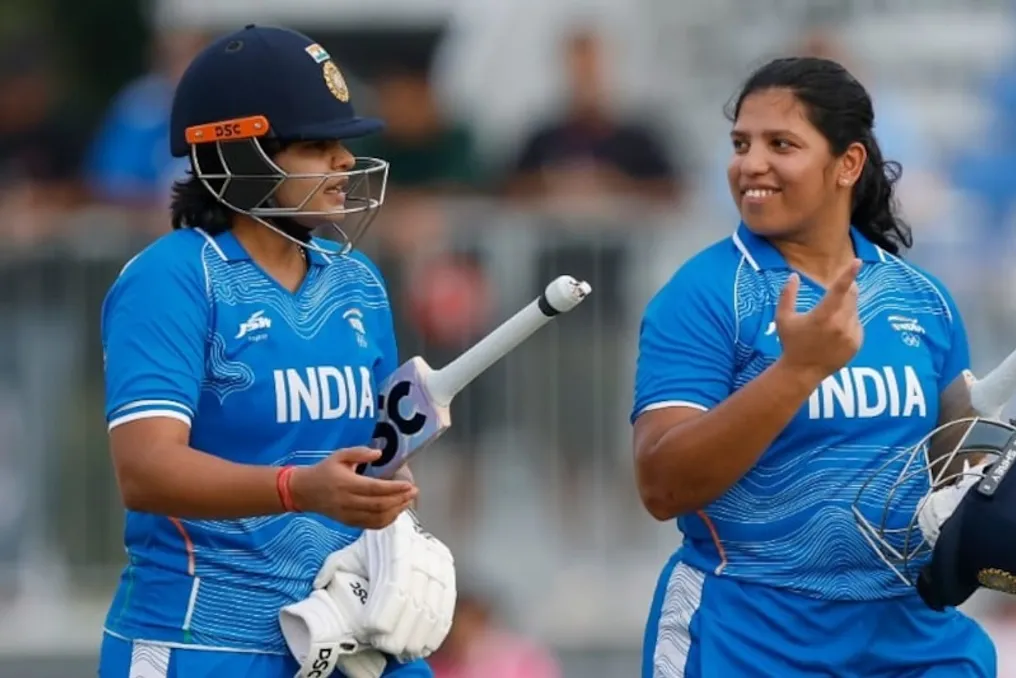
At the Asian Games, the Indian team secured a spot in the semi-finals, but the true story of this victory is far more interesting than just the score on the board. In Nisshin (Korogi Sports Park, Nisshin) on Tuesday, Indian spinners created such a complex game that the Japanese batsmen had no chance of scoring runs. As a result, the entire team was brought down to a score of 57 points, and India won with a score of 59 in five overs, taking eight wickets.

India bowled first and chose the bowling option, immediately putting pressure on Japan. The Japanese batsmen had no answer to the Indian bowling. The situation became clear within six overs, which constituted the powerplay. Japan accumulated only 24 points during this period, with only two fours being hit, and one of them came not from hitting the center of the bat, but from touching the periphery.

Advancing to the Semi-finals

The experienced spin attack of the Indian team completely stifled the Japanese offense. The most significant contribution came from left-arm spinner Shri Charni. In the seventh over, she dismissed two batsmen consecutively: Haruna Iwasaki and captain Mai Yanagidu, which was a serious blow to Japan's hopes. After this, Charni did not allow the Japanese batsmen to play freely and took four wickets, conceding only 10 runs. This was her best performance in the T20 format.

The rotation and bounce of the ball also complicated matters for the Japanese batsmen. The ball either hit the bat or suddenly soared upwards, surprising the players. Under these conditions, attempts to score big often ended in catches.

Shefali also demonstrated spinning mastery

Although the attacking stars appeared later, Shefali Verma also proved to be a strong bowler. Bowling off-spin, she took two wickets, conceding only 13 runs. She forced Ayaka Kato-Stafford and Shimako Kato to try and hit big, and both times the ball fell into the hands of Indian fielders. Japan scored only three fours in the innings, and no sixes were seen. This means that the Indian bowlers almost completely prevented the easy runs that could have been earned through fours and sixes over 20 overs.

Japan missed opportunities even while running

The problems were not only in the bowling. Between wicket falls, the Japanese batsmen also showed a lack of coordination while running, which allowed India to take several outs. For a team with very little experience playing against top teams and regular training, the pressure from the Indian bowling and fielding constantly increased.

India's target of 57 points became a formality

Nevertheless, the start of the Indian innings was also not easy. Gunalan Kamalini was dismissed without scoring any runs. Then Harti Fulmali returned to the bench, scoring only 6 runs. However, the target was so small that it did not significantly affect India.

Shefali's powerful attack

After this, Shefali Verma finished the match within five overs. She scored 40 runs without getting out, using only 15 balls. Her innings included 6 fours and 2 sixes. Thus, Shefali came close to Japan's total score.

Richa Ghosh also helped India reach the target, scoring 12 runs without getting out in just 6 balls. While the Japanese batsmen managed to score only 57 runs in 20 overs, India surpassed this barrier in just 30 balls. This is the essence of this quarter-final: the confrontation between Japan's inexperienced batting and India's experienced spin bowling was one-sided. India has now advanced to the women's cricket semi-finals of the Asian Games.
India Refuses to Accept Asian Women's Cricket Championship Trophy After Dubai Victory
Read more
www.khaleejtimes.com

India Refuses to Accept Asian Women's Cricket Championship Trophy After Dubai Victory

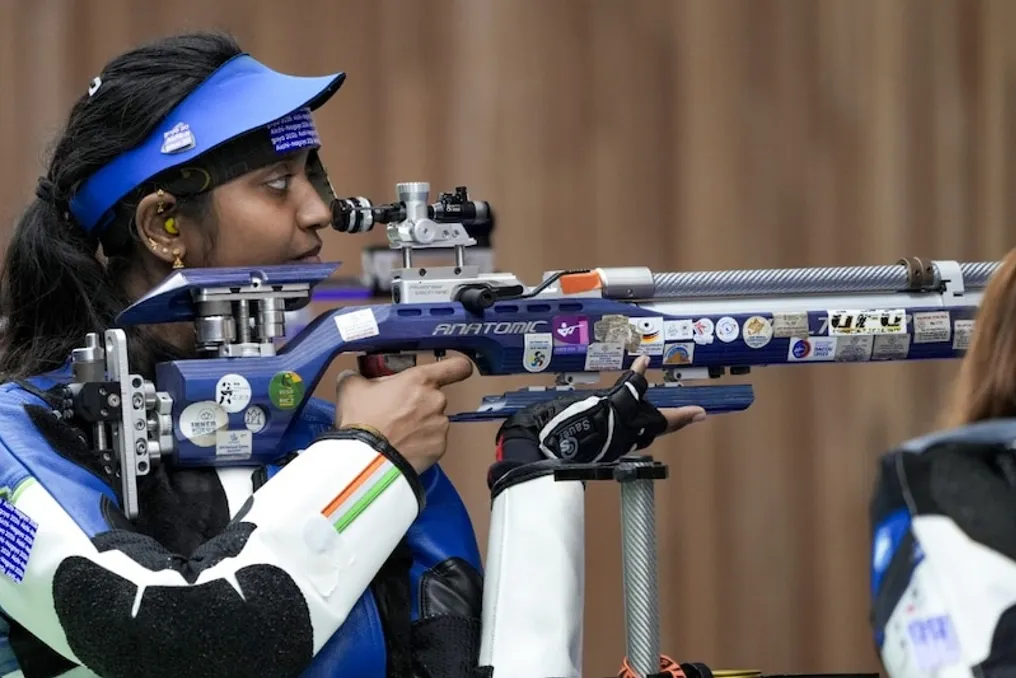
The victorious Indian women's team once again refused to accept the championship trophy from Mohammad Nasim of the Pakistan Cricket Board at the International Stadium in Dubai on Sunday, repeating the dispute over the trophy at the 2025 Asian Cup.

Nasim, who is also the president of the Asian Cricket Council, arrived at the final of the Women's Asia Cup T20 2026 between India and Sri Lanka. The Indian team achieved a convincing victory by a margin of 72 runs. However, the Indian squad did not attend the award ceremony to receive the trophy.

Last year, the Indian men's team also refused to accept the trophy from Nasim after defeating Pakistan in the final of the Men's Asia Cup T20 at the same International Stadium in Dubai.

Diplomatic relations between India and Pakistan reached an historic low after the two nuclear neighbors of South Asia nearly engaged in a full-scale war in May 2025. Nasim, who also holds the position of Pakistan's Minister of Interior, held a lengthy meeting with other officials after the match on Sunday.

He eventually headed to the awards area, clearly indicating that he would present the trophies to the winners and silver medalists. Nevertheless, the Indian team returned to the locker room while the Sri Lankans received their medals amidst a hail of disapproval from the Indian public at the stadium.

Popular