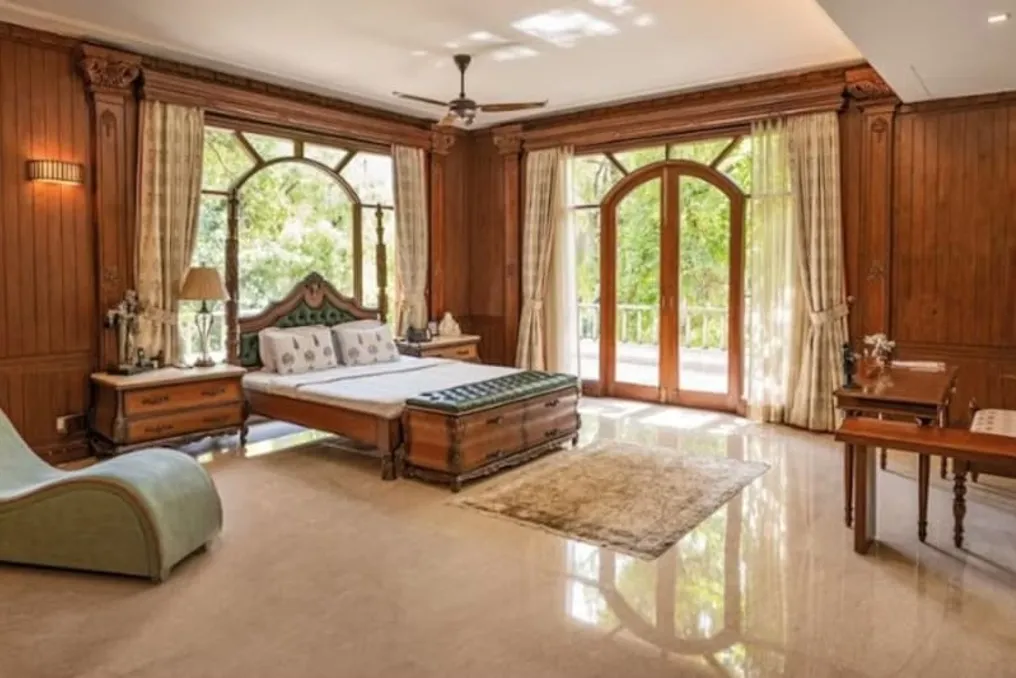
Young Wealthy Buyers Are Changing Real Estate Preferences: From Apartments to Land Plots
Read more
Aaj Tak
www.aajtak.in

Young Wealthy Buyers Are Changing Real Estate Preferences: From Apartments to Land Plots

Young and affluent buyers in India are transforming the country's housing market. Individuals who have founded startups, businessmen, tech specialists, and first-generation earners making significant money at a young age are viewing real estate differently than previous generations.

These wealthy buyers are now seeking living options on land plots and in low-density areas. Nevertheless, affordable housing remains a serious issue for first-time homebuyers, especially in expensive metropolises like Mumbai.

Sonali Rajput, CEO of Samira Habitats (India) Limited, noted that young wealthy buyers view real estate not just as buying a home. According to her, since many of them already invest in financial assets, they see real estate as a way to diversify their capital and improve their quality of life.

This shift in focus is also increasing buyer interest in land. Unlike ready-made housing or apartments, land gives the buyer the freedom to determine its future use—whether for investment, a second home, a large family residence, or property for future generations.

In Rajput's opinion, the very concept of luxury among young buyers is changing. The priority is no longer just acquiring a large apartment. Buyers place greater value on privacy, open spaces, proximity to nature, less crowded areas, and the ability to build a house according to their own taste.

Despite the strong desire of young Indians to acquire housing, it does not mean they can do so easily. The situation is particularly difficult when affordable housing is scarce. Devanshu Bansal, Director at UK Realty, citing Knight Frank data for the first half of 2026, reported that the annual decline in the unregistered stock of homes priced under 50 lakh rupees was 7%, while the stock of homes priced between 2 and 5 crore rupees increased by 43%.

Bansal emphasized: 'Homes that young buyers can afford are selling, but new homes coming onto the market are out of their reach.' This problem is exacerbated in the Mumbai Metropolitan Region (MMR). According to Knight Frank, MMR is one of two markets in India where the debt-to-income ratio (EMI) exceeds the acceptable threshold of 50%.

He added: 'A 28-year-old person buying a home for the first time in Mumbai does not want to give up on buying a house. The problem is that an appropriately priced home for their single income is unavailable.' Bansal urged developers not to take the youth's positive attitude as guaranteed demand. To engage the youth in actual purchases, housing must be built considering their financial situation. This may require small but well-built spaces, an adequate starting price, and timely completion, which will allow young families to plan their expenses and finances for the long term.
Similar stories

Despite rising prices, 48% of Indians prefer to buy large 3 BHK homes
Read more
www.aajtak.in

Despite rising prices, 48% of Indians prefer to buy large 3 BHK homes

Despite the continuous increase in housing costs, the desire of Indians to acquire spacious homes remains unchanged. The latest buyer survey results show that consumers are increasingly favoring larger residences and are willing to pay a higher price for them.

According to the ANAROCK consumer sentiment study for the first half of 2026, about half of buyers choose three-bedroom homes (3 BHK). The most sought-after price range turned out to be houses costing between 90 lakh and 1.5 crore rupees.

The demand for spacious housing is steadily increasing. The study revealed that 48 percent of respondents named 3 BHK as their preferred size. Furthermore, 38 percent prefer two-bedroom homes (2 BHK), while about 5 percent consider options with four or more bedrooms, which is significantly higher than the 3 percent recorded in the first half of 2024.

Demand for 3 BHK is particularly strong in several major cities across the country. In Ahmedabad, this figure was 57%, and in Chennai and Delhi-NCR, it was 53%. In Hyderabad, 52% of people chose 3 BHK. In Bangalore, it was 46%, in Pune, 47%, and in Kolkata, 46%. The lowest demand for 3 BHK was recorded in MMR, at 39%.

Anuj Puri, Chairman of ANAROCK Group, noted that the high demand for 3 BHK, as well as for larger budget and 4 BHK or more homes, indicates that buyers prioritize space and improved amenities, even despite the rising costs. He added that the demand for large homes is observed mainly in major cities, although the intensity of this demand varies across different localities.

The growing demand for spacious housing is prompting buyers to become more amenable to more expensive options. According to the survey, homes in the price segment of 90 lakh to 1.5 crore rupees are the most popular, chosen by 34% of respondents. Additionally, 27% wish to purchase housing costing over 1.5 crore rupees.

This reflects a shift in preferences regarding affordable housing. Demand for homes costing less than 45 lakh has significantly decreased in recent years, while demand for more expensive options has increased. This suggests that the trend of buying better housing for a higher price is no longer exclusive to affluent buyers; ordinary buyers are willing to increase their budget for more space and better features.

Nevertheless, due to rising prices, buyers are having to make more considered decisions. Approximately 65% of respondents expressed some concern about the current rise in real estate prices, with 40% believing that the price increase could continue for a long time. Despite this anxiety, a significant number of people are not abandoning home purchases: about 44% plan to continue their purchases, and 38% might slightly postpone the process.

Only 18% stated the possibility of postponing or completely canceling the purchase decision. The main reason for those who are postponing or considering cancellation is budget, cited by 44% of respondents. Another 32% pointed to limited choice within their budget.

Instead of abandoning the purchase, some buyers are adjusting their plans: about 31% are considering renting instead of buying, and 20% are looking for housing in city suburbs.

The survey also shows that this housing demand primarily comes from those planning to live in the purchased home. About 68% of respondents are purchasing housing for self-residence, while 32% are doing so for investment purposes.

Buyers also view real estate from an investment perspective: at least 77% stated that rental income from the property plays a significant or very significant role in determining its investment value. For 67%, the future resale price of the property is also important.

Newly launched projects are attracting buyers' attention. About 34% prefer new launches, while 18% prefer ready-to-move-in homes. For those buying in new projects, the developer's reputation is the most important factor, according to 34% of respondents. Following in importance are the benefits derived from the price, noted by 21%, as well as location and construction quality.

In the investment sphere, real estate remains a top choice for many people. In the survey, 60% of respondents chose real estate...

Popular