
Berger Paints strengthens expansion to counter competition from Birla Opus and JSW Dulux
Read more
Business Standard
business-standard.com

Berger Paints strengthens expansion to counter competition from Birla Opus and JSW Dulux

Berger Paints India Ltd., a company controlled by the Dhingra family, aims to strengthen its market position as it is the second-largest paint manufacturer in India and faces challenges from major players in the $8.2 billion sector.

The Kolkata-based company, holding nearly 20% of the revenue share among publicly traded competitors, has identified two directions for what its CEO, Abhijit Roy, called a 'rebellion.' Roy stated in an interview that Berger is strengthening teams in weaker markets in western regions—Mumbai and Pune—as well as in southern regions—Chennai and Bangalore.

Furthermore, the firm plans to launch a new line of premium paints and open up to 250 new, predominantly exclusive sales points annually, aiming for a total of 2500 by March 2029.

Competitive Pressure and Market Growth

The company found itself in a defensive position after billionaires Kumar Mangalam Birla and Sajjan Jindal initiated a price war to win business from it and the sector leader, Asian Paints Ltd., which controls over 50% of the market. According to a PL Capital report dated September 16, Birla Opus and JSW Dulux Ltd. are gaining momentum.

Berger's shares have declined by approximately 16% this year, compared to the national benchmark index drop of 10%. The company, valued at 52,540 crore rupees ($5.5 billion), is 64.56% owned by UK Paints India Pvt., which is controlled by Kuldipa Singh Dhingra and his brother Gurbachan Singh Dhingra. These brothers acquired the business in 1991 from former liquor magnate Vijay Mallia, whose Kingfisher Airlines Ltd. ceased operations in 2012 due to inability to pay creditors.

The country's second-largest paint company is expanding its distribution network and offering incentives to artists, builders, and architects to boost sales. Roy also stated that the company is investing 2000 crore rupees in building manufacturing facilities in West Bengal and Odisha, located in the eastern part of the country, by 2029 and 2030.

According to IMARC Group forecasts, the Indian paint market is expected to grow by about 5% by 2030, reaching $11.8 billion, driven by urbanization, rising disposable income, and nationwide growth in commercial and residential real estate.

Prospects and Risks

However, price pressure caused by aggressive discounts from new competitors has squeezed margins for both Berger Paints and Asian Paints. Rising crude oil prices, triggered by the Middle East conflict, further complicate forecasts for public participants, including Kansai Nerolac Paints Ltd. and JSW Dulux, formerly known as Akzo Nobel India.

Given the current competitive landscape, Roy believes that 'maintaining our 20% market share is a solid baseline.' He added that 'if market conditions align with our plans, we will aim for an additional 0.5% national growth across all categories.'

Roy expects the festive season leading up to Diwali in November to support demand and slightly increase the annual growth volume to 8%, compensating for a slow start to the year and rising raw material costs. He also predicts additional growth in the industrial paint segment due to the country's infrastructure development.
Similar stories

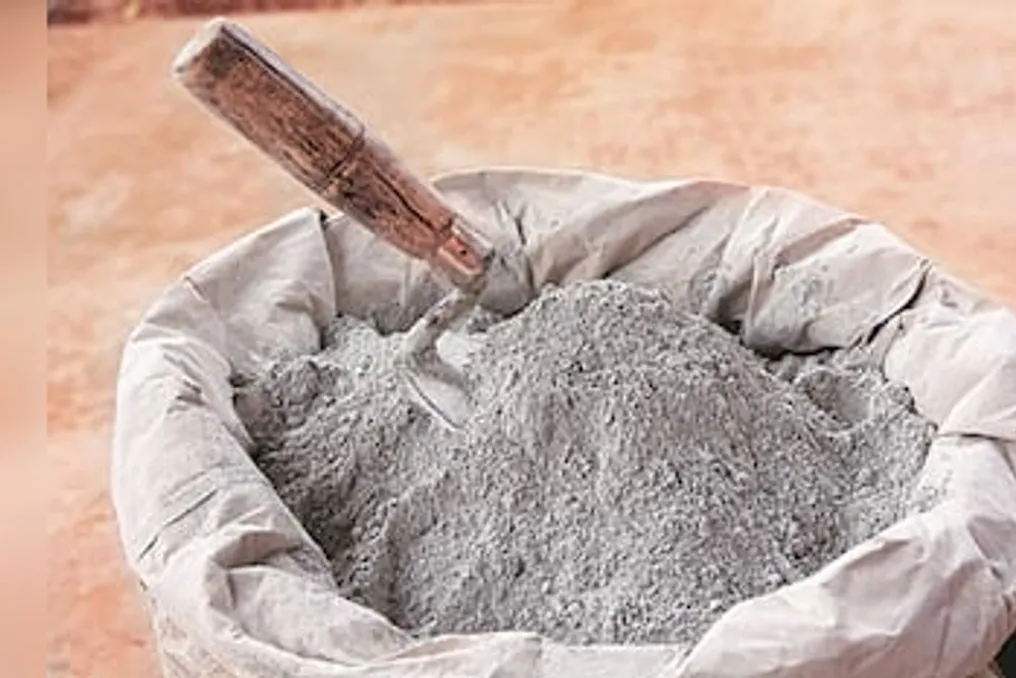
Increase in cement production capacity raises concerns about short-term supply surplus
Read more
business-standard.com

Increase in cement production capacity raises concerns about short-term supply surplus

In the Indian cement industry, it is expected that the increase in production capacity will exceed demand growth over the next two financial years, which could potentially lead to a decrease in capacity utilization rate and price pressure in some regions.

Despite this, it is projected that the capacity utilization rate will remain above its long-term average level, limiting the risk of serious overproduction across the entire industry. Faster supply growth may restrain stock prices, even if the Nifty Cement index is at a three-month low, unless companies can achieve faster profit growth.

According to Anand Kulkarni, Director at Crisil Ratings, the installed capacity of the domestic cement industry was estimated at 720-730 million tonnes (MT) as of March 2026. Approximately 55 MT of capacity was added in the 2026 financial year, with another 115-125 MT expected to be added during the 2027 and 2028 financial years.

According to Crisil, cement production volumes grew at a Compound Annual Growth Rate (CAGR) of 5.5-6 percent between the 2025 and 2026 financial years, which generally matched the actual capacity increase and maintained the utilization rate at around 70 percent, similar to 2025. Since capacity growth is expected to outpace demand in 2027 and 2028, the utilization rate may drop to 68-69 percent.

Kulkarni noted that 'cement capacity additions tend to be large due to long implementation timelines, and large additions can lead to a supply-demand imbalance in the short term.' He also added that in the medium term, demand and supply growth are expected to remain balanced.

Mohit Kapur, Associate Director of Investment Banking at Equirus Capital, forecasts that cement demand will grow by 7-8 percent over the next two to three years, slightly outpacing GDP growth, while capacity is expected to increase by 8-9 percent annually. He stated that the current capacity utilization rate of around 69 percent could decline by 100-150 basis points over the next two to three financial years.

Kapur also highlighted the presence of price (cost) pressures, particularly on the fuel side. He noted that the expected supply growth exceeding demand growth in the short term could cause some price pressure.

Expansion is also becoming increasingly concentrated among large players. According to Akshay Shetty, Analyst at Mirae Asset Sharekhan, the five largest cement companies are expected to have a combined capacity of 465-470 million tonnes per annum (MTPA) in the 2026 financial year, increasing to 580-590 MTPA by the 2028 financial year.

Nevertheless, cement companies remain confident in demand growth and capacity utilization. Jayakumar Krishnasamy, Managing Director of Nuvoco Vistas, stated in an interview with Business Standard in July that although almost every cement company announced expansion plans about a year ago, there has been more realism in the industry since then.

He added that 'the industry's expansion plans reflect long-term confidence, not short-term demand fluctuations.' Atul Daga, CFO of UltraTech Cement, said during the company's first quarter 2027 earnings call in July: 'Demand remains strong. The problem is we don't have the capacity. We must expand.'

Vinod Baheti, Permanent Director and CEO of Ambuja Cements, stated that long-term fundamental demand indicators in India remain attractive due to investments in infrastructure, urbanization, industrialization, logistics, and the housing sector.

Analysts believe that regional markets may face different consequences. Kapur expects North, West, and Central India to face a lower capacity utilization rate over the next two to three years. The maximum capacity increase is expected in the North, followed by the South and East, while demand growth is expected to be relatively stronger in the East and Southeast.

Shetty noted that the South remains a fragmented market with a utilization rate in the mid-50s and is likely to continue facing price pressure. The North is also becoming a concern as large players add new capacity, which could potentially put pressure on prices and affect established players like Shree Cement.

Satyadip Jain, Lead Analyst for Cement, Metals, Mining & Commodities and Utilities at Ambit Institutional Equities, stated: 'The main issue is the North region, where capacity growth was moderate for 7-8 years but is now accelerating. The North region is poised to increase cement capacity by 38 percent or nearly 50 MT between the 2025 and 2028 financial years.'

Crisil reported that average cement prices across India rose by 4-4.5 percent sequentially in the first quarter of 2027, partly due to the partial pass-through of higher costs for fuel, packaging, and freight. In the 2027 financial year, prices adjusted for the reduction in Goods and Services Tax are expected to rise by 1-3 percent, while increased input costs could reduce operating margins by 50-75 rupees per tonne.

Shetty expects price discipline to be maintained in North and Central India during the 2027 financial year, while South India is likely to continue facing weak prices. A risk remains of an overall Indian revenue decline of 2-3 percent if demand disappoints.

Jain concluded that 'sector profitability is currently at the bottom of the cycle due to cost increases of 400 rupees per tonne. Utilization rate does not determine profitability. While the utilization rate improved between the 2021 and 2024 financial years, profitability remained under pressure due to the Russia-Ukraine war and fuel inflation.'

Popular