Five Ways to Celebrate Heritage Day in Durban: Events, Culture, and Food
Read more
IOL
iol.co.za

Five Ways to Celebrate Heritage Day in Durban: Events, Culture, and Food

Ahead of Heritage Day in Durban, numerous options are available to celebrate South African culture, music, cuisine, and history during this public holiday.

Heritage Day, celebrated on Thursday, September 24th, offers South Africans a chance to celebrate the traditions, languages, histories, and cultural practices that form the foundation of national identity. This year's national theme is 'Celebrating our living heritage: Strengthening the bonds that unite us.'

Heritage Day Celebration at King Zwelithini Stadium

One of the largest events in the Durban area will be a celebration at King Zwelithini Stadium in Umlazi. The 2026 National Heritage Day program takes place in KwaZulu-Natal in partnership with the Zulu Kingdom and the Royal House. This celebration will also include uMkhosi Welembe, an annual Zulu cultural event dedicated to the heritage of King Shaka kaSenzangakhona. The event provides an opportunity to personally participate in the celebration of traditional heritage.

Spend the Day with Sjava, Simmy, and Q Twins

Music lovers can attend the Old Mutual Music at the Lake Heritage Day concert at the Durban Botanic Gardens. The concert is scheduled for Thursday, September 24th, featuring performances by Sjava, Simmy, and Q Twins. Gates open at 13:00, and the event is designed as an open celebration where visitors are advised to bring picnic blankets and folding chairs. According to the event information, food and drinks are permitted. This is an option for those who want to combine South African live music with a relaxed day in one of Durban's most famous green spaces.

To immerse yourself in African culture, you can visit the Botho Heritage Festival in the Valley of a Thousand Hills. This five-day festival runs from September 23rd to 27th at the Wushwini Pan-African Centre, which overlooks the Inanda Dam. On Heritage Day, the program focuses on storytelling, theatre, film, creative workshops, and discussions on topics such as indigenous knowledge, cultural economy, and pan-African cooperation. The evening program, 'Beyond Limits: The Spirit in Motion,' is dedicated to performances, music, and creativity by people with disabilities and the visually impaired. Admission is 50 rand.

Picnic at Weston Square

If a quieter outing is preferred, there will be a Heritage Day celebration at The Bowl in Weston Square, Shangweni. This venue will be transformed into an open-air picnic area where families and friends can enjoy South African cuisine, braai-style dishes, local music, and entertainment. Visitors are encouraged to bring a picnic blanket and spend the day enjoying the spring weather.

Start the Public Holiday with 'Wake and Shake'

For early risers, Heritage Day can begin with music, movement, and coffee at Lineage Coffee in Hillcrest. The Wake and Shake: Heritage Day Edition event starts with a yoga session at 6 am, followed by a Wake and Shake session at 7:30 am. This event combines music and community, offering a different way to start the public holiday before heading to other celebrations of the day. Yoga participants are advised to bring their own mats, and tickets cost 150 rand for yoga and Wake and Shake or 100 rand for Wake and Shake only.

Similar stories

Zeitz MOCAA Museum offers free entry on Heritage Day with workshops and music
Read more
10and5.com

Zeitz MOCAA Museum offers free entry on Heritage Day with workshops and music

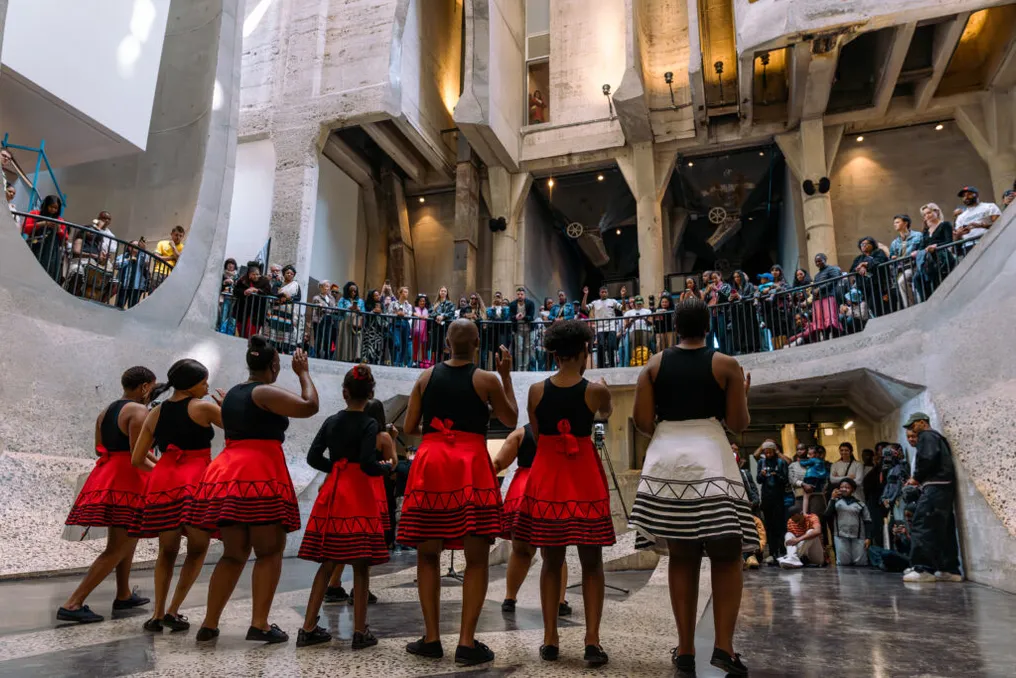
In observance of Heritage Day, the Zeitz MOCAA museum is waiving admission fees, offering visitors free access throughout the day, which includes tours, workshops, and live music. The museum will open its doors on Thursday, September 24th, from 10:00 AM to 6:00 PM, and advance registration is not required.

The museum has a packed day planned. Architectural tours, offered in several languages, introduce guests to the history of the Grain Silo—from a grain storage facility to one of Africa's boldest museum spaces. Tours of exhibitions showcasing current exhibits are also available.

Many activities are provided for families with children. The 'Silo Tote Bag Workshop' is returning, where teenagers and adults can create their own shopper inspired by the silo's shape. Additionally, a new children's workshop linked to current exhibitions has been organized, along with a new program from the museum's Art Patrol, allowing visitors to see the building through the eyes of those who guard it.

Outside, the food area is managed by Makers Landing, where visitors can enjoy good food and performances by local artists, including V&A Buskers. Although club members retain the option to skip the queue, for everyone else, this is the only day of the year they can visit Zeitz MOCAA for free.

Lizle Hartman, Director of the BMW Education Centre at Zeitz MOCAA, noted that 'Heritage Day is a day of celebration, but also of remembrance, acknowledging the sacrifices made by others so that we can enjoy our freedom and our diverse cultures side by side.' She added that Zeitz MOCAA is a sanctuary for artists from across the African continent and its diaspora, and the museum welcomes South Africans to celebrate with them.

Talia Naiker, the museum's education manager and Heritage Day project lead, emphasized that this day promises 'inspiration, creativity, and a shared sense of community in Africa's leading contemporary art museum,' whether the visitor is visiting the museum for the first time or returning with family and friends.

South African Heritage Day Celebration Checklist: From Barbecue to Traditional Dishes
Read more
iol.co.za

South African Heritage Day Celebration Checklist: From Barbecue to Traditional Dishes

Heritage Day, also known as National Braai Day, is celebrated in September and serves as an occasion to celebrate the culture, tastes, and connections of South Africa, reminding us that the feeling of home is often found in shared traditions and memories.

When gathering in South Africa, arguments about barbecue, guests arriving beyond the planned number, and someone insisting that their family prepares the best version of any dish on the table are almost guaranteed.

Dotsure, a supporter of the 'Mrs South Africa' competition, surveyed the finalists of the Mrs South Africa 2026 competition about the significance of heritage to them. Their answers covered a wide range of topics: from family recipes and favorite songs to wildlife and pets they consider part of the family.

Start with something delicious

The finalists placed a lot of emphasis on food in their plans. Angelika Jansen van Rensburg prefers milk tart, boerewors rolls, and biltong, while Megan Kaister's ideal table includes steak, ribs, wors, braaibroodjies, and homemade salads. Carica Bebp keeps the menu simple, choosing boerewors, and Aleche Landman opts for ribeye, pap, baked potatoes, and papoukies.

Despite the variety of menus, there is a common sense of people coming together.

Add some Mzansi to the playlist

The soundtrack of home can be quite specific. For Angelika, it is the National Anthem. Megan chooses the song 'Sister Bethina' by Mgarimbe, and Carica prefers 'World in Union' by PJ Powers. Aleche doesn't need a playlist at all; the sound of a wild goose instantly transports her home.

Megan reflects on the importance of kinship and human connection, emphasizing that there is room for everything in this.

Visit a place that tells a story

The finalists' choices demonstrate how differently a place can hold meaning. Angelika and Aleche chose Kruger National Park, Megan chose Robben Island due to its historical significance to South Africa, and Carica settled on Cape Town.

Your place can be a famous landmark or a local shop where everyone knows your name, a beach you visited every December, or your grandparents' old house.

Preserve traditions

For the finalists, family traditions often boiled down to something surprisingly simple: family meals, Sunday gatherings, barbecues, and shared memories featured in their answers.

Create your own version of Heritage Day

There is no single recipe for a typical South African celebration. Yours might include a Durban bunny chow, a family barbecue, a favorite song, a trip to a beautiful place, or a dog sleeping under the table while everyone else goes about their business.

Heritage lives in the things we remember, the traditions we uphold, and the new memories we create along the way. Dotsure believes that the things we cherish are worth appreciating and preserving. So gather your loved ones and enjoy everything that makes your corner of the country feel like home.

Five KwaZulu-Natal Heritage Sites: From Rock Art to Zulu History
Read more
iol.co.za

Five KwaZulu-Natal Heritage Sites: From Rock Art to Zulu History

KwaZulu-Natal is often associated with its beaches, mountains, and warm subtropical climate; however, beyond the popular tourist destinations lies a rich past spanning millennia. The province offers numerous opportunities to study South Africa's history, ranging from the ancient rock art of the San people and some of the earliest evidence of modern human behavior, to the history of the Zulu kingdom, the struggle against apartheid, and the arrival of Indian indentured laborers.

For travelers wishing to see more than standard attractions, these heritage sites provide insight into the people, cultures, and events that have shaped KwaZulu-Natal.

Ukhahlamba-Drakensberg is not only one of KwaZulu-Natal's most impressive landscapes but also an important chronicler of human history. This mountain range contains thousands of examples of San rock art located in caves and rock shelters, offering insight into the life, beliefs, and traditions of communities that lived in the region centuries ago.

Visitors can view this heritage up close in places such as Game Pass Shelter in the Kamberg Reserve and the Main Caves in Giant's Castle. Further north, in Sibhudu Cave near KwaDukuza, lies an even older window into human prehistory. This Middle Stone Age archaeological site holds evidence related to early modern human behavior, including ancient technologies, shell beads, and traces of plant use.

KwaZulu-Natal is closely linked to the history of the Zulu kingdom, and several sites across the province preserve this heritage. In KwaDukuza, visitors can visit King Shaka Memorial, which commemorates King Shaka kaSenzangakhona, one of the most influential figures in Zulu history.

Another perspective on the kingdom is offered by the Ndini Royal Complex and the KwaZulu Cultural Museum in Ulundi. This site is connected to King Cetshwayo kaMpande and includes exhibitions dedicated to royal life, clothing, weaponry, beadwork, and Zulu cultural traditions. Another significant location is the eMakhosi Valley, known as the Valley of Kings, which is closely tied to early Zulu monarchy and provides understanding of the kingdom's political and cultural history.

For a deeper immersion, cultural villages in the Eshowe area offer the opportunity to learn about traditional customs, crafts, food, and forms of Zulu cultural expression.

KwaZulu-Natal also played a vital role in South Africa's long struggle for democracy. The Inanda Heritage Route in Durban connects several important sites related to the country's political and social history.

At the Olange Institute, founded by John Langalibalele Dube, visitors can learn about the institution's role in South African education and politics. This place is also known as where Nelson Mandela voted in South Africa's first democratic elections in 1994. Nearby, Phoenix Settlement is associated with Mahatma Gandhi, who founded this community in 1904 while developing Satyagraha ideas.

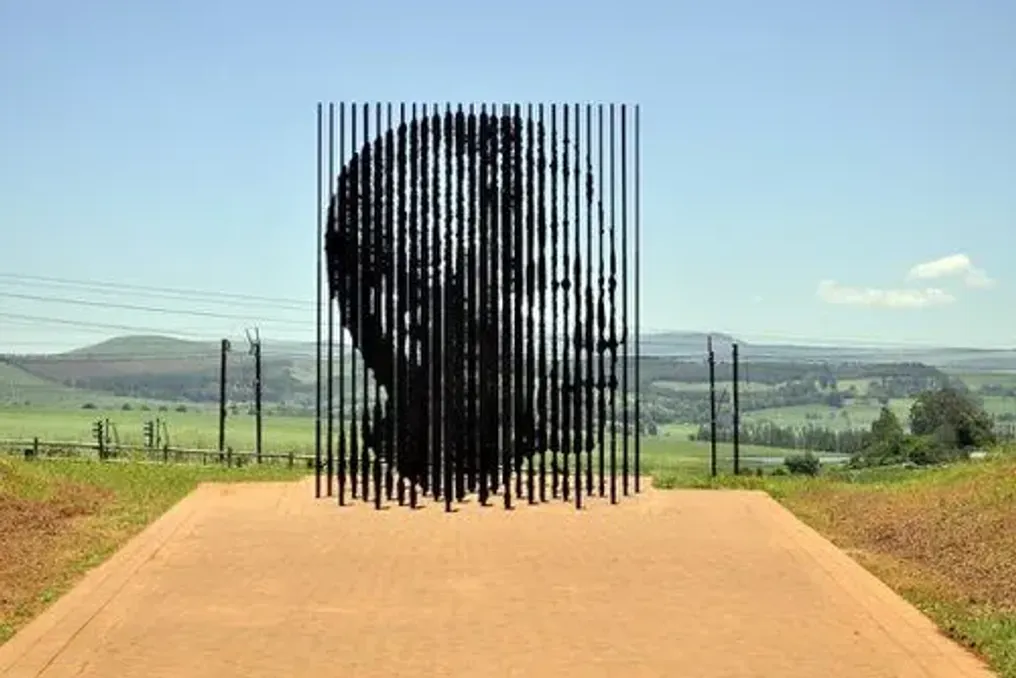
The route also includes Inanda Seminary, one of the country's historic institutions for girls. Further inland, Nelson Mandela's arrest site near Howick commemorates the moment of Mandela's arrest on August 5, 1962. Today, visitors can tour the museum and see the striking steel sculpture that forms the centerpiece of this site. The Tutu Falls Museum in Grutwall offers another important chapter in the province's liberation history. The museum is located in the former home of Chief Albert Luthuli, who became the first African to receive the Nobel Peace Prize in 1960.

The KwaZulu-Natal battlefields route takes visitors through landscapes where some of South Africa's most significant military conflicts took place. Isandlwana is remembered for the dramatic defeat of the British during the Anglo-Zulu War in 1879, while nearby Rorke's Drift became famous for defending the British mission during the same conflict.

The province's military history extends beyond the Anglo-Zulu War. In Spioenkop, visitors can study the site of a major battle during the Anglo-Boer War. This area is also linked to several prominent historical figures, including Winston Churchill and Mahatma Gandhi. The Dundee Tala Museum combines military history with exhibitions covering the region's development in mining, agriculture, and culture.

For those interested in history, the Battlefield Route offers an opportunity to experience these events in the landscapes where they unfolded. In the Chatsworth area of Durban, the Sri Sri Radha Radhanath Temple is one of the province's most recognizable cultural and religious landmarks.

The heritage of KwaZulu-Natal is also closely linked to the history of people of Indian descent in South Africa. In the Chatsworth area of Durban, the Sri Sri Radha Radhanath Temple is one of the province's most recognizable cultural and religious landmarks. Its distinctive architecture, richly decorated interiors, and Hindu traditions make it a notable stop for visitors exploring the diverse heritage of the area.

The Durban 1860 Heritage Centre offers another important link to the province's Indian history, documenting the arrival of Indian indentured laborers in Natal in the 19th century. Visitors can also visit the Victoria Street Market, where Indian and African influences merge through food, spices, clothing, crafts, and other goods. Together, these places tell a broader story of migration, identity, and the communities that helped shape modern KwaZulu-Natal.

More Than Just a Tourist Destination

The heritage of KwaZulu-Natal spans thousands of years and encompasses numerous diverse communities, cultures, and historical periods. Whether you are exploring ancient rock paintings in Drakensberg, learning about the Zulu monarchy, visiting sites related to the fight for democracy, walking through historic battlefields, or discovering the province's Indian heritage, travelers can uncover the side of KwaZulu-Natal that extends far beyond its beaches.

For those ready to step outside the typical tourist trail, the province offers something even more valuable: the opportunity to understand the stories that have shaped South Africa.

Popular