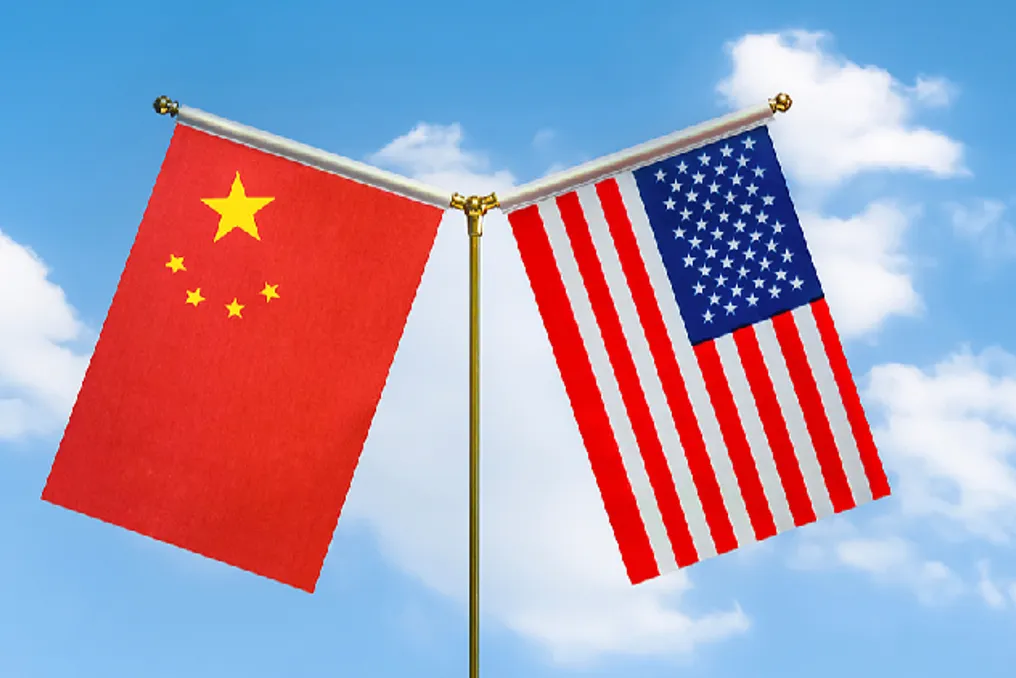
Teams from China and the United States conducted thorough, constructive, and candid discussions regarding economic and trade matters on Sunday, which also included dialogues concerning Artificial Intelligence. The Chinese delegation was led by Vice Premier He Lifeng, who participated in economic and trade talks in New York alongside US Treasury Secretary Scott Bessent and US Trade Representative Jamieson Greer.
These exchanges were guided by the significant consensus established by the leaders of both nations, adhering to the principles of mutual respect, peaceful coexistence, and mutually beneficial cooperation. Participants discussed crucial economic and trade issues of shared interest, as well as the execution of agreements reached in prior meetings.
The following is a summary of the key outcomes from these preceding rounds of consultations.
May 10-11, 2025 – Geneva, Switzerland
During the bilateral economic and trade meeting in Geneva, China and the United States issued a joint statement. Both sides agreed to reduce tariffs on each other's goods: the US committed to eliminating 91% of tariffs and suspending 24% of 'reciprocal tariffs' for 90 days. Correspondingly, China will also eliminate 91% of counter-tariffs and suspend 24% of counter-tariffs for 90 days, while both countries will retain the remaining 10% of tariffs.
Furthermore, it was decided to establish a consultation mechanism on economic and trade issues between China and the US.
June 9-10, 2025 – London, UK
The first meeting of the China-US economic and trade consultation mechanism was held. The parties reached a fundamental agreement regarding the implementation of an important consensus achieved by the heads of state during a phone call on June 5, and also agreed on the framework of measures to solidify the results of the economic and trade negotiations held in Geneva. Both sides achieved new progress in resolving mutual economic and trade issues.
July 28-29, 2025 – Stockholm, Sweden
China and the United States released a joint statement following the bilateral economic and trade meeting in Stockholm. The US will continue to adjust the application of the additional ad valorem duty on Chinese goods, suspending 24 percentage points of this rate for an additional period of 90 days, starting August 12, 2025. China, in turn, will continue to suspend 24 percentage points of the additional ad valorem duty on US goods, as well as related non-tariff countermeasures for another 90 days, starting August 12, 2025.
September 14-15, 2025 – Madrid, Spain
China and the US reached a basic framework agreement on resolving issues related to TikTok through cooperation, reduction of investment barriers, and promotion of relevant economic and trade interaction. Both sides fully recognized that stable economic and trade relations between China and the US are of great importance to both countries and significantly influence global economic stability and development.
October 25-26, 2025 – Kuala Lumpur, Malaysia
The US will lift the so-called 'fenacetil tariff' of 10% imposed on Chinese goods, and the 24% reciprocal tariff rate applied to Chinese goods will be suspended for an additional year. China will make corresponding adjustments regarding the aforementioned US tariffs. Both sides agreed to continue extending certain tariff exemption measures.
The US will suspend the application of the Entity List Rule announced on September 29, 2025, which expands export restrictions for the 'entity list' to any organization owning at least 50% of shares in one or more organizations on this list, for one year. China will suspend the implementation of corresponding export control measures announced on October 9, 2025, for one year, and will study and improve specific plans.
The US will suspend for one year the application of measures under the Section 301 investigation targeting China's maritime, logistics, and shipbuilding industries. In response, China will correspondingly suspend the implementation of its countermeasures against the US for one year after the suspension by the US takes effect.
The parties reached a consensus on issues such as anti-narcotics cooperation regarding phenacetin, expansion of agricultural trade, and resolution of individual cases concerning relevant enterprises. Furthermore, both sides confirmed the results of the Madrid consultations, with the US making positive commitments in areas such as investment, and China undertaking proper resolution of issues related to TikTok with the US.
March 15-16, 2026 – Paris, France
China and the US agreed to explore the possibility of creating a cooperation mechanism to promote bilateral trade and investment. Both sides agreed to continue effectively utilizing the China-US economic and trade consultation mechanism.
May 12-13, 2026 – Seoul, Republic of Korea
China and the US agreed to establish trade and investment councils to address relevant issues in trade and investment cooperation. In principle, both sides agreed to discuss within the trade council a system of mutual tariff reduction for products of equivalent scale valued at $30 billion or more from each side. The parties reached a positive consensus on promoting the resolution of non-tariff barriers and market access issues concerning certain types of agricultural products from both sides. Both sides also agreed in principle to include relevant products in the framework of mutual tariff reduction and set guiding goals for expanding bilateral agricultural trade.
Both sides will maintain close contact and consultations to facilitate the extension of joint agreements reached during the economic and trade negotiations in Kuala Lumpur. Regarding rare earth elements and other critical minerals, teams held an in-depth exchange of views on export controls, and the parties will jointly study and resolve each other's legitimate and lawful concerns.
In accordance with the important consensus reached by the heads of state, China's aviation industry, based on its own needs for civil aviation development, will import 200 Boeing aircraft according to commercial principles.