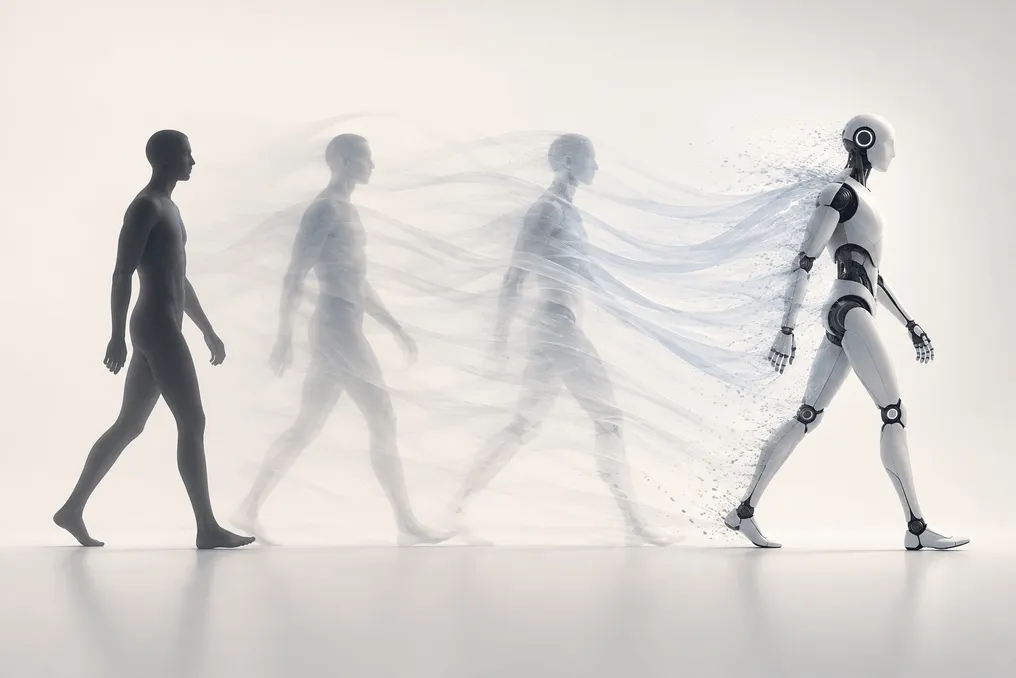
Light Origins releases Light-O1-Preview 6B model for full-body control
Read more
Pandaily
pandaily.com

Light Origins releases Light-O1-Preview 6B model for full-body control

Light Origins has made Light-O1-Preview, a model for full-body actions containing approximately 6 billion parameters, publicly available. This model is released under the Apache 2.0 license on Hugging Face and GitHub, according to the company's technical blog from September 21st and its English coverage.

This preliminary version of the model represents a public segment of Light-O1—Light Origins' foundational line of embodied systems. This line is first trained on structured human actions extracted from video material and then adapted to various robotic bodies. The official company branding is Light Origins; this release differs from the earlier LightNav-0 navigation module.

Light Origins described a workflow that involves segmenting people in videos, reconstructing three-dimensional motion, and tokenizing root trajectory, body pose, and hand state into discrete action tokens. These tokens are interleaved with language and visual data for autoregressive pre-training of the Transformer.

Scaling experiments, covering from 3.75 billion to 120 billion multimodal tokens—which corresponds to approximately 100,000 hours of reconstructed human actions at the largest budget—demonstrate a reduction in next-action loss and full-body pose error after adaptation to egocentric human data, as well as to Unitree G1 teleoperation systems and Light Origins' proprietary LightBot datasets.

Demonstrations mentioned in the launch materials transfer this prior experience to LightBot and Unitree G1 to perform actions such as squatting, balancing, wiping, and picking up objects.

On the Hugging Face page, the preview shows a 6B checkpoint in the Qwen3.5-4B-Base model tree. The model accepts a text instruction, generates a brief reasoning trace, and outputs full-body action sequences at a rate of 20 frames per second. The output format consists of 138 values per frame, covering root movement, hip height, yaw, 22 joints, and hand openness states.

Applying these trajectories to real hardware still requires a separate behavior model or low-level controller. Light Origins documents an example path for Unitree G1, which is currently running in simulation with an additional policy checkpoint. Results from the company's own RoboCasa GR-1 kitchen simulations are also reported, achieving 79.3% success on macro metrics across 24 tasks, although this is not an independent public rating.

For robotics teams, Light-O1-Preview is a loadable motion-priority layer under a permissive license, not a ready-to-use robot operating system. The open weights allow labs to verify claims about pre-training on human video content; however, the quality of local manipulation tasks between different bodies still depends on the adaptation data and controllers, which remain partially proprietary.

Similar stories

Light Origins releases LightNav-0 model—a universal open-source navigation brain
Read more
pandaily.com

Light Origins releases LightNav-0 model—a universal open-source navigation brain

Light Origins has made its LightNav-0 model publicly available. This compact, universal navigation model is built upon the Qwen3-VL-4B backbone and was released along with weights, code, a technical report, and the INSIGHT-Bench evaluation suite.

The company presents this model as a navigation brain that utilizes a unified token interface to perform instruction-following tasks, open-vocabulary object navigation, and visual tracking, without requiring specialized output layers for each task.

The core of its operation is the Real2Sim2Real process at scale. A specialized data engine transforms over 2000 real-world scenes collected from the internet into reusable simulators. Subsequently, more than 4000 hours of synchronized experience across vision, language, and action are synthesized.

The training process occurs in three stages: first, embodied reasoning training to form spatial representations; second, embodied controlled fine-tuning on aligned trajectories; and finally, online reinforcement learning, allowing the policy to improve based on its own errors.

To ensure diversity, camera height, field of view, and tilt angle are randomized so that the same scenes cover multiple viewpoints before any fine-tuning begins on real robots.

In its evaluation, Light Origins reports that the monocular RGB LightNav-0, captured from a first-person perspective, demonstrates high performance across ten different navigation scenarios. These scenarios include VLN-CE, Matterport3D/HM3D object navigation, HM3D-OVON, and EVT-Bench tracking.

The model ranks first among single-camera methods and remains competitive even when panoramic systems are included. Dual-channel guidance tokens express spatial intentions within the image space. Furthermore, a three-level action tokenizer with residual vector quantization decodes a 10-step chunk with reconstruction error measured in centimeters, according to the team's data.

Zero-shot demonstrations allow the same checkpoint to be applied across humanoid, quadruped, wheeled, and aerial platforms in previously unseen indoor and outdoor scenes, including tracking in crowded streets.

All artifacts are publicly available on GitHub at lightorigins/LightNav-0 and on Hugging Face as LightOriginsHQ/LightNav-0 under the Apache 2.0 license. For robotics teams, the most valuable aspect is not just another VLN metric, but the reproducible alignment cycle—from real scenes to simulation, and then back to heterogeneous bodies—which aims to reduce the need for teleoperation-heavy navigation data collection while maintaining a unified RGB and language interface.

SAPS plans to implement AI-based facial recognition body cameras
Read more
techcentral.co.za

SAPS plans to implement AI-based facial recognition body cameras

According to tender documentation published this week by the State Information Agency (Sita), the South African Police Service (SAPS) intends to equip its officers with body cameras capable of performing facial recognition.

This requirement is featured in the technical specification for the RFB 3286-2026 competition. This contract is set for three years and provides for the 'supply, delivery, support, and maintenance of body-worn and in-vehicle dashcams' along with corresponding software. The deadline for submitting applications is set for 11:00 on September 29th.

The scope of work specifies that the solution must provide SAPS with 'the ability to perform facial recognition and integrate with various security platforms, as well as have alerting functions.' This is not an optional feature; bidders are required to confirm compliance with these mandatory functional and subject requirements, as any application that does not meet them will not be considered further.

However, the specification does not clarify the specific purposes for which the police plan to use this system. The only place where the operation of such a system is described is in user management, where facial recognition is one of three methods (alongside fingerprint scanner and access code) for extracting the camera from the docking station, which allows identification of the officer, not the object the camera is pointed at.

The vehicle cameras must be equipped with built-in AI, including 'automatic number plate recognition' and detection of events triggered by blue lights, door opening, or collision. The specification also includes an 'option for an internal camera (facing passengers).' The video stream management software covering the fleet 'must have' analytical tools such as 'motion detection, facial recognition, and license plate recognition.'

This is more ambitious than just an accountability tool, as this project is positioned. In addition to collecting forensic evidence, the specification states that the cameras will allow SAPS to 'dispute false civil lawsuits' against itself.

Popular