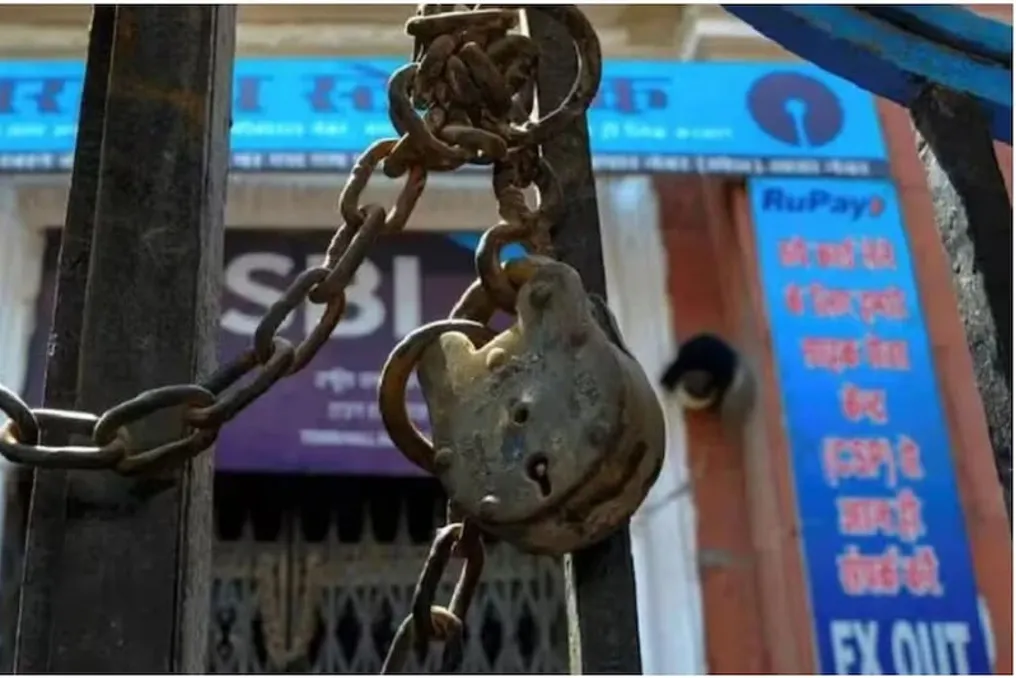
Central government issues statement after announcement of bank employee strike; services may be suspended for five days
Read more
Aaj Tak
www.aajtak.in

Central government issues statement after announcement of bank employee strike; services may be suspended for five days

The central government has responded to the announced strike by bank employees. The Ministry of Finance appealed to bank staff to withdraw the three-day nationwide strike scheduled for September 28 to 30. The government noted that negotiations on several employee demands are ongoing, but the strike could negatively affect customers, businesses, and government transactions.

The United Forum of Bank Unions (UFBU) announced a three-day nationwide strike set for September 28 to 30. Since September 26 and 27 fall on weekends, there is a possibility that banking operations in branches may be disrupted for five consecutive days. Nevertheless, this does not mean a complete halt of all services in every bank during these five days; it is expected that digital services such as UPI, internet, and mobile banking will remain available, while branches may face significant difficulties.

The most significant demand of the bank unions is the implementation of a five-day banking service system. The unions assert that discussions and the process of agreeing on this proposal took place previously but have not yet been implemented. In addition, the list of demands includes issues regarding the update and improvement of pension provision, the application of a unified cost of living index formula (DA) for pensioners, and providing employees in the National Pension System (NPS) the option to switch to the old pension scheme (OPS).

The demands of bank workers also include the issue of Performance Linked Incentives (PLI). According to government information, in response to requests from state bank employees, the PLI scheme was temporarily suspended for 2025–26. The government stated that further discussion on this matter will take place within bilateral departmental agreements and the joint memorandum process. The Ministry of Finance emphasized that a decision has already been made on one of the key employee demands, while negotiations on other issues, including the five-day work schedule, continue.

The timing of the strike is also important. Banks conduct semi-annual reporting on September 30. Important operations are carried out during this period, such as account reconciliation, as well as treasury and market-related operations. The government warns that the combination of the strike from September 28 to 30 and the preceding weekend could lead to continuous five-day disruptions in banking services, potentially affecting customers, businesses, government operations, and international banking turnover.

Given the potential difficulties, the banks themselves advised customers to complete all necessary tasks in advance. State banks such as State Bank of India (SBI) and Union Bank of India urged customers to finalize urgent transactions before the strike begins. Cash can be obtained using ATMs, cash deposit machines, and other digital methods if needed. It is expected that services such as UPI, internet, and mobile banking will operate normally, but branch-related operations, such as certain cash transactions, check verification, and loan applications, may suffer.

Currently, the government has called on bank employees to abandon the strike. According to the Ministry of Finance, negotiations and settlements are underway on issues such as the five-day work schedule and other unfinished matters. The government also mentioned a number of measures related to salaries, bonuses, personnel welfare, promotions, transfers, and pensions. However, the unions have not yet announced the withdrawal of the planned strike from September 28 to 30. Therefore, it is currently more prudent for customers to complete all important banking matters in advance. Furthermore, the unions have announced an indefinite strike starting October 26 if their demands are not fully met.

Similar stories

Bank Strike: Banks Closed September 11-13; Information on Affected Services
Read more
www.aajtak.in

Bank Strike: Banks Closed September 11-13; Information on Affected Services

If you need to visit a bank to carry out important matters, you should take into account the dates of the following three days. Due to a nationwide strike, operations in many banks may be disrupted on September 11. Furthermore, September 12 falls on the second Saturday, and September 13 is a Sunday, so banks will also be closed on these two days. Thus, for urgent banking needs, you will have to wait until Monday.

The United Forum of Bank Unions (UFBU) announced a one-day nationwide strike on September 11. In connection with this, banks advised their customers to complete all necessary operations in advance. The State Bank of India (SBI) also warned customers about possible branch disruptions due to the strike.

However, this does not mean that all banking services will be unavailable during these three days. Digital banking services and a number of other services can be used as usual.

UFBU comprises seven banking unions: AIBEA, AIBOC, NCBE, AIBOA, BEFI, INBOC, and INBEF. These associations represent over 90 percent of the banking sector's workforce. The main demand of the unions is the introduction of five working days, meaning that bank operations should only take place from Monday to Friday. Additionally, their demands include changes to the performance-linked incentive scheme, as well as other employee-related issues. It is with these demands that the banking unions announced the general strike on September 11.

Various manual operations performed at bank branches may be affected during the strike. Such operations include cash deposits and withdrawals, cheque acceptance and verification, operations related to bills of exchange and payment orders, updating passbooks, and other manual banking procedures at branches. If any of these operations are urgent, you will have to wait until September 14.

Despite branch disruptions, digital banking services will remain available. Money transfers or payments can be made using UPI, mobile, and internet banking. Through UPI, funds can be transferred using applications such as GPay, PhonePe, Paytm, and BHIM. At the same time, functions such as NEFT, RTGS, and IMPS are available through internet or mobile banking. Therefore, if your task is only to send money or make an online payment, you do not need to wait for the bank branch to open.

If you need cash on these days, instead of visiting a bank branch, you can use ATMs. ADWM machines for cash deposits and withdrawals are also installed in some locations. However, during the strike, there may be increased pressure on ATMs compared to normal days. Therefore, if you urgently need cash, it is best not to postpone it until the last moment.

Some banking services may also be available through Customer Service Points (CSP) of many banks. Nevertheless, the services provided there may vary depending on the bank and the respective CSP. Therefore, before visiting to perform a specific task, it is recommended to check whether this service is available at that point.

Punjab employee strike ends after negotiations; government withdraws notices and orders
Read more
www.aajtak.in

Punjab employee strike ends after negotiations; government withdraws notices and orders

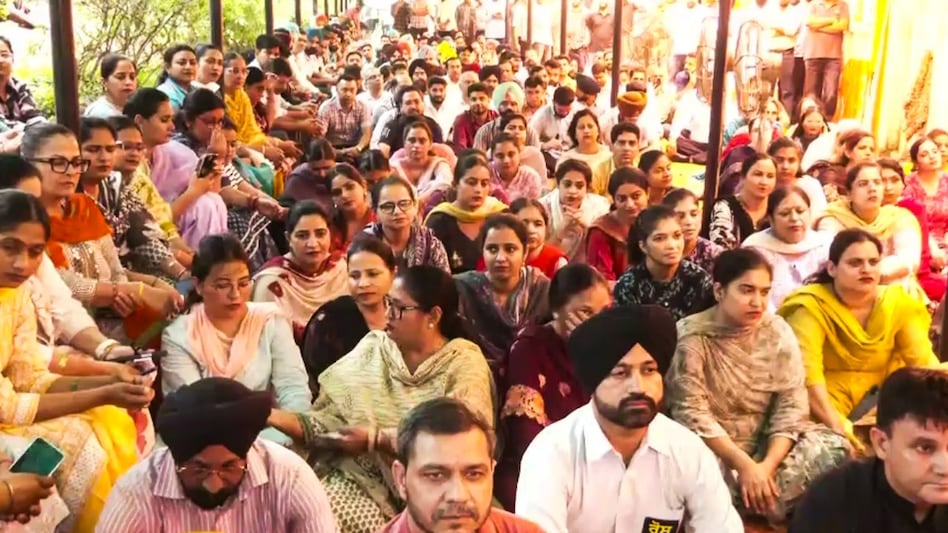
The conflict that has been ongoing for the past few days at the Civil Secretariat of Punjab and in the offices of district commissioners across the state finally ended on Wednesday. Employees who were actively protesting against 'show cause notices' and 'no work, no pay' directives issued by the Punjab government resumed their work after two rounds of intensive meetings with the Chief Secretary and senior officials. Union representatives completely halted their protests and sit-ins at the Secretariat.

During the workday at the Secretariat building, two important meetings took place between union leaders and the Punjab administration, despite loud slogans and dissatisfaction among workers. The first meeting was held with the Chief Secretary, and the second was with ADG-ranking officials from the intelligence wing and Secretary Kamal Kishore Yadav. Union leaders, including Sushil Fauji, Sukhaina Singh Hairu, and representatives of the Employees Association, stated that the decision to end the strike was reached after an agreement was made on two urgent issues.

An agreement was reached that the show cause notices issued to employees who participated in the rally on August 27th and later would be annulled. Furthermore, the 'no work, no pay' order issued by the government on Tuesday evening will be revoked, and no disciplinary action will be taken against any employee.

A representative of the Employees Association, Sahil Sharma, reported after the meeting with the Chief Secretary that the negotiations proceeded in a very friendly atmosphere. He emphasized that the letter regarding unauthorized absence and the 'no work, no pay' order were forcibly imposed on the workers. The Chief Secretary assured that no action would be taken against the employees, and both documents would be withdrawn.

Alka Chopra, Secretary of the United Action Committee, noted that the attempt to intimidate 11,000 employees by issuing notices failed due to the solidarity of the workers, forcing the administration to concede. She added that the Chief Secretary listened carefully to them and supported them. Nevertheless, they stated that the fight for their fundamental rights, such as OPS and DA, would continue in courts and on the streets.

Although the protests at the Secretariat have ceased, union leaders made it clear that their fundamental demands remain unsatisfied. The administration promised that a high-level meeting with Minister Bhawant Mann would be scheduled soon regarding the pending demands.

Key demands include: cancellation of letters 15:15 and 177:20, regularization of ad-hoc and contractual employees, implementation of the old pension system (OPS), a 2.59 times increase in pension, and an increase in allowances for kindergarten and food workers.

The resumption of work at the Secretariat brought relief to the general public, as administrative processes that had been suspended at the Civil Secretariat and district commissioner offices for several days returned to normal thanks to the assurances of the Chief Secretary and the achieved mutual understanding.

Popular