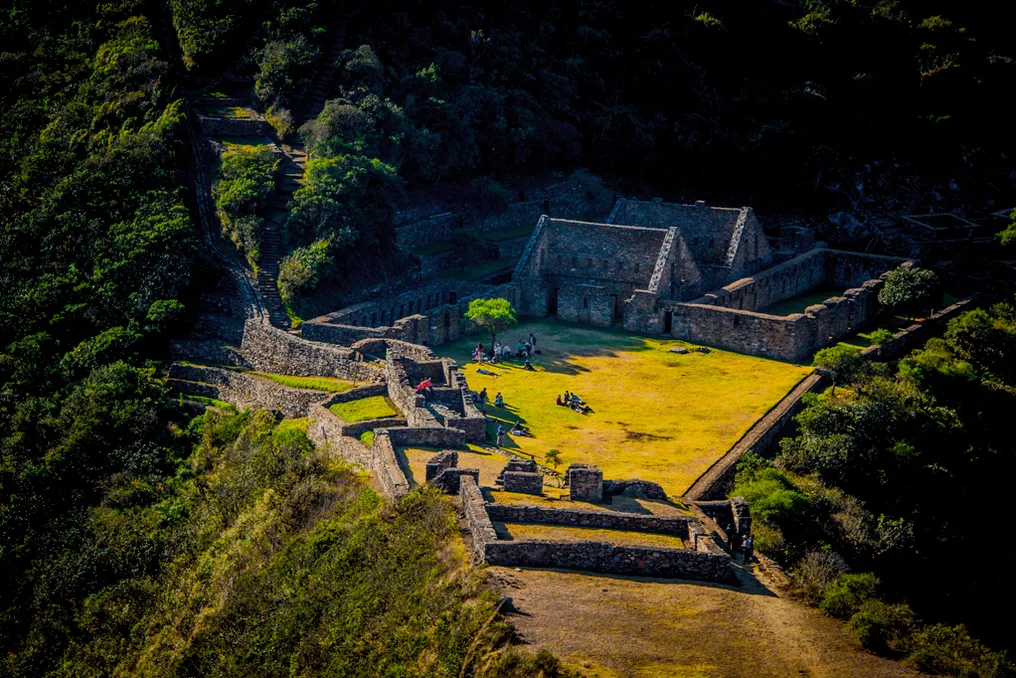
Admiring the ruins of Machu Picchu, one of the seven modern wonders, is often hindered by the large number of tourists, who reach about 1.6 million annually. However, there is another Inca city, less known and more isolated in the Andean region, called Choquequirao, which is sometimes referred to as the 'younger sister of Machu Picchu.'
This settlement was built as part of the Inca Empire between the 15th and 16th centuries. Located at three thousand meters altitude and 89 km away from the most famous tourist spot, visiting Choquequirao demands considerable effort and time, which naturally deters the average tourist. There is no transport infrastructure such as roads, trains, or nearby airports; access requires hiking and crossing the Apurímac river canyon, traversing mountainous trails for several days.
Due to its isolation in the jungle, Spanish colonizers never located it, resulting in little knowledge among researchers. It is estimated that the Choquequirao complex was built around 1450, although its exact purpose remains uncertain. The most accepted hypothesis is that this settlement functioned as a religious, administrative center, or a strategic connection point between the Andes and the Amazon.
The archaeological site features agricultural terraces, ceremonial plazas, and structures that demonstrate sophisticated planning. Among the notable elements are the terraces adorned with llama figures, sculpted in white stones on the walls, a distinctive trait of Inca architecture. Attention should also be paid to the 'Houses of the Fathers' and the 'Main Houses' overlooking the plaza, places that likely housed the local nobility.
The name of the city, which means 'cradle of gold' in Quechua, suggests its importance to the Incas, although researchers warn that this mention of gold may indicate value, prestige, or sacredness, and not necessarily the literal presence of the metal in the area.
Later, Choquequirao's remote location became tactical during the Spanish conquest in the 16th century, and it is possible that the Inca resistance sought refuge there. However, this resistance was brief, and the city ended up being abandoned.
Public recognition of Choquequirao only occurred in 1909 when American explorer Hiram Bingham described it, two years before visiting Machu Picchu. It took decades longer for the Peruvian government to direct efforts toward its preservation, which only began in 1980.
Recently, authorities have promoted the construction of a cable car as a strategy to attract more visitors. This project, with a projected investment of US$ 261 million, aims to connect strategic points between the Cusco and Apurímac regions. Furthermore, the plan includes improving existing trails as a hiking alternative. The government announced that the cable car tender will be conducted through Public-Private Partnership (PPP), aiming to raise the annual tourist flow from 8 thousand to one million people.
Although facilitating access could boost the rural and underdeveloped economy of Peru, the BBC reported that the cable car project has generated tensions among communities claiming inclusion on the route to benefit from development and increased visitors.