Many who see Yakuza imagine a standard fighting game with cliché mafia stories. If that's what appeals to you, congratulations, you've found something more than just gold. But if that perception turned you away from the game, there's good news: you can give it another chance.
Of course, avoiding combat elements is impossible, but consider this: do you prefer a typical fighting game using fists or weapons, or one where you can fight using a shopping cart or a telephone pole? Furthermore, legend has it that the franchise's main character has never killed anyone.
"But it's still a fighting game." Not entirely. Have you ever seen a game that makes you sing karaoke with friends? Or manage your own brothel, styling staff in terms of clothing and makeup? Or, more simply, pull a plush toy out of a claw machine?
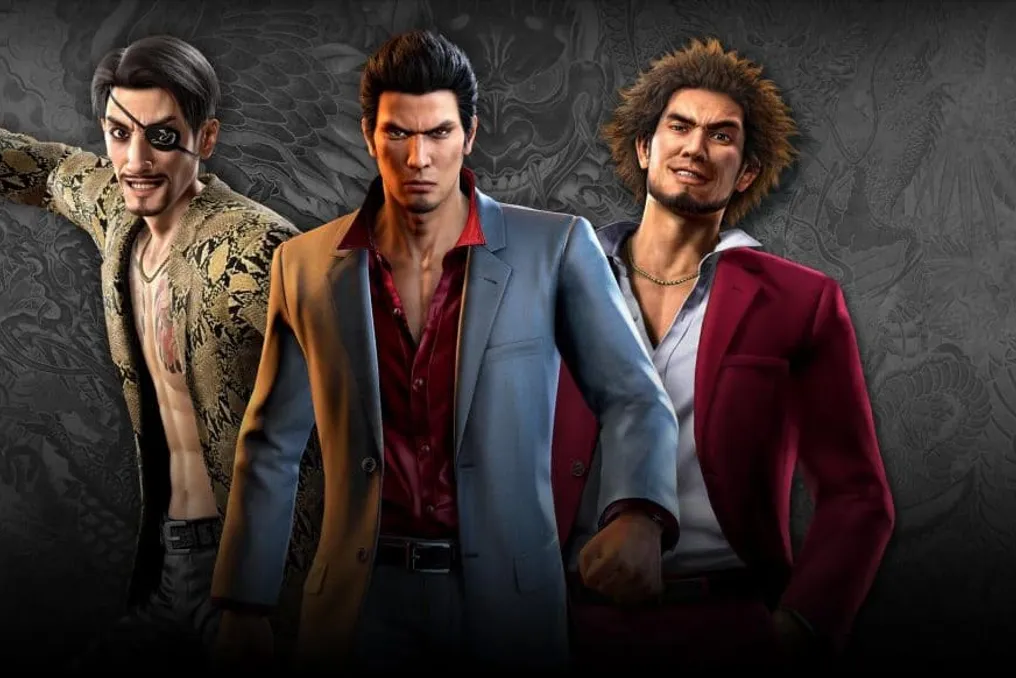
Yakuza is different. Believe me. You are likely familiar with Like a Dragon, the Ichiban series. But did you know this story didn't start there? The previous series is called Yakuza, and knowing it makes the gaming experience in Like a Dragon much richer. With nine main numbered games, the fear might arise: 'Where do I start?' Relax: the official entry point is Yakuza 0, set in 1988 and featuring Kiryu and Majima, one of the best games in the series. And this isn't just a fan opinion: Yakuza 0 received an 86 on OpenCritic, with 95% of critics recommending it.
Don't be intimidated by the large number of games; it is strongly recommended to play the older installments. If you like Like a Dragon, you will love discovering the origins of this franchise even more.
Yakuza possesses one of the most unique contrasts among games: at one moment, you are immersed in a completely absurd side story, investigating a used underwear sales scheme, participating in a 'who can withstand the spiciness longer' duel, or taking on the role of a film producer and clashing with a rival production gang. And the next moment, you are in a tense cutscene about betrayal, grief, or a decision that changes a character's life forever. And the most striking thing is that both sides are executed equally well.
If there is a side story that reflects how far this game has strayed from my expectations, it is 'How to Train Your Dominatrix.' You help a dominatrix who says she never knew how to say 'no' and agreed to work specifically to learn how to be tougher. For training, she conducts a role-playing session in a public park, where Kiryu plays the role of a subordinate, choosing the most humiliating phrases. This side mission made me laugh the most and realize that Yakuza goes completely beyond my expectations.
The game presents a living world where you can manage an entire property, managing employees and challenging rivals for territory. Or become a brothel owner, hiring hostesses, developing their skills, and competing with other clubs in the city.
There is full karaoke with choreography, dance battles, bowling, mahjong, golf, arcade machines with working games, and even a stock market investment mini-game (I certainly haven't mentioned everything, find out by playing).
And they are very well developed: some have dozens of hours of content comparable to a standalone game within the main one. Each mini-game has its own system, progression, and rewards—a depth usually only seen in single-genre games. You can spend hours managing your brothel and feel like you are achieving something. It is an entire city to explore between missions.
And this city is not fictional: Kamurocho is based on Kabukicho, Tokyo's most famous entertainment district, and appears in almost all the numbered games in the series. You will recognize every corner, every shop, and see how the district changes over the years within the story, almost like another character of the franchise.
Combat in Yakuza has RPG depth that many do not expect: a skill tree for unlocking, characteristic evolution, and various fighting styles that can be changed mid-fight. Some games, such as Yakuza 0 and Kiwami, offer up to four different styles for one character, each with its own way of playing. There is also a 'Heat' system that accumulates during battles and unleashes devastating special attacks.
It is in this serious combat that the series' most absurd creativity shines through: you can pick up almost any object from the street and use it as a weapon—a shopping cart, a telephone pole, a traffic cone, an umbrella, a bicycle, a road sign, a fire extinguisher, even a vending machine, each having unique special moves, some so specific they become comical amidst a serious fight.
Beneath all this hustle and farcical humor, Yakuza hides one of the best-written stories in gaming. Kiryu embodies the central themes of the series: loyalty, honor, and the burden of protecting those you love, even if it comes at a high cost. He is not a perfect hero, and the game is not afraid to show the consequences of his choices and the loss of people along his path.
The entire series revolves around family—not necessarily blood, but the one you choose and build throughout your life. Kiryu accepts, protects, and sacrifices for the people who cross his path, and it is this thread that gives emotional weight to a franchise that moments ago made you laugh at a ridiculous side story.
Villains also avoid the superficial cliché of the 'evil gangster for no reason.' Many of them have their own traumas and worldviews that are logical within their own system, even if you completely disagree with them. This turns confrontations into something more complex than just a hero versus villain struggle.
Yakuza makes you genuinely attach yourself to the characters, to the extent that every loss feels personal. Few series can balance absurd humor with such drama, and make both aspects work without feeling forced.
With Yakuza 6, the series runs on Dragon Engine, RGG Studio's proprietary engine, which significantly enhances the visual quality of the franchise: street signs have animation, light decorations look more realistic, and the team has started using better anti-aliasing techniques to give everything a smoother look.
The soundtrack also deserves a separate mention. In Yakuza 0, music director Hidenori Shoji worked with over a dozen composers and used different genres to emphasize the individuality of each protagonist: Kiryu's themes are clearer and more optimistic, reaching a tech trance style in the finale (please sing 'Bakamitai' in karaoke with Kiryu, this song is perfect), while Majima's themes explore darker sounds like drum'n'bass and dubstep. This turned out so successful that it became the series' calling card.
The entire franchise has sold over 27.7 million copies worldwide since 2005, in both physical and digital formats. The recognition is not new: the first game was highly praised in Japan for combining innovative gameplay and cinematic storytelling—a combination the series maintained and perfected over nearly 20 years.
The series has received numerous awards at various Japan Game Awards ceremonies, and Yakuza 5 and 6 achieved an almost perfect score of 39/40 from Famitsu magazine, the highest rating in this series. Metacritic scores range from 75 to 89 depending on the game, despite the history of delays between Japanese and Western releases, which for a long time kept the series 'hidden' from audiences outside Japan.
It was this situation that began to change rapidly with Yakuza 0: this game is considered the main reason the franchise resurfaced in the West, prompting Sega itself to reconsider its localization and simultaneous release strategy for subsequent games.
There are no games like Yakuza that could combine the best of all worlds. No matter what genre you prefer or what your age is, the narrative and gameplay can attract you.
You become too emotionally invested in the story being told, in the trials faced by the protagonists to achieve their goals; you suffer with them and rejoice in every achievement. Kiryu himself, being a stoic, carries a sensitivity rarely seen in mafia game heroes, and you can laugh at how seriously he takes comical situations.
And a special mention to Majima, the best character in this franchise, who evokes both tears and laughter throughout his journey. Our crazy favorite.
So, if I still haven't convinced you to play, perhaps you should try it and decide for yourself.