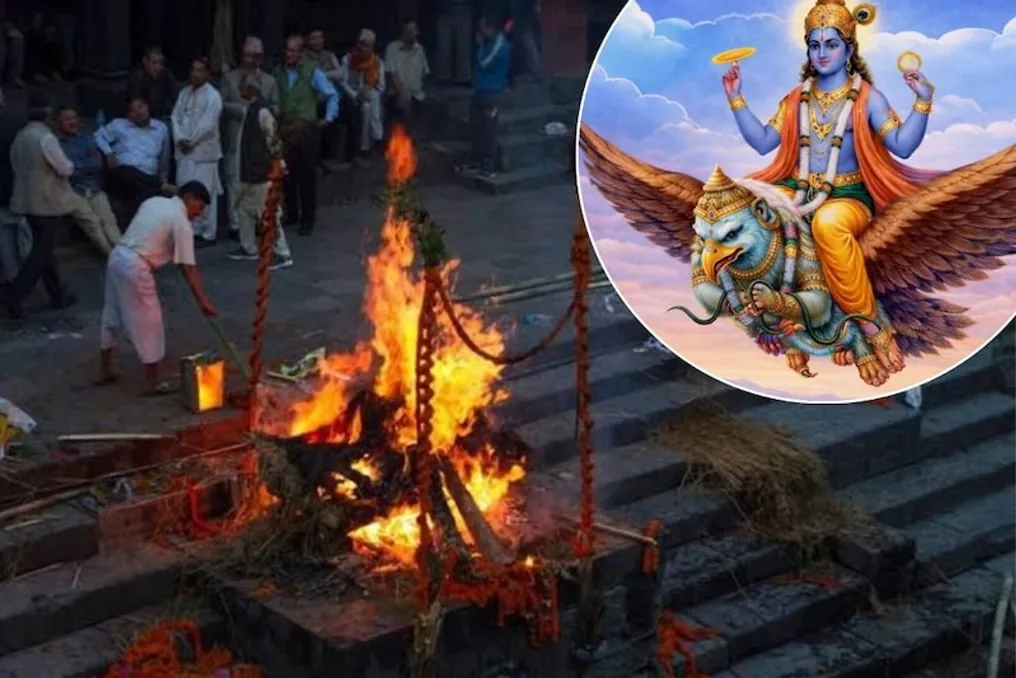
In Hinduism, the ritual of scattering ashes (Asthi Visarjan) is an important rite performed after human cremation. In this process, the ashes and embers obtained from the funeral pyre are collected and then immersed in a sacred river or body of water. Special significance in religious traditions is given to scattering the ashes in the Ganges River. This is why people from different parts of the country travel to holy places such as Haridwar and Varanasi to perform this ritual.
The timing and method of performing Asthi Visarjan are also very important. Several Hindu traditions mention collecting the ashes on the second, third, or fourth day after cremation, while some traditions prescribe scattering within the tenth day. However, the question arises: why is a three- or four-day period specified for collecting the ashes? What should be done if the scattering cannot be performed within the stipulated time? And why is scattering in the Ganges considered so significant?
When is the ash collection performed?
In Hindu burial traditions, the process of collecting ashes after cremation is called Asti Sanchayan. The rules for this process vary depending on different Dharmic traditions and regions. According to the beliefs laid out in the Garuda Purana, there are mentions of post-death actions and ash collection. Traditionally, in some cases, the ashes are collected on the second or third day, and for the person who conducted the cremation (Mukhaagni), there is a tradition of collecting ashes on the fourth day.
Nevertheless, funeral methods can vary depending on the family, region, and confession. Therefore, it is considered appropriate to follow the procedure established by the local priest or family traditions.
Why is the ash collection done within three or four days?
According to religious beliefs, leaving the ashes in the graveyard for a long time after cremation is not recommended. This is why many traditions speak of the necessity to collect the ashes within a few days. Some religious interpretations suggest that the proper collection and scattering of ashes after the funeral is an integral part of subsequent rituals performed in memory of the deceased. This process is viewed as an expression of duty and reverence for the departed.
However, the assertion that the soul will not attain liberation if the prescribed time is not observed remains a matter of religious belief and cannot be scientifically proven.
Why is early ash collection important today?
Previously, conditions at cremation sites differed from modern times. In many places, a limited number of funerals were conducted simultaneously. Under these conditions, it was possible to observe the tradition of collecting ashes after several days. Today, however, continuous cremations are held at cremation sites in large cities. Under these circumstances, it is impractical to leave the ashes and embers of the pyre for many days. There is also a possibility that the ashes may disperse or mix with the ashes of other pyres. Therefore, under current conditions, families often collect the ashes shortly after the funeral.
What is the general ash collection procedure?
Before collecting the ashes at the cremation site, a prayer or ritual is performed according to the traditions of the respective family. After this, the ashes are carefully collected. Traditionally, they are placed in a clean vessel and carried to a sacred place for ritual scattering. Some families wash the ashes with milk and water, offer sandalwood, and then scatter them in the river. Differences may also exist in these methods depending on the region and family.
Why is scattering ashes in the Ganges so important?
In Hinduism, the Ganges River is revered as a river that grants liberation (Mokshadayini) and is sacred. According to religious beliefs, the waters of the Ganges are connected to the spiritual salvation of a person. This is why scattering ashes in the Ganges is considered particularly auspicious. Both in the Garuda Purana and in other religious traditions, the glory of the Ganges is described. It is believed that scattering ashes in the Ganges contributes to achieving good results for the soul of the deceased and fulfilling its desire for liberation. This is a matter of religious faith, and different traditions hold varying opinions on this matter.
What to do if ash scattering could not be performed on the third or fourth day?
In some families, for some reason, it is impossible to perform the ash scattering on the third or fourth day. In such a situation, it is not customary to panic. Different Dharmic traditions provide different methods for such cases. According to some traditions, the ashes can be safely stored and scattered later on a suitable date and in a holy place. If this ritual is not performed even within ten days, it is customary to consult the family priest to determine the further procedure. Thus, instead of applying the same rule to all families, it is reasonable to make a decision in accordance with one's own family tradition and local religious customs.
What rituals are performed during the 10–13 days after death?
In Hindu tradition, various rituals known as Uttarayana Sanskar are performed in the days following death. These may include Pindadana, Shraddha, and other rites. The number and method of these rites vary depending on communities and regions. In many traditions, the period up to the thirteenth day is associated with mourning and the performance of these subsequent rituals.