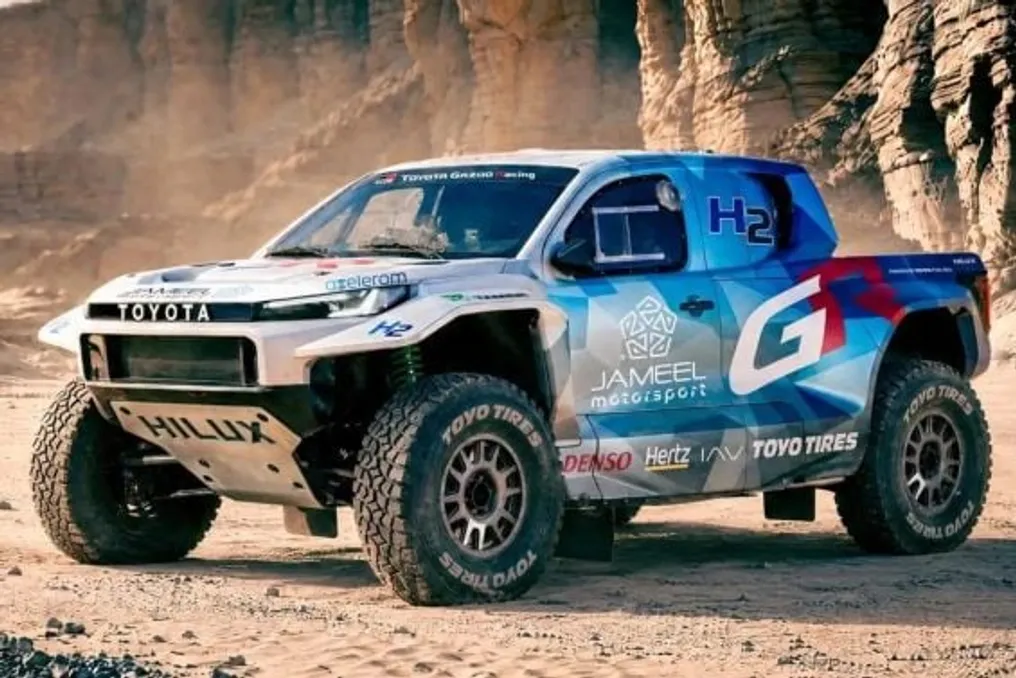
Toyota announced that the Hilux equipped with a hydrogen fuel cell will begin production in 2028. This model is intended for fleets and commercial customers in Europe. The announcement was made during the IAA Transportation 2026 event, held in Hanover, Germany, positioning the Japanese manufacturer at the forefront of the medium pickup competition with this technology available on the continent.
The automaker's objectives include a range exceeding 400 km in the WLTP cycle and a towing capacity of 2,500 kg, in addition to an estimated refueling time between three and five minutes. It is important to note that Toyota itself considers these values as development goals, not as already approved data; the company also did not disclose information regarding tank capacity, power, or payload.
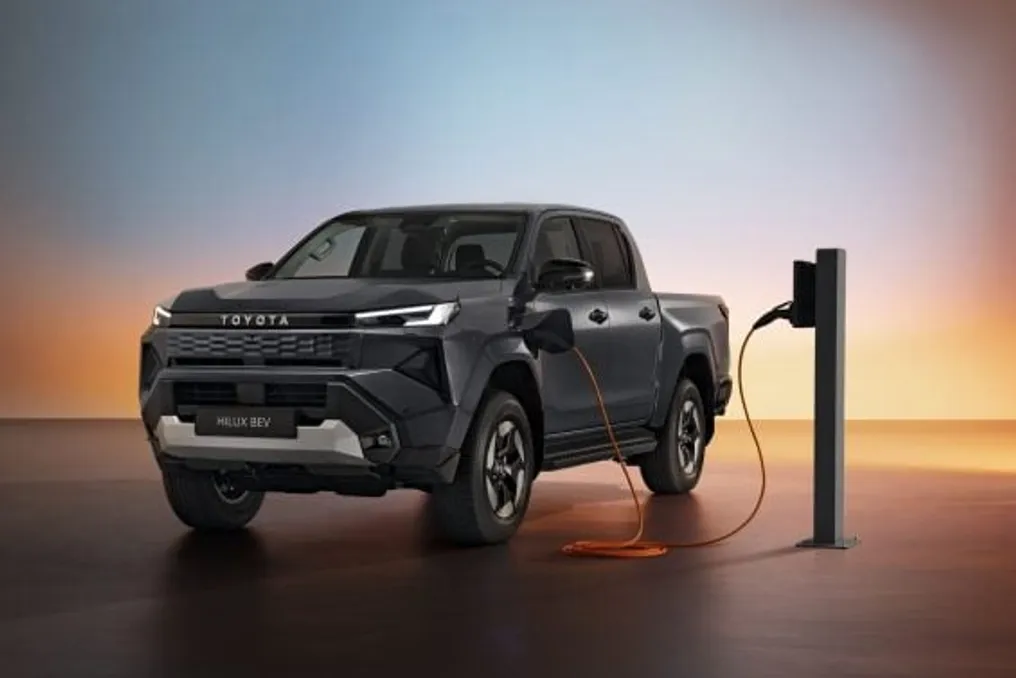
The comparison with the fully electric Hilux illustrates the reason for this technological choice. The battery variant has a WLTP range ranging from 240 km to 260 km, depending on the configuration and market, can tow up to 2,000 kg, and requires approximately 30 minutes on a fast charger to go from 10% to 80% charge. This difference becomes significant for fleets operating all day.
The propulsion system uses technology derived from the Mirai sedan, generating electricity internally through the reaction between hydrogen and atmospheric oxygen, resulting only in water vapor as an exhaust byproduct. The first prototype of this technology was presented in 2022.
In 2024, Toyota developed ten test units in the United Kingdom. These vehicles featured three tanks integrated into the ladder chassis, a lithium-ion battery located under the bed, a rear electric motor with 182 hp and 30.6 kgfm, and a declared range of 600 km. Although the series version promises 400 km, the brand has not clarified the discrepancy between the figures.
According to a survey by the European Hydrogen Observatory in May of this year, there are only 179 public hydrogen stations in Europe, 160 of which have dispensers compatible with 700 bar vehicles. In contrast, the charging infrastructure for electric vehicles is much more extensive, and fuel cell vehicles tend to have a higher cost than equivalent battery or combustion models.
The pickup enters a scenario of operational expansion in Europe: Toyota's light utility sales on the continent have more than doubled in the last five years and are projected to exceed 165,000 units in 2026, representing over 7% market share. The future goal is to reach 200,000 annual units and 8% share by 2030.
There are no launch plans for markets outside of Europe. In Brazil, the ninth generation of the Hilux is scheduled for early 2027, manufactured in Zárate, Argentina. This version will include a 204 hp 2.8 turbodiesel engine and an electric option of 196 hp with a range of up to 380 km. Hydrogen technology is not part of the regional planning, and the country still lacks a public supply network.