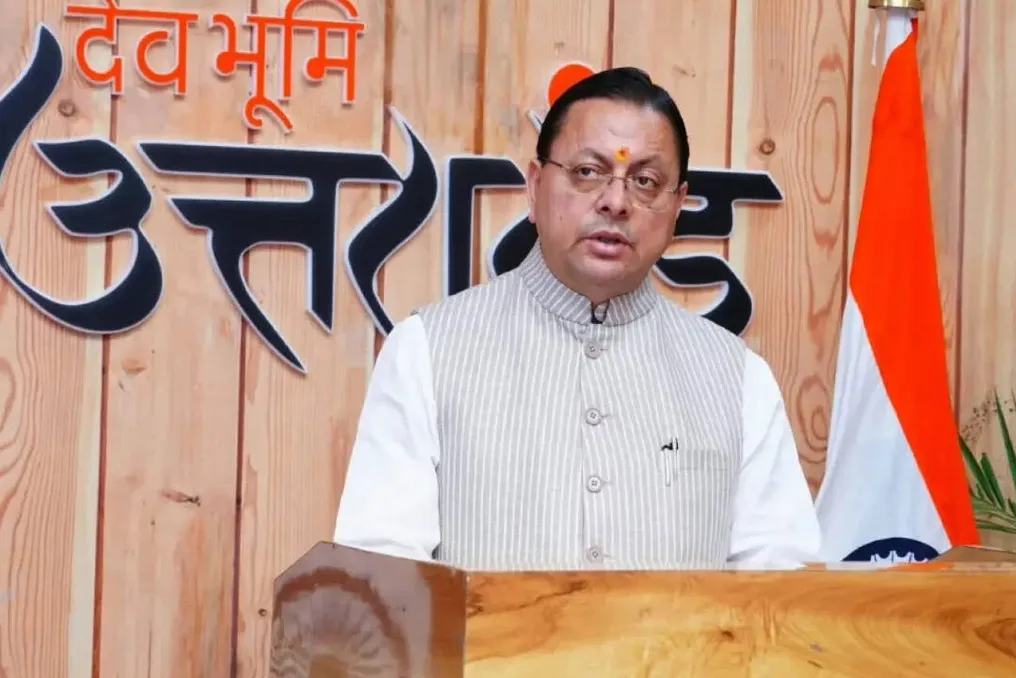
Uttarakhand Chief Pushkar Singh Dhami stated on Monday that strengthening cooperatives and M-PACS can play a key role in stimulating the rural economy, supporting mountain agriculture, and creating opportunities for youth in the state.
Speaking at the inaugural session of the Second Training Program for Cooperative Leaders named after Shri Lakshmanrao Inamdar in Pantnagar, Dhami emphasized the need for qualified leadership to transform cooperatives into an effective tool for economic empowerment.
The program was organized by the organization Sahakar Bharati Uttarakhand at the Gobind Ballabh Pant University of Agricultural and Technology Education in Pantnagar. On the occasion of the birth anniversary of the founder of Sahakar Bharati, Shri Lakshmanrao Inamdar, the state chief noted that such training events are important for strengthening the rural economy through support for the cooperative sector.
He stated: 'Strong leadership will strengthen M-PACS, strong M-PACS will strengthen villages, and strong villages will make Uttarakhand prosperous.'
The state chief reported that several important initiatives have been launched from Pantnagar, which is called the land of knowledge, aimed at giving a new direction to the cooperative movement. These measures include the publication of Sahakar Granth, the Devbhoomi Sarathi initiative of the State Cooperative Federation, new courses in the cooperative sector, a social media campaign to attract youth to cooperatives, and an M-PACS leadership training program, all of which will give a fresh impetus to the cooperative sector.
Dhami stressed that the state government is committed to rapidly advancing Uttarakhand towards the concept of 'Prosperity through Cooperatives.' He clarified that cooperatives can effectively address several problems faced by the hilly state, including migration, strengthening mountain agriculture, ensuring markets for local products, and boosting the rural economy.
It was noted that Primary Agricultural Credit Societies (PACS) are an important pillar of the state's cooperative system and are being transformed into M-PACS to enhance their efficiency and meet changing demands. The government is working to improve conditions for farmers through M-PACS, create new jobs for youth, and economically strengthen rural areas.
The state chief added that competent and visionary leadership is necessary to increase the effectiveness of M-PACS, and this is precisely why the leadership training program was launched. He explained that the training serves not only to build knowledge but is also a powerful tool for shaping new perspectives, approaches, and directions among leaders.
Dhami stated that the state government's priority is the involvement of farmers, youth, and women in the cooperative movement. The government aims to make cooperatives not just societies, but an effective means of public participation and economic empowerment.
He urged participants of the training program to continue strengthening the spirit of cooperation in their regions and encourage more people to join this movement. The state chief concluded that all stakeholders must work together to make cooperatives a people's movement, strengthen villages, create opportunities for youth, and enhance the economic power of farmers.