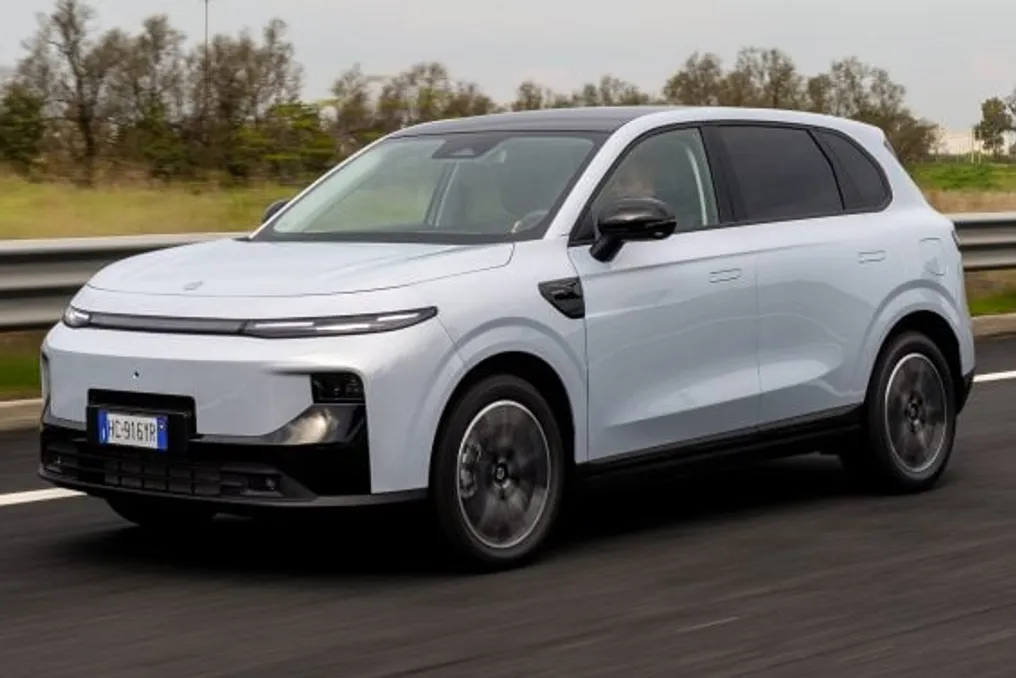
Leapmotor plans to remove the 12V auxiliary battery from its vehicles, a component that has existed in automobiles for over seven decades. This change will be implemented in the Chinese manufacturer's new generation models, scheduled for launch starting in 2027.
The novelty was presented during the Leapmotor Tech Day 2026 event, held at the Hu Zhou Battery facilities in Hangzhou. The solution, named High and Low Voltage Cell-to-Chassis (CTC) 3.0, integrates low-voltage power, currently supplied by a separate battery, directly into the drivetrain system.
In an official statement, the company declared that when this technology is incorporated into the next line of models, the cars will be the first in over 70 years of production to dispense with a lead-acid auxiliary battery.
The main difference lies in how energy is distributed: instead of using a high-voltage battery for propulsion and another 12V battery for other electrical systems, CTC 3.0 fulfills both functions. According to Leapmotor, the new generation has seven times more operational capacity in low voltage than the previous version, which is sufficient to supply items such as lighting, windshield wipers, air conditioning, multimedia, and safety equipment.
Both high and low voltage will share the same cells and modules, in addition to sharing thermal management and power distribution.
An annual failure report issued by ADAC, Europe's largest automotive club, revealed that the starter battery is responsible for almost half of roadside assistance calls, regardless of the type of powertrain. The German club also pointed out a significant proportion of problems related to the internal electrical system in electric vehicles.
As a wear item, the 12V battery requires replacement throughout the car's lifespan. By transferring the low-voltage function to the main battery, Leapmotor claims that this periodic replacement will become unnecessary. The automaker also estimates that the large-scale adoption of this technology could prevent the disposal of tens of millions of lead-acid batteries annually, resulting in a proportional reduction in waste.
The acronym CTC defines the concept: instead of modules being in a separate structure, the cells and modules are integrated directly into the chassis. CTC 3.0 is part of the LEAP 5.0 architecture, which will serve as the basis for future brand launches. The company has not yet specified which model will be the first to feature this system.
In the Brazilian market, Leapmotor has been operating since late 2025 under the Stellantis structure, with a network of 36 dealerships, offering the C10 and B10 SUVs in electric and REEV versions. The brand has not communicated whether or when the new architecture will arrive in the models sold in the country.