Indian athletes won medals in shooting and MMA at Asian Games, defeating Pakistan
Read more
Aaj Tak
www.aajtak.in

Indian athletes won medals in shooting and MMA at Asian Games, defeating Pakistan

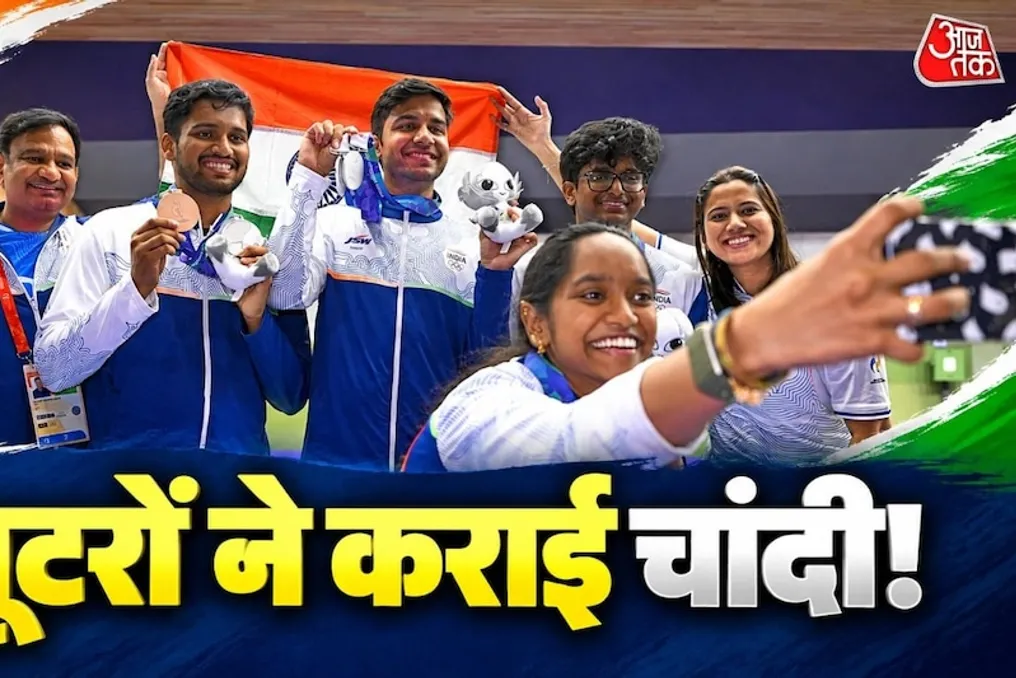
The second day of the 2026 Asian Games proved mixed for Indian athletes; however, they demonstrated impressive performance by winning a total of four new medals (three silver and one bronze). The main focus was on the shooting range and the mixed martial arts (MMA) arena.

Despite the successes, India has yet to secure its first gold medal. The day started brightly for India: the men's air rifle team in the 10-meter distance won a silver medal thanks to excellent aiming. Individual competitions also brought success afterward.

Himanshu Dhillou secured a silver medal, and former world champion Rudranaksh Patil won bronze, demonstrating strong competition. Furthermore, Suchika Tarial from the mixed martial arts section set a historic record by winning a bronze medal in the women's traditional fighting category at 60 kg.

Tension peaked in the matches between India and Pakistan. In the team table tennis tournament, India achieved a convincing victory over Pakistan with a score of 3:0 in both their encounters, defeating the Pakistani team twice in one day.

The women's table tennis team, consisting of Sutirta Mukki, young athlete Sindrela Das, and Shridhi Akula, left no chance for the Pakistani team. Subsequently, the men's table tennis team continued its confident play against Pakistan, easily winning its matches involving Ji Satyan, Harmit Desai, and Pais Jain.

Significant events also occurred in sports disciplines. The women's hockey team of India achieved a one-sided victory over Indonesia with a score of 17:1. In kabaddi, both teams—men's and women's, the reigning Indian champions—started their tournament strongly: the men's team defeated Japan with a score of 49:24, and the women's team defeated Bangladesh with a score of 42:21.

In badminton, the men's Indian team advanced to the quarterfinals, defeating Bangladesh 3:0, thanks to the performances of Lakshya Sen, Ayusha Shetty, and Kidambi Srikanth. In boxing, in the 32kg weight class, Sumit beat Bunjong Sinsiri from Thailand with a score of 5:0 and advanced to the next stage. In Wushu, Roshbina Devi and Aryan secured their place in the quarterfinals by achieving brilliant victories in their matches.

Similar stories

India defeats Japan 57:59 and advances to the Asian Games semi-finals
Read more
www.aajtak.in

India defeats Japan 57:59 and advances to the Asian Games semi-finals

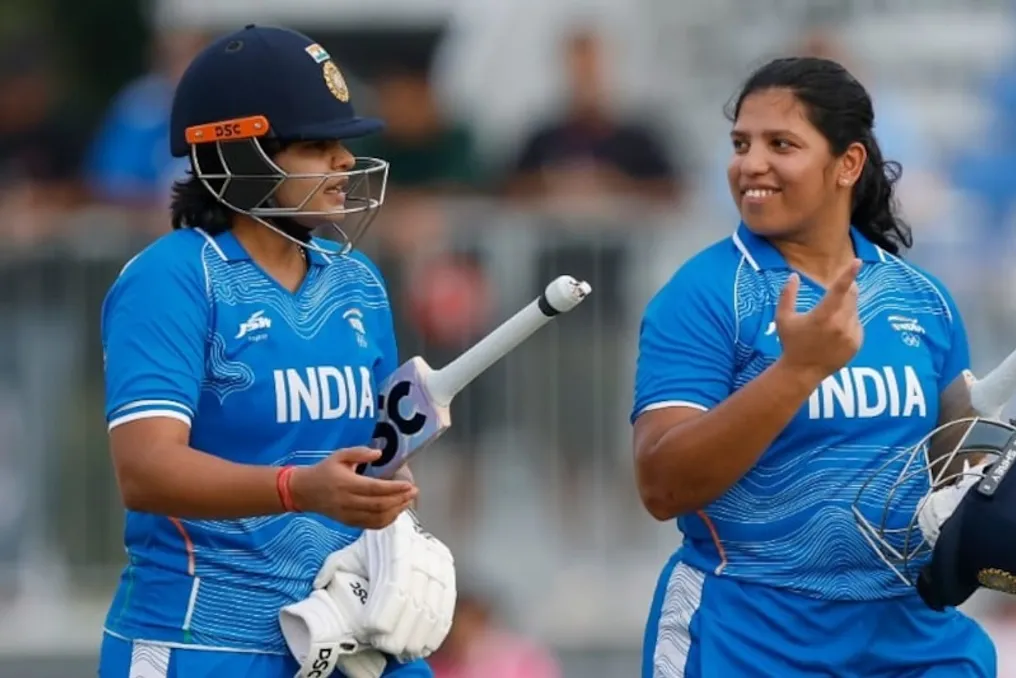
At the Asian Games, the Indian team secured a spot in the semi-finals, but the true story of this victory is far more interesting than just the score on the board. In Nisshin (Korogi Sports Park, Nisshin) on Tuesday, Indian spinners created such a complex game that the Japanese batsmen had no chance of scoring runs. As a result, the entire team was brought down to a score of 57 points, and India won with a score of 59 in five overs, taking eight wickets.

India bowled first and chose the bowling option, immediately putting pressure on Japan. The Japanese batsmen had no answer to the Indian bowling. The situation became clear within six overs, which constituted the powerplay. Japan accumulated only 24 points during this period, with only two fours being hit, and one of them came not from hitting the center of the bat, but from touching the periphery.

Advancing to the Semi-finals

The experienced spin attack of the Indian team completely stifled the Japanese offense. The most significant contribution came from left-arm spinner Shri Charni. In the seventh over, she dismissed two batsmen consecutively: Haruna Iwasaki and captain Mai Yanagidu, which was a serious blow to Japan's hopes. After this, Charni did not allow the Japanese batsmen to play freely and took four wickets, conceding only 10 runs. This was her best performance in the T20 format.

The rotation and bounce of the ball also complicated matters for the Japanese batsmen. The ball either hit the bat or suddenly soared upwards, surprising the players. Under these conditions, attempts to score big often ended in catches.

Shefali also demonstrated spinning mastery

Although the attacking stars appeared later, Shefali Verma also proved to be a strong bowler. Bowling off-spin, she took two wickets, conceding only 13 runs. She forced Ayaka Kato-Stafford and Shimako Kato to try and hit big, and both times the ball fell into the hands of Indian fielders. Japan scored only three fours in the innings, and no sixes were seen. This means that the Indian bowlers almost completely prevented the easy runs that could have been earned through fours and sixes over 20 overs.

Japan missed opportunities even while running

The problems were not only in the bowling. Between wicket falls, the Japanese batsmen also showed a lack of coordination while running, which allowed India to take several outs. For a team with very little experience playing against top teams and regular training, the pressure from the Indian bowling and fielding constantly increased.

India's target of 57 points became a formality

Nevertheless, the start of the Indian innings was also not easy. Gunalan Kamalini was dismissed without scoring any runs. Then Harti Fulmali returned to the bench, scoring only 6 runs. However, the target was so small that it did not significantly affect India.

Shefali's powerful attack

After this, Shefali Verma finished the match within five overs. She scored 40 runs without getting out, using only 15 balls. Her innings included 6 fours and 2 sixes. Thus, Shefali came close to Japan's total score.

Richa Ghosh also helped India reach the target, scoring 12 runs without getting out in just 6 balls. While the Japanese batsmen managed to score only 57 runs in 20 overs, India surpassed this barrier in just 30 balls. This is the essence of this quarter-final: the confrontation between Japan's inexperienced batting and India's experienced spin bowling was one-sided. India has now advanced to the women's cricket semi-finals of the Asian Games.

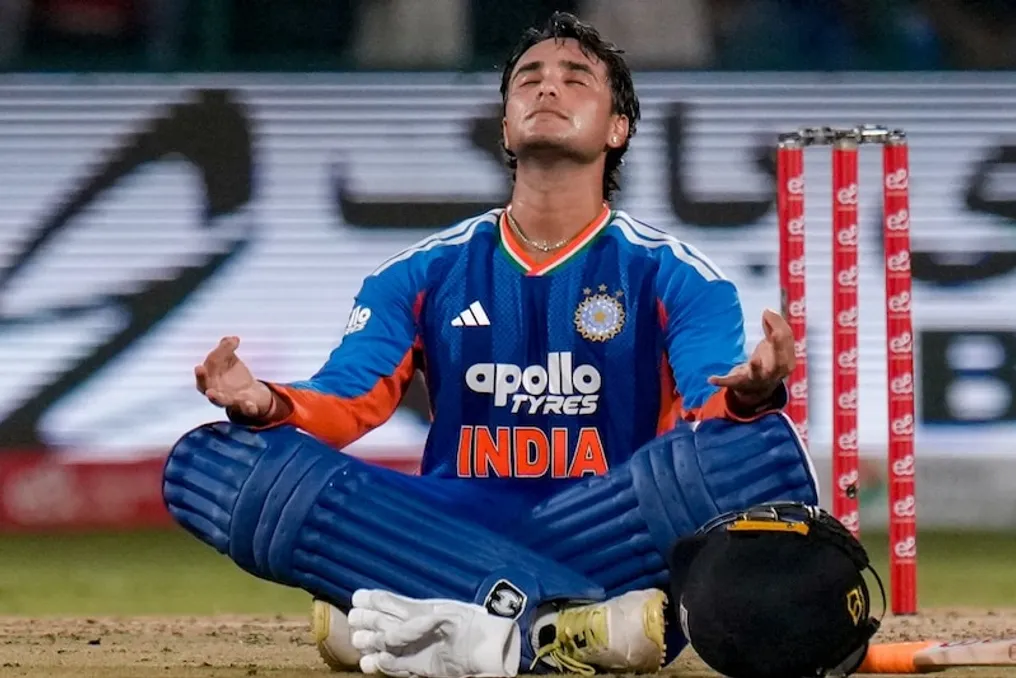
Abhishek Sharma scores a hundred in match against Afghanistan; father speaks about his meditative celebrations
Read more
www.aajtak.in

Abhishek Sharma scores a hundred in match against Afghanistan; father speaks about his meditative celebrations

In the third T20 International match between India (IND) and Afghanistan (AFG) in Delhi, at Arun Jaitley Stadium, India secured a convincing victory with a score of 127 runs. This win allowed India to sweep the three-match series 3-0. The main hero of this match was Abhishek Sharma, who achieved a historic feat by reaching a century in just 30 balls.

India started the game by scoring 221 runs in 20 overs. Abhishek Sharma demonstrated incredible batting, scoring 108 runs off just 34 balls. His performance was supported by Sanju Samson, who also scored 50 runs, helping the team build a strong foundation. Following this, Indian bowlers restricted Afghanistan to only 94 runs in 14.1 overs.

This triumph marked Abhishek's third century in T20 Internationals. It was the fastest century among Indian players in T20 Internationals, as well as the fastest century among full member players in T20 Internationals. Overall, it is his third fastest century in the history of T20 International cricket.

During the celebration of the victory, Afghanistan captain Ibrahim Zadran joined the Indian team and captain Shreyas Iyer. In the match, Afghanistan managed to score only 94 runs, with Ibrahim Zadran scoring the most points—25. Indian bowlers, such as Nitish Kumar Reddy and Ravi Bishnoi, showed outstanding play, each taking three wickets, while Axar Patel also added two wickets.

The victory by 127 runs concluded the series, which India won 3-0. Earlier, India had won the first two matches of the series, achieving a major victory in the third match.

After the game, Abhishek's father, Rajkumar Sharma, told PTI in an interview that his son possesses a huge passion for training, which prevents him from paying attention to anything else. He noted that he invited his son home, but he did not come because his achievements are the result of diligent training and hard work.

Rajkumar expressed hope that Abhishek will continue to play in the same spirit and maintain this energy to keep winning matches. He also mentioned that his son meditates a lot, waking up at 4 am, which helps him maintain high concentration. Regarding the viral celebration, he said that if he did it on premises that are a temple or gurdwara, then it is very good, and he wishes that God continues to bless him and help him deliver similar performances in the future.

Rivalry between Asian Games and ODI series against West Indies will test the depth of the Indian team's squad
Read more
www.aajtak.in

Rivalry between Asian Games and ODI series against West Indies will test the depth of the Indian team's squad

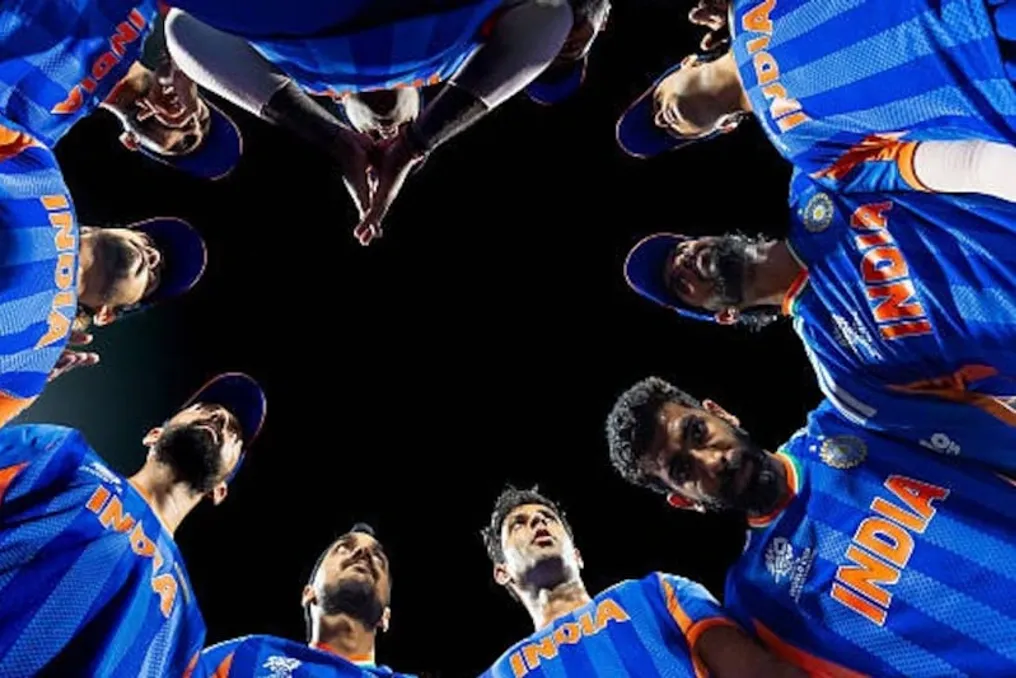
The true strength of a sports team is determined not only by its starting eleven; it manifests when multiple stars are available simultaneously, yet the team's level does not drop. In the coming weeks, Indian cricket will face such a test: an ODI series against the West Indies will take place while the Asian Games are being held in Japan. The question is not who replaces whom, but whether India possesses sufficient squad depth to field two strong international teams at once.

This situation presents more of an examination than a problem for Indian cricket. Many players selected for the T20 format Asian Games were previously part of India's plans for the ODI format. Consequently, some recognized names will be unavailable during the start of the ODI series against the West Indies. It is under these conditions that the true reserve power of Indian cricket can be revealed.

For instance, Ishan Kishan will be available for the Asian Games as a wicketkeeper. However, this does not mean that Rishabh Pant should be considered the only replacement for him in the ODI team. A more important question is which wicketkeeper, besides Kelleh Rahul, can be a reliable choice for use during the 2027 World Cup?

Pant's name naturally surfaces because he is a big-match player, and his ODI statistics are favorable. Nevertheless, if he is given a chance, it cannot be seen merely as a return of a star. It must become an opportunity to test what role Pant can play in the next World Cup cycle. Another figure in this picture is Dhruv Jurel. Therefore, it is more important to develop a complete backup plan than to give a chance to one player.

A similar situation is observed in the batting department. Shreyas Iyer will captain the Asian Games, which may give chances to batsmen like Rituraj Gaikwad and Yashasvi Jaiswal in the ODI series. In both cases, the question is not just about form. The question is whether Indian batsmen who can step in for the primary players are ready without lowering the quality of the team?

Yashasvi's situation is particularly interesting. Despite scoring two centuries in the last three ODI matches, if he does not secure a spot in the regular ODI lineup, it will not just be the disappointment of one player. It will call into question how Indian selectors determine their priorities for the future.

The challenge in bowling is even greater. Since Jasprit Bumrah and Arshdeep Singh will be available for the Asian Games, other fast bowlers may be tasked with responsibility in the ODI series. Mohammed Siraj, Mayank Yadav, and other options will get a chance to prove their worth.

This is where India's true depth will be shown. After all, great teams are not defined by whether they have a bowler like Bumrah. They are defined by how reliable the next bowler is if Bumrah is unavailable. In tournaments like the World Cup, injuries, workload, and form can change the equation at any moment. Therefore, having a second line is not a luxury, but a necessity.

The same test awaits all-rounders. If Axar Patel participates in the Asian Games, it could open the door for Ravindra Jadeja's return to ODIs. But it is not enough to just consider this as the return of an experienced player. Selectors also need to determine what type of all-rounder the team requires for the next major tournament.

The most intriguing thing about this story is that major names like Rohit Sharma, Virat Kohli, and Shubman Gill will also be present in the ODI series. That is, on one hand, there will be many first-tier Indian stars, and on the other, a test for those players who must replace them when necessary.

Therefore, considering this ODI series merely a three-match series against the West Indies would be a mistake. It could also become a selection series for India's second team.

India has long spoken about its reserve strength. There is talk of constantly forming a large pool of new players through the IPL, domestic cricket, and India-A. But the real test takes place in international cricket. There is not just talent required there. There is also the ability to perform under pressure, understanding the role, and taking responsibility in the absence of big players.

The clash of the Asian Games and the ODI series against the West Indies places precisely this kind of test before India. And perhaps this is the most positive aspect of the entire event.

If India uses this opportunity only to fill gaps, the benefit will be limited. But if every new player is clearly assigned a role and tested, the picture for the 2027 World Cup could become clearer in just a few matches.

Which of the eleven players will take the field is a secondary issue. True strength will be demonstrated when, in addition to these eleven, there are players ready to take responsibility as soon as the opportunity arises. The Asian Games have provided India with exactly such an opportunity.

Now the ball is in the selectors' court, not just the players'—will they view this as a forced measure or as a chance to build two strong Indian teams?
Popular