The Cultural Heritage Agency of Uzbekistan has provided an official response to statements made by Alisher Kadyrov, the leader of the 'Milliy Tiklanish' party, concerning the preservation of historical monuments and the allocation of state financial resources.
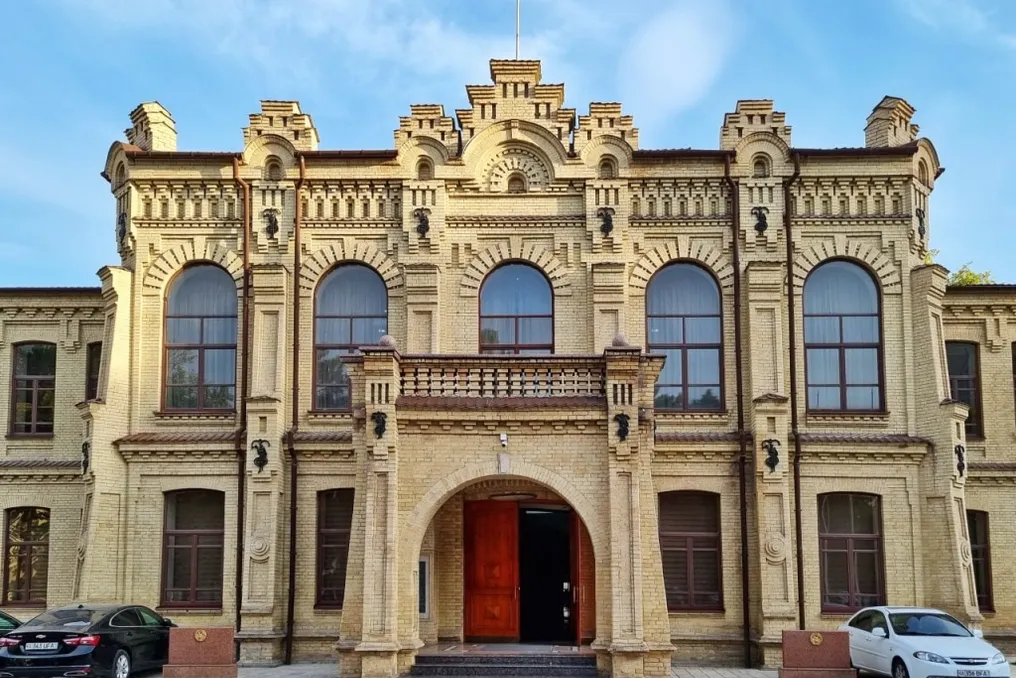
Kadyrov previously expressed the opinion that the state should adopt a differentiated approach to cultural heritage sites, giving primary attention to preserving national heritage. He also expressed doubt about the significance of one of Tashkent's ancient buildings, calling it a residence of a Russian artist, and compared its value to the Shah-i-Zinda monument.
Representatives of the Agency stated their readiness to accept criticism and participate in parliamentary oversight, but emphasized the need to verify public statements based on factual data and documentation.
According to the agency, 4.2 billion soums were allocated from the state budget for the Sarmyshsay site. These funds allowed for the creation of two entry points and information centers, the development of a 2.5-kilometer trail to the petroglyphs, the installation of five shelters, the organization of parking, a lighting system, and video surveillance. Additionally, 1.2 billion soums from the Agency's Fund were directed towards building a visitor center and a control point.
In response to remarks about the condition of Shah-i-Zinda, the Agency reported that repeated measurements did not reveal the appearance of new serious deformations in the entrance portal. The previously recorded deviation from the vertical axis, which was 46 centimeters on one side and 31 on the other, decreased by 4 and about 8 millimeters respectively after re-inspection.
According to the Ministry of State Tourism and Spiritual Development (Mingtеpe), some land decisions regarding the monument were made before it was included in the National List in 2019. 1.2 billion soums are allocated for its protection and museumification during 2024–2025.
Furthermore, the Agency clarified that the Quran manuscript located in Bukhara is stored in the archive of the 'Bukhara' museum-reserve on the first floor of the Ark fortress, which complies with established requirements for storing museum collections. International experts are planned to be involved in the conservation and restoration of this manuscript.
The building at Babura Street, 7, was also separately reviewed. According to the Agency's data, this structure was built in 1935 and is associated with architect Alexey Shchusev. In 2020, it was included in the National List of Cultural Heritage Sites, and in 2021, the proposal to exclude this object from the list was rejected.
Nevertheless, the Agency noted that funds from the republican budget for this object have not been received to date. On September 8, the agency sent a request to the Prosecutor General's Office asking for a legal assessment of the circumstances related to this building.
In the first half of 2026, 79.4 billion soums were allocated for archaeological research, restoration, repair, and reconstruction of cultural heritage sites. Of this amount, 77.6 billion has been utilized, accounting for 97.7%, with contracts concluded for 60 different sites.
The Agency assures that it is ready to provide the public and parliament with all necessary information regarding the legal status of the sites, the results of expert examinations, funding volumes, and completed works.