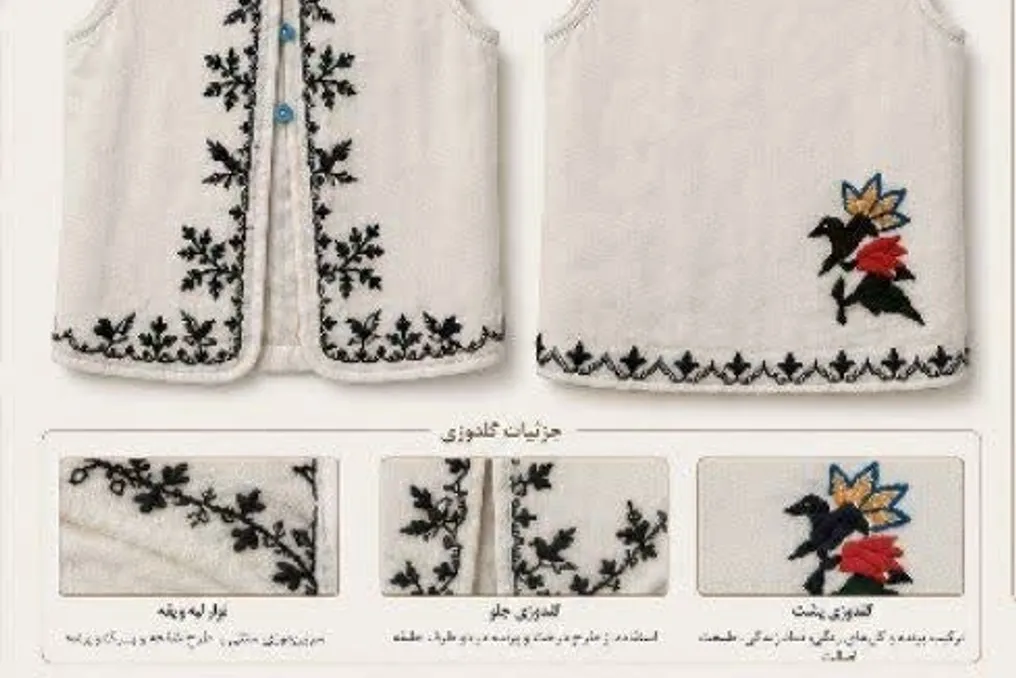
A traditional embroidered vest from Abarkuh, Yazd province, was showcased at the fourth international Soka exhibition in Mexico. At the event, the item received recognition from experts and judges.
This felt vest is considered a valuable example of local traditions in clothing and embroidery of Abarkuh. Its presentation on an international level was made possible by the efforts of Hamed Akrami, a researcher and activist in the field of cultural heritage and traditional arts. Support was provided by the Abarkuh Municipality and the District's Department of Cultural Heritage, Tourism, and Crafts, as reported by the Miras Aria news agency on Monday.
During the evaluation process at the exhibition, the vest was accepted and noted, which provided an opportunity to present one of the lesser-known aspects of Abarkuh's traditional heritage in terms of clothing and crafts on the international stage.
The vests, distinguished by characteristic local features and traditional embroidery techniques, have the potential for display at specialized exhibitions, as well as for the revival and reproduction of this craft. According to the report, this could also contribute to creating new employment and entrepreneurial opportunities.
Research and documentation of this traditional craft are currently being finalized. After the documentation is complete, a package of documents will be submitted to the Abarkuh Department of Cultural Heritage, Tourism, and Crafts for necessary legal procedures.
The participation of the Abarkuh vest in the international event is viewed as part of ongoing efforts to study, revive, and promote the district's traditional clothing, as well as to introduce its traditional arts to audiences both in Iran and abroad, according to the news agency.
Abarkuh, also known as Abarku, is famous for its ancient earthen architecture and cultural heritage. One of the most famous landmarks is Sarv-e Abarkuh, an ancient cypress tree that has become a symbol of the city. Experts have estimated the age of the tree differently: some suggest it is between 4,000 and 5,000 years old, while other estimates reach 8,000 years.