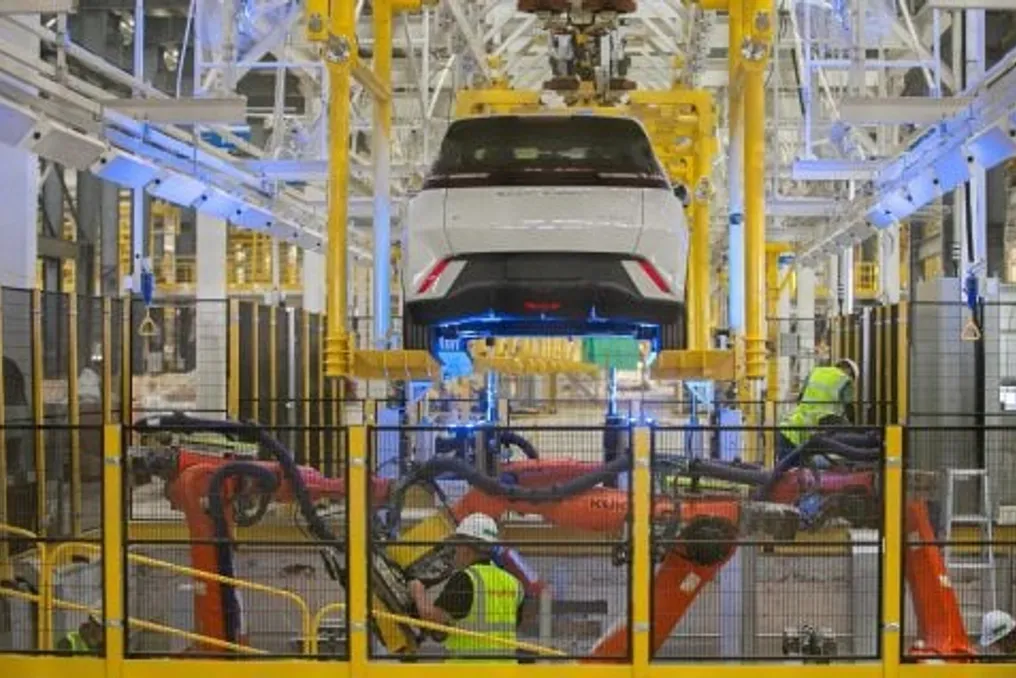
Analysts indicate that BYD needs to expand its manufacturing presence in Europe but is facing significant obstacles in finding suitable locations. The company aims to establish three new vehicle assembly plants and a dedicated battery unit on the continent in the long term.
Alfredo Altavilla, a specialized consultant for the brand in the region and former executive at Fiat Chrysler, assesses that local production is crucial to ensure the company's growth and to meet future European Union regulations. The automaker has already started operations at its first European factory, located in Szeged, Hungary, and plans to decide on the location of the second unit by the end of this year.
According to Altavilla, Spain and France emerge as the most promising options due to the simplicity of their situations. The decisive factor for the choice is the cost required to adapt the selected space. Unlike other Chinese companies that use idle production lines from established manufacturers, BYD prefers to acquire, fully own, and renovate an existing facility rather than building a new one from scratch.
Additionally, the company indefinitely suspended the project for a factory in Manisa, Turkey, which had been announced in 2024 and was projected to produce 150,000 vehicles annually. This move is part of a larger trend, as Leapmotor and Dongfeng have signed agreements to use Stellantis lines in Spain and France, respectively, while Geely will produce at a Ford unit in Spain. Chery, meanwhile, took over an old Nissan factory in the same country in partnership with a local partner.
Altavilla told Reuters that he has been visiting factories across Europe and observes that competitors' executives are competing for the same assets at airports. Italy was considered as a secondary alternative, but the executive reported that Stellantis, being the country's main automaker, has no intention of selling any plant, summarizing the impasse by the fact that you cannot buy something that is not available for sale.
These movements are driven by regulatory requirements, as Brussels is developing the guidelines for 'Made in Europe,' incorporated into the Industrial Accelerator Act. These rules define minimum percentages of European content for electric vehicles marketed in the bloc. The European Commission's proposal requires that assembly takes place in a Member State and that at least 70% of the components originate from Europe for the vehicle to access public procurement and certain incentives. The text is still under negotiation and may come into force as early as next year.
The strategy adopted in Europe mirrors the model implemented by BYD in Brazil. In Camaçari, Bahia, the company has been manufacturing the Dolphin Mini, King, and Song Pro models since 2025 under the SKD regime, where cars arrive semi-assembled from China, with an initial capacity of 150,000 units per year. To increase the nationalization rate and decrease dependence on imported inputs, the manufacturer is building stamping, welding, and painting facilities.