For a long time, software development in large corporations followed a clear separation: business teams defined the requirements, while centralized IT departments were responsible for creating the software itself. However, the rapid growth of generative artificial intelligence (Gen AI), low-code tools, and agentic workflows is fundamentally changing this model.
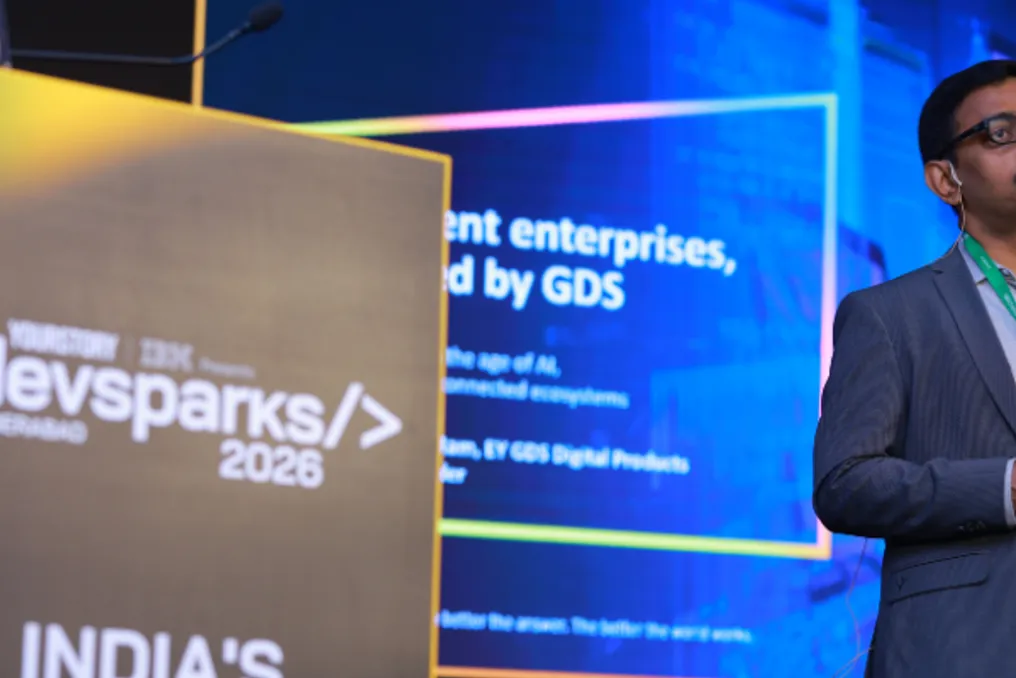
Speaking at the DevSparks Hyderabad conference, Subish Ram, Head of Digital Products and Services at EY GDS, noted that the mechanism for delivering solutions in the corporate sector is undergoing a fundamental structural shift. Based on ten years of automation experience within the global organization EY, which supports a staff of over 400,000 members, Ram emphasized that engineering teams can no longer function in isolated technical silos.
Ram observed: 'An autonomous IT team that simply develops software is no longer as visible. More of it is moving into the business side. We need people who understand the business, who can speak the language of business, and implement technology into it.'
The path to automation in corporations began almost ten years ago with Robotic Process Automation (RPA), which solved routine back-office tasks. Over time, rule-based RPA evolved into intelligent workflows and has now reached the level of full-fledged AI agent systems that manage end-to-end business functions such as finance, procurement, and human resources.
Thanks to the widespread availability of tools like Replit, Cursor, and company-approved copilots, non-technical groups are taking development into their own hands. Tax consultants, HR managers, and financial analysts are increasingly creating initial versions of internal tools themselves.
Ram noted: 'The first version of development today happens on the business side. What comes to the technology team is: can you help us scale this? Can you deploy it? Can you conduct security testing?' This transition changes the core task of the developer. In the near future, business units will handle basic prototyping, testing, and debugging using AI. In turn, the engineering community will be responsible for system architecture, integration, management, and enterprise-level scalability.
Despite the rapid growth of experimentation, Ram presented a candid view on implementing AI in corporations: calculating a clear return on investment (ROI) remains a significant obstacle. Unlike traditional RPA, where replacing manual labor provided clear and immediate cost savings, deploying AI involves significant ongoing costs for token consumption, infrastructure, and maintenance.
Ram explained: 'ROI is currently more of a wish. If you automate an entire reporting process with AI, and its annual maintenance cost is hundreds of thousands of dollars, there is often no immediate ROI. We have seen business cases where token costs rivaled human labor costs.'
Ram stressed that end-users ultimately care about productivity, efficiency, and net profit, not whether the solution uses Python, traditional dashboards, or autonomous agents. To create sustainable value, developers must focus on building reusable accelerators, improving token economics, and reducing AI usage costs.
To remain indispensable in an AI-driven world, engineers do not necessarily have to become subject matter experts, but they must understand the mechanics of that domain. Ram concluded: 'You don't need to become a certified accountant to build a finance solution, but you do need to understand the language they use and what business outcome they expect.'