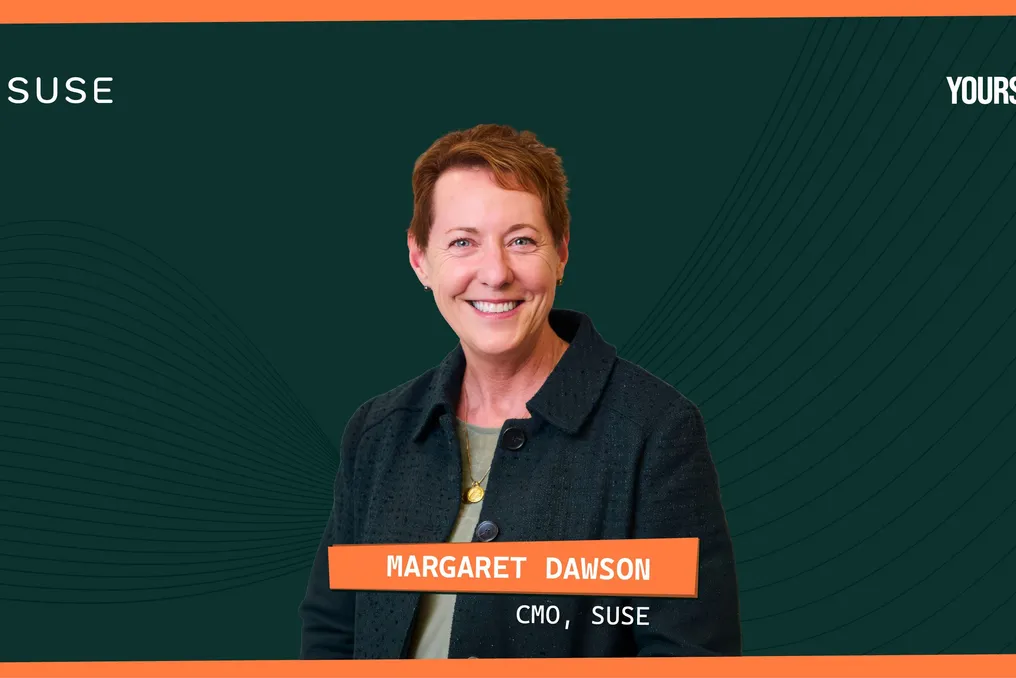
For SUSE Marketing Director Margaret Dawson, the concept of open source extends far beyond simply providing free software. In an interview with YourStory, she explains why Indian startups should view open source as a significant strategic advantage.
Dawson discusses how open source can be the key to building organizations ready for AI work, whether that involves constructing sovereign AI architectures or eliminating dependence on specific vendors, as well as creating workplaces where ideas are valued above hierarchy.
When founders hear the term 'open source,' they often picture only free tools or licenses. However, in the age of AI, according to Margaret Dawson, viewing open source as a discount coupon is a serious strategic mistake. Open source represents not just a license, but a development model, a technological process, and an architectural strategy based on control, choice, and speed.
For fast-growing Indian startups, using open source helps avoid costly architectural problems in the future. It provides a composable foundation for ensuring compatibility in multi-cloud and edge environments, allows fine-tuning models based on proprietary intellectual property, and enables innovation without needing permissions or running into limitations.
When model prices change, APIs become obsolete, or data governance requirements evolve, open source maintains control over one's business. Furthermore, it gives developers the freedom to work with technologies they like or want to learn, while retaining the option to purchase a supported, ready-to-use enterprise version of that software.
Margaret Dawson, who leads Sovereign AI strategy at SUSE, notes that there is a misconception that digital sovereignty is solely a European compliance issue. In reality, sovereignty is a global operational imperative.
For a CTO in Bengaluru or Hyderabad, this boils down to three inherent opportunities. A Deloitte study shows that 65% of organizations abandon AI initiatives halfway, mainly due to skill gaps, data residency risks, and infrastructure limitations. Independent research confirms this trend. Indian tech leaders are starting work where the risk is highest: in regulated enterprise workloads and fine-tuning open-weight models on private data. They are moving away from the old 'public cloud first' approach towards hybrid, managed architectures. Creating a sovereign future inside a 'black box' is impossible; transparency and open standards are the only way to guarantee true control.
The core idea is implementing internal operating methods based on open principles—transparency, meritocracy, and psychological safety. Dawson emphasizes that true openness is not just about software licenses but rests on three interconnected pillars: Open Standards, Open Architecture, and Open Culture. It is impossible to build an open, sovereign AI future if leadership operates with a closed, command-and-control mindset.
In the open source culture, the best ideas win regardless of position, and contribution always transcends hierarchy. The practice of 'InnerSourcing' transforms the entire operating model by applying open source community principles within the company. An example is provided of the transformation of cross-functional go-to-market campaigns and the architecture of AI agent workflows across marketing, sales, support, and product departments.
The created ecosystem of agents, fully aligned with the brand's style and voice, now guides potential clients and customers through the entire discovery journey, appointment setting, sales and support Q&A, and technical implementation.
Many older Indian tech firms talk about innovation but operate within closed management structures with strong hierarchies. To understand if an organization truly lives the open source culture, one must examine its daily working habits.
In open source communities, contribution is valued above origin. Startups can replicate this principle by shaping hiring, promotion, and project management processes so that self-learning engineers, women in tech, and career changers can thrive, rather than just being 'included.'
Dawson places great emphasis on this topic because talent shortages or skill deficits remain the biggest barrier to AI adoption. IDC predicts that by 2026, 90% of enterprises will face a critical AI skills shortage, estimated at $5.5 trillion in lost productivity globally. Solving such a massive talent gap with outdated, origin-based hiring filters is impossible.
In open source communities, no one asks about where you studied; instead, pull requests, problem-solving logic, and passion are assessed. Startups can replicate this by making three conscious changes: when people feel safe to share their curiosity and 'work out loud,' diversity ceases to be a corporate compliance metric and becomes the main driver of innovation.
Instead of 'training everyone on LLMs,' there are open-source style training models that demonstrate real progress in upskilling teams for AI work. Passive, top-down video tutorials rarely build real operational capability. Organizations that implement structured, practical training achieve an average AI ROI of 3.7 to 10.3 times.
The greatest need Dawson sees is recognizing how each person learns and absorbs information differently. There needs to be learning content that can be watched, listened to, read, and tried. The most effective for upskilling are active, community-driven models: peer review of requests and agent workflows, using sandboxes and hackathons for real-world prototyping, and replacing static learning with live, community-driven documentation. It is important to make learning collaborative, even for non-technical teams, and to recognize cross-functional successes, not just individual technical expertise. Programs like 'AI Star of the Week' can recognize teams that use AI collaboratively for innovation, problem-solving, and driving business forward.
For a founder wanting to start using the open source culture tomorrow, the smallest yet most effective change to make in the next 30 days is to open one key strategic discussion currently held behind closed doors. One should choose a product pivot, an architectural decision, or an operational bottleneck, publish the internal context, constraints, and data. Then, conduct an open, cross-functional working session with developers, marketers, product managers, and customer success leaders. Ask: 'What are we missing?' and 'How can we solve this together?' When leaders demonstrate that clarity and good ideas matter more than hierarchy, they build a culture of openness.