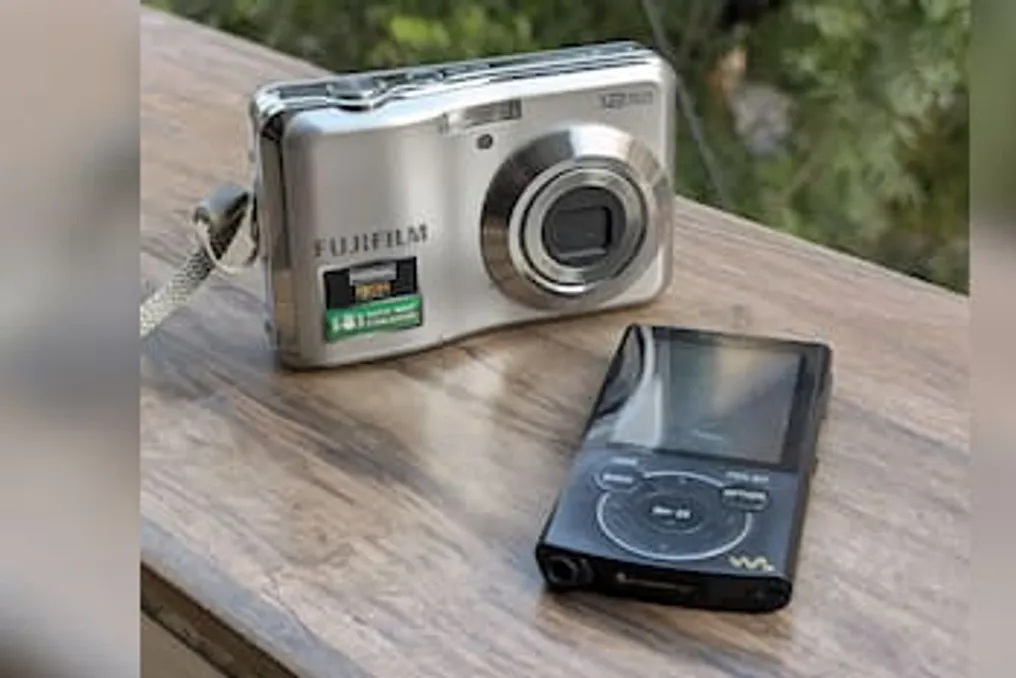
Despite smartphones being capable of performing most functions, consumers are increasingly paying attention to devices that perform fewer tasks. Gadgets such as compact cameras, wired headphones, and specialized music players are gaining new users as buyers seek to reduce distractions and gain greater control over their technology.
This choice does not necessarily mean a complete rejection of modern technology. Instead, some users prefer devices that limit certain types of activities—whether it is listening to music without notifications, taking photos without immediate publishing, or maintaining a music collection independent of streaming services.
This shift is noticeable in the personal audio market in India. Raghav Somani, founder and CEO of Headphone Zone, noted a significant growth in customers outside the traditional audiophile audience who are purchasing wired in-ear monitors, wired headphones, and standalone players for music listening.
Somani reported that the company is seeing 'approximately a tenfold increase in new people choosing wired in-ear monitors and standalone MP3 players for music listening.' This is particularly important given that these consumers already have more convenient options: smartphones can stream music, wireless headphones can play it without wires, and cloud services store libraries without the need to carry files.
It's Not Just an Audio Trend
A similar trend is observed in the point-and-shoot camera segment, a category that was expected to be displaced by smartphones but is now showing increased demand. Vishvesh Magu, Head of Cameras at Canon India, told the news portal Digit that the demand for compact digital cameras in India exceeds the current supply from Canon India by approximately ten times, corresponding to a demand-to-supply ratio of 1:10.
This demand is interesting because today compact cameras occupy a different niche compared to when they were the main alternative to mobile photography. Although smartphones are easier to carry and allow for instant editing and sharing of photos in seconds, the compact camera offers fewer such conveniences, and this is what makes it appealing.
Haruto Iwata, Managing Director of Fujifilm Asia Pacific, mentioned in an interview with Indian Express that young consumers in India are buying QuickSnap and Instax cameras, and Fujifilm India has named Instax one of the main drivers of growth. The company is also observing increased interest in compact cameras.
This trend is global. Data from the Camera & Imaging Products Association (CIPA) showed that shipments of cameras with built-in lenses, including compact cameras, grew by 29.6% in 2025, and their value increased by 48.9%. CIPA data for the first four months of 2026 also demonstrated a global growth in shipments of cameras with built-in lenses of 29.9% year-on-year.
These products do not necessarily compete with smartphones in terms of convenience; they offer a different experience. A compact camera cannot instantly transform into a messenger, a social media feed, or an entertainment device. An Instax camera cannot store thousands of photos and allow the user to scroll through them. These limitations are an integral part of the product.
Young Consumers Are Not Necessarily Looking Back
The resurgence in popularity of older devices is often mistakenly attributed to nostalgia, especially when outdated technology appears on social media. However, demographic data makes this explanation less obvious. Young consumers are not necessarily growing up using iPods, compact digital cameras, or wired headphones as their standard devices; for them, these items may be new, not old.
Somani sees similar changes in the audio sphere. He noted that traditionally audiophiles were an older group, but this category has expanded because young consumers have gained access to more affordable headphones and in-ear monitors. Somani emphasized: 'Young people were not traditional audiophiles before, but they are starting to take up this hobby because the products have become more accessible.' As a result, the traditional older demographic of audiophiles 'has undoubtedly expanded to a much younger demographic that is now involved.'
This distinction is important because it indicates that the appeal of these products is not necessarily based on prior personal experience with the technology. A young consumer buying a compact camera or a specialized music player might be reacting to what the device offers today, rather than trying to recreate a past feeling.
The Attraction Is Often the Limitation
What these products have in common is not so much their age as their ability to impose boundaries. A smartphone can take pictures, play music, stream videos, send messages, and work with a voice assistant, whereas a specialized gadget generally cannot do all of these things.
This can make the latter useful precisely because it eliminates choice overload. Somani explained that people who purchase specialized digital audio players often want to listen to music without interference from notifications, WhatsApp messages, or Instagram DMs.
He added: 'If you want to sit down and listen to music for even 10 minutes, two tracks, the listening experience on a digital audio player is probably exactly what most people want, just to get the smartphone out of the equation.'
The same principle applies to photography. A person carrying a compact camera is not necessarily trying to take better pictures than a smartphone can; perhaps they simply want the act of taking photos to remain separate from everything else happening on the phone.
This is where the concept of digital fatigue is relevant. Somani noted that consumers today are surrounded by numerous devices requiring their own charging, maintenance, and attention. He said: 'So, you charge your phone, you charge your smartwatch, you charge your power bank, you charge your AirPods. At some point, a person simply encounters digital fatigue.'
Thus, for some consumers, choosing a less connected device is not a complete abandonment of convenience, but a decision about where an additional level of connectivity should be placed.
Streaming Has Made Ownership Relevant Again
Smartphones and subscriptions to streaming services provide access to a huge catalog without the need to store content independently. However, this convenience also means that access depends on whether the platform continues to provide the content. Somani noted that some consumers are beginning to question this model.
The main issue is whether what is available on a streaming service today will still be available tomorrow. Somani pointed out: 'Now the second thing we are seeing recently is the idea that people don't want to stream music because they don't own the content.'
He compared this experience to video streaming, where movies and shows can disappear from the service's catalog. Somani gives examples: 'My favorite series on Netflix disappears one day, my favorite movie on, you know, Jio Hotstar disappears one day. An album I listened to my whole childhood is unavailable on the streaming service. I don't know if I want to live that life.'
For consumers thinking this way, keeping a personal collection on a dedicated device provides a degree of certainty that streaming does not offer. Somani cited this as one reason he returned to his 15-year-old iPod containing music he listened to as a child. He explained: 'I literally only listen to music on this 15-year-old iPod because it is filled with every song I listened to in my childhood.'
The preference for physical ownership is also visible in music formats. According to IMARC, the vinyl record market in India was valued at $62.1 million in 2024 and is projected to reach $112.5 million by 2033. Furthermore, according to the Recording Industry Association of America, CD sales in the US grew by 45.7% in the first half of 2026, and vinyl sales also continued to rise.
Simpler Gadgets in an Increasingly AI-Driven World
The timing of this trend is significant. Consumption technologies are moving towards greater interconnectedness. Artificial intelligence is being integrated into smartphones, headphones, watches, and other devices, and companies are increasingly positioning these products as systems capable of understanding context, anticipating needs, and performing tasks on behalf of users.
At the same time, some consumers intentionally choose products that cannot perform any of these functions. This does not necessarily make the two trends contradictory. One person might use an AI-enabled smartphone for work, wireless headphones for calls, and a compact camera for photography. A person might stream music most of the time but opt to use an old iPod for uninterrupted listening when desired.
Thus, the growing appeal of simpler gadgets is related more to the separation of activities that were once combined.