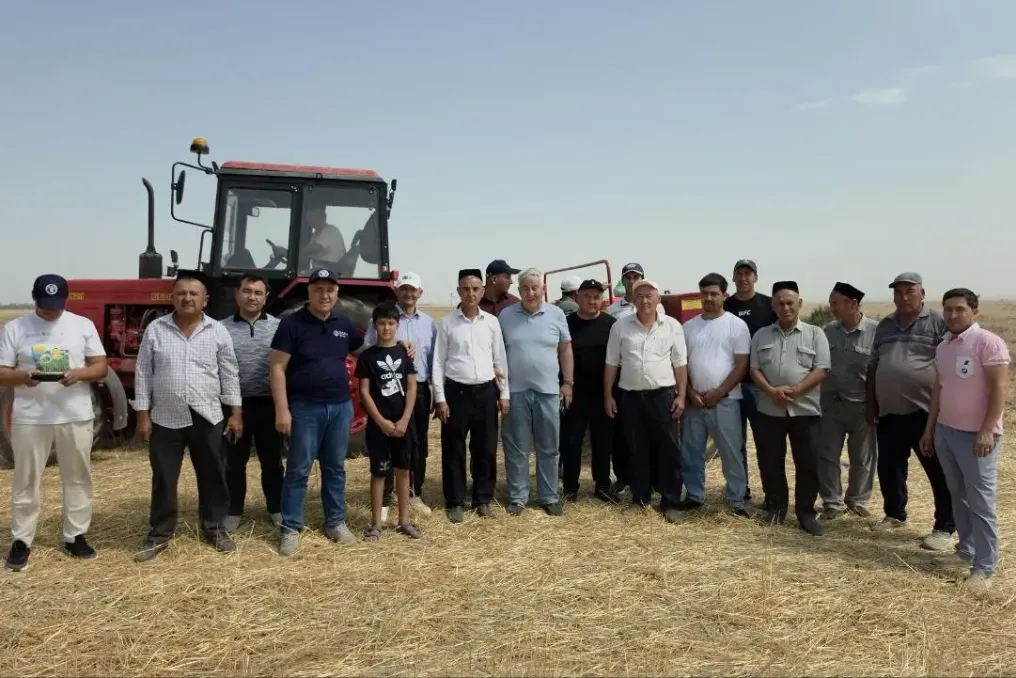
In the Kashkadarya region of Uzbekistan, farming methods aimed at soil conservation, including zero tillage technology (No-Till), are being introduced as part of the FOLUR-Uzbekistan project. This project is implemented with the support of the Food and Agriculture Organization of the United Nations (FAO) and is financed by the Global Environment Facility.
Training for Specialists
Training for trainers was conducted at the Southern Research Institute of Agriculture in the city of Karshi. Twenty researchers and agricultural specialists studied the basic principles of soil-conserving agriculture. Topics covered included no-tillage sowing, preservation of crop residues, crop rotation, and efficient water use.
Following the training, these specialists will transfer the acquired knowledge to farmers and assist in establishing field schools in the region.
Field Demonstration of the Technology
A field demonstration was also organized at the Javli Bobo Ugli farm in the Kamashi district. Wheat Nushkent was sown over an area of 40 hectares using a specialized zero tillage seeder. The field was not plowed; instead, seeds were placed directly through the layer of straw and crop residues left after the previous harvest.
Project specialists demonstrated the process of setting up and operating the seeder, paying special attention to planting depth and uniform seed distribution. Zero tillage technology minimizes mechanical impact on the soil, promotes moisture retention, reduces erosion, and decreases fuel and field preparation costs. The condition of the demonstration plot will be monitored throughout the entire growing season, and specialists will assess seedling emergence and other indicators.