South African municipal councils taking office will face increasing pressure related to managing risks in water supply, food security, healthcare, and the economy caused by the expected El Niño summer.
The country is approaching an 'ideal storm' in the fourth quarter. Firstly, there are elections in November, which could destabilize effective governance in several municipalities, many of which are already on the brink of collapse. The formation of new political alliances and the need to induct new councillors may take months to restart management mechanisms.
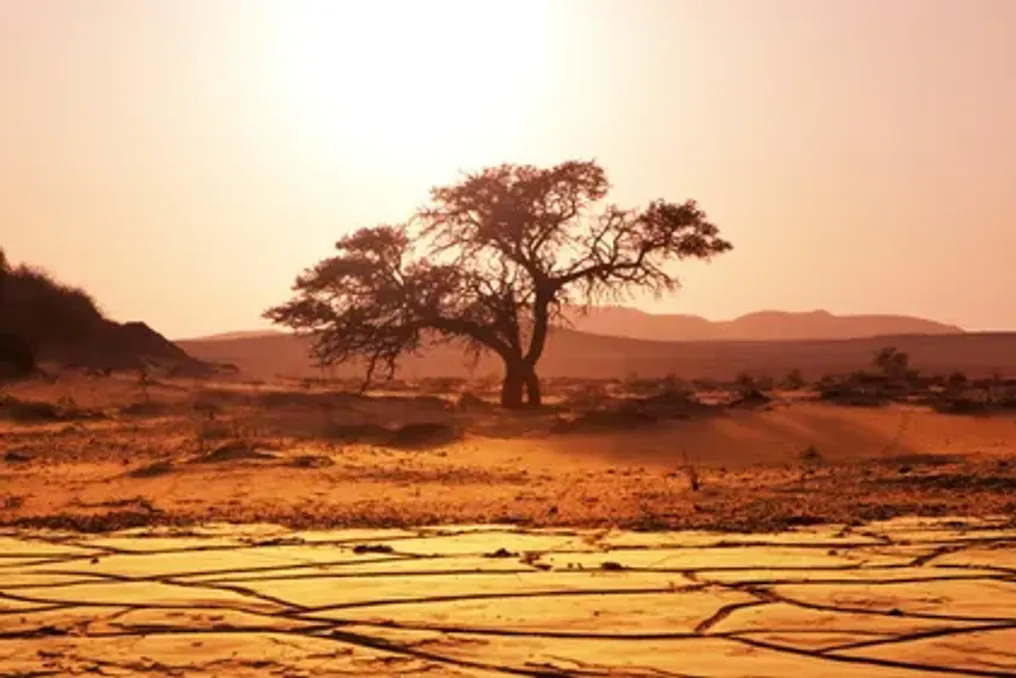
This puts many municipalities in a vulnerable position regarding the developing climate phenomenon of El Niño. Seasonal forecasts indicate reduced rainfall and increased temperatures in many parts of South Africa from October 2026 at least until March 2027.
The new group of councillors and mayors will begin their work, some of whom cannot read or write, which may lead to the threat of El Niño to national well-being not being perceived with due urgency.
Recently, the author participated as a panelist at the Nedbank Sustainable Development and Climate Leadership Conference at GIBS. The main problem associated with El Niño is not only drought but also the probability of a complex climate stress event. South Africa has demonstrated an ability to relatively well withstand periods of below-average rainfall, provided that dams, groundwater, soil, and municipal systems have sufficient reserves.
The danger arises when the rainfall deficit accumulates. Since all forecasts point to reduced precipitation, there is a risk of 'Day Zero' scenarios in some regions of the country, as well as isolated cases of extreme rainfall and flooding in other parts of South Africa.
El Niño Could Worsen Water and Food Instability
How will the new mayors and their councillors react to these vulnerabilities while trying to settle into their institutional duties simultaneously? Reduced rainfall negatively affects dams and agricultural viability. Food security becomes a serious problem.
Agriculture will be affected through several simultaneous channels: less rain and higher temperatures, decreased soil moisture, and heat stress lead to increased irrigation needs, which reduces yields. The Ministry of Agriculture has issued warnings about crop failure, livestock mortality, irrigation restrictions, as well as pests and diseases under hot and dry conditions.
Ultimately, all this will lead to the issue of inflation. Drought does not necessarily have to destroy the entire harvest; if it reduces production sufficiently, prices will rise. Poorer households will spend a larger portion of their income on food.
Thus, the climate shock turns into a socio-political shock. However, the story does not end there. We tend to view drought as a lack of rain. Extreme heat will be a more immediate threat than drought itself. The consequences of El Niño include rising temperatures. Heat represents a direct physiological stress.
Heat Will Increase Pressure on Healthcare and Energy Supply
SAWS warns that if the expected rainfall deficit materializes, more frequent severe heatwaves are likely. El Niño and anthropogenic warming will lead to heat-related illnesses and deaths, reduced productivity, increased demand for cooling, strain on hospitals, increased water consumption, livestock losses, crop damage, and increased fire risk.
Power stations will face pressure from two sides: reduced water availability and increased electricity demand. In the fourth quarter of 2026 and the first quarter of 2027, we are facing not 'just another drought,' but an event related to heat, energy, and water stress.
This is what makes complex climate events so dangerous: they are not limited to one sector. Fires, especially in informal settlements, will become a major secondary disaster. Higher temperatures, dry vegetation, low humidity, and dry soils create conditions where wildfires can spread rapidly. This requires much more attention.
Poorer Households Will Face the Greatest Risks
The poorest residents of South Africa will experience the consequences of El Niño most acutely, as people most dependent on informal livelihoods, agriculture, livestock farming, municipal services, and suffering from food and water shortages are particularly vulnerable. Besides being an environmental phenomenon, El Niño is also a distribution crisis.
With high levels of unemployment and poverty, poor households cannot afford to buy bottled water, install tanks, solar panels, improve insulation, or stockpile food before price increases. Their huts made of wood, zinc, and iron will turn into ovens in the coming summer. Infants, young children, and the elderly will be particularly susceptible to heat stress and dehydration.
New councillors will have to address issues of rainfall deficits, water restrictions, agricultural losses, rising food prices, heat stress, and increased demand for state aid. In many cases, this will lead to political conflicts over the distribution of scarce resources. They will quickly realize that understanding our climate crisis is an act of good governance. Future municipalities must demonstrate how well they manage scarcity.
How much money will be needed to respond to El Niño? What will it cost South Africa if it does not prepare before the consequences hit? We cannot rely on reactive spending. The government must invest in sound preventive spending. It must fund its ability to survive in a more unstable climate regime.
As preparation for a major climate event, we need to ask a more uncomfortable question: are candidates running for municipal office ready to manage the economic and social consequences that may accompany El Niño? Climate competence is now a more pressing qualification for political and public leadership.