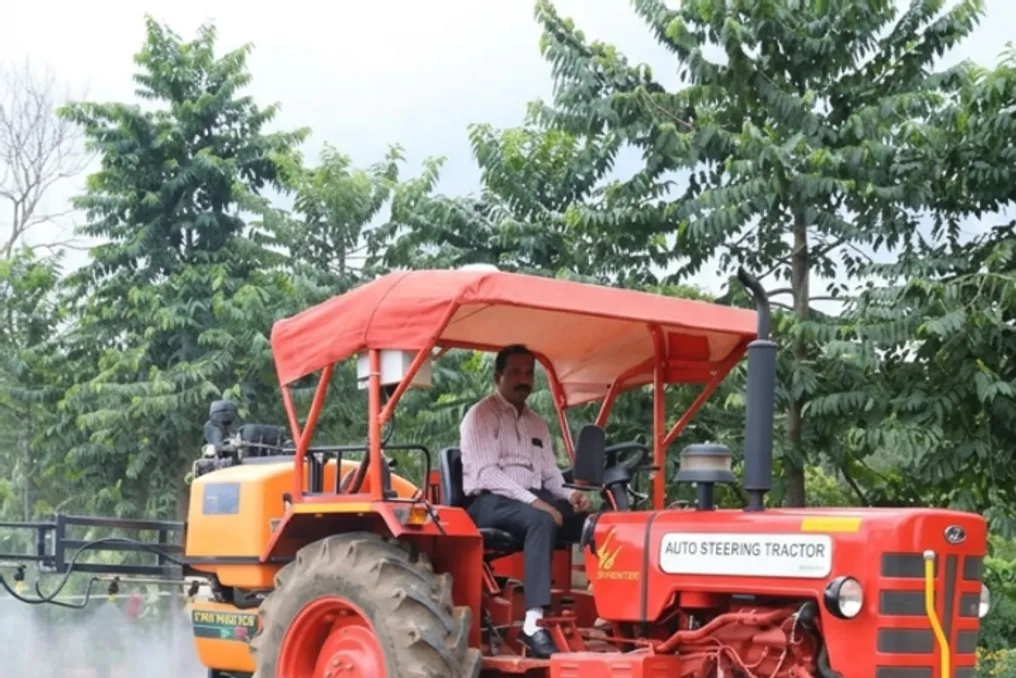
Four Indian farmers created their own agricultural machinery due to high labor and tractor costs
Read more
The Better India
thebetterindia.com

Four Indian farmers created their own agricultural machinery due to high labor and tractor costs

In India, farmers do not just use ready-made machines; some of them construct their own equipment. These four farmers turned everyday agricultural problems into practical inventions, creating everything from harvesters to mini-tractors.

In the village of Sodjan, near Vidisha in Madhya Pradesh state, Bagwan Singh Dangi, who grew up surrounded by farming and machinery, decided after finishing 12th grade to create tools to simplify field work. When labor shortages slowed down soybean harvesting, Dangi developed a harvester attachment for tractors. Its roller neatly guides the crops before cutting, which helps reduce grain loss and bean scattering.

Unlike standard harvesters, his machine collects the cut crops in the center, which facilitates maneuvering without damaging standing plants. Furthermore, this reduces the need for labor to only three or four people.

In Dharwad, Karnataka state, Abdul Hader Nadakkattin began his inventions at the age of 14 when he created an alarm clock that sprayed water to wake him up. This early interest in technology later transformed his approach to agriculture. Known as the 'Barefoot Scientist,' Nadakkattin developed over 40 folk innovations, including devices for quickly separating tamarind seeds and a seeder that simultaneously sows seeds and fertilizer.

His sugarcane seeder is capable of loosening the soil, cutting bunches, placing them, and covering them in a single pass of a tractor. His developments focus on making agricultural work more accessible, efficient, and economical for small farmers.

Gurmeet Singh Bhupal

Gurmeet Singh Bhupal from Hanumangarh, Rajasthan, received education only up to the third grade before joining the family farm. His interest in making mechanisms eventually led him to create machinery for farmers. For farmers growing cotton, spraying pesticides required workers to walk alongside tractors and operate the spraying equipment. Bhupal designed an automatic tractor-powered sprayer to eliminate this tedious and dangerous manual labor. His machine uses hydraulic manipulators and semi-rotating spray heads for automatic field coverage. With a working width of 23 meters, it can process up to 5 hectares per hour, consuming about 2 liters of fuel.

Namdeo Radhakrushna Anerao

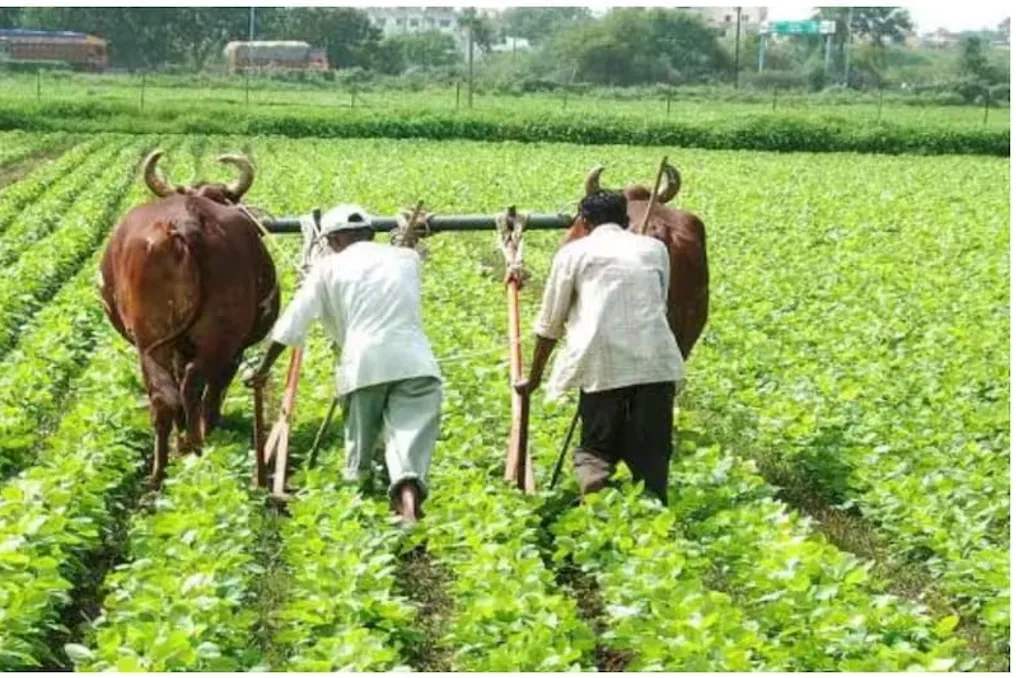
In the drought-prone region of Pimpalner, small farmer Namdeo Radhakrushna Anerao faced high labor costs and the expense of maintaining oxen. Therefore, he decided to create his own solution. Using scrap metal and locally available parts, Anerao spent three years developing a compact three-wheeled farm machine. The cost of his first prototype was only 35,000 rupees. This machine can be adapted for sowing, fertilizing, plowing, or weeding. Commercial versions cost approximately between 56,000 and 65,000 rupees, offering small farmers an alternative to expensive tractors and oxen.
Similar stories

Four government programs for farmers: from financial aid to subsidized loans and pensions
Read more
www.aajtak.in

Four government programs for farmers: from financial aid to subsidized loans and pensions

Income from agriculture depends not only on a good harvest. Sometimes the costs for seeds and fertilizers increase, sometimes the weather nullifies all the efforts of farmers, and sometimes the most difficult task is attracting funds for running the farm. In such situations, if farmers can take advantage of certain government programs, their financial burden can be significantly reduced. It is important to note that these programs provide not only support in agriculture but also protection against debt and financial security in old age.

Let's look at four government initiatives that are useful for farmers:

During the agricultural season, farmers need funds to purchase seeds, fertilizers, pesticides, and other necessary materials. The PM-KISAN program helps during this period. According to this program, the central government provides financial assistance of 6000 rupees annually to eligible farmers. This amount is transferred in three equal installments of 2000 rupees directly to the farmer's bank account, which can use this money to cover urgent agricultural expenses. Some regional governments also provide additional financial support on top of the PM-KISAN amount.

The main concern for a farmer is the harvest. After great effort and expense, if the crop is destroyed due to flooding, drought, heavy rain, or pest infestation, it will be difficult for the farmer to cover even their initial costs, let alone make a profit. The Pradhan Mantri Fasal Bima Yojana (PMFBY) program is designed to protect farmers from such risks. Farmers can insure their crops at a reduced premium. Depending on established rules and the circumstances of the damage, the insurance provides financial assistance, which can reduce the financial burden on the farmer in case of total crop loss.

Another serious problem for farmers is ensuring financial stability in old age. The PM-Kisan Mandhan Yojana (PM-KMY) program can be useful for solving this problem. Small and marginal farmers aged between 18 and 40 can join this program. The farmer makes monthly contributions according to their age. Upon reaching 60 years of age, a pension payment of 3000 rupees per month is provided, guaranteeing a certain income in old age, even if agricultural earnings decrease.

Sometimes a farmer needs money before sowing, but the funds do not arrive on time. In such a situation, the Farmer Credit Card (KCC) is very useful. With it, a farmer can take out a loan directly from the bank for agricultural needs and related activities. Financial support is provided not only for crop needs but also for animal husbandry. Depending on compliance with requirements and rules, relief on the loan interest rate is provided. The advantage of this tool is that it helps the farmer reduce dependence on expensive loans from moneylenders to cover farming expenses.

Analyzing these four programs, it is clear that each one addresses the specific needs of the farmer. 'PM-KISAN' helps with initial farming expenses, the crop insurance program reduces the risk of losses from natural disasters and bad weather, 'Kisan Mandhan' provides a pension in old age, and 'Kisan Credit Card' helps meet the need for credit to run agriculture.

Popular