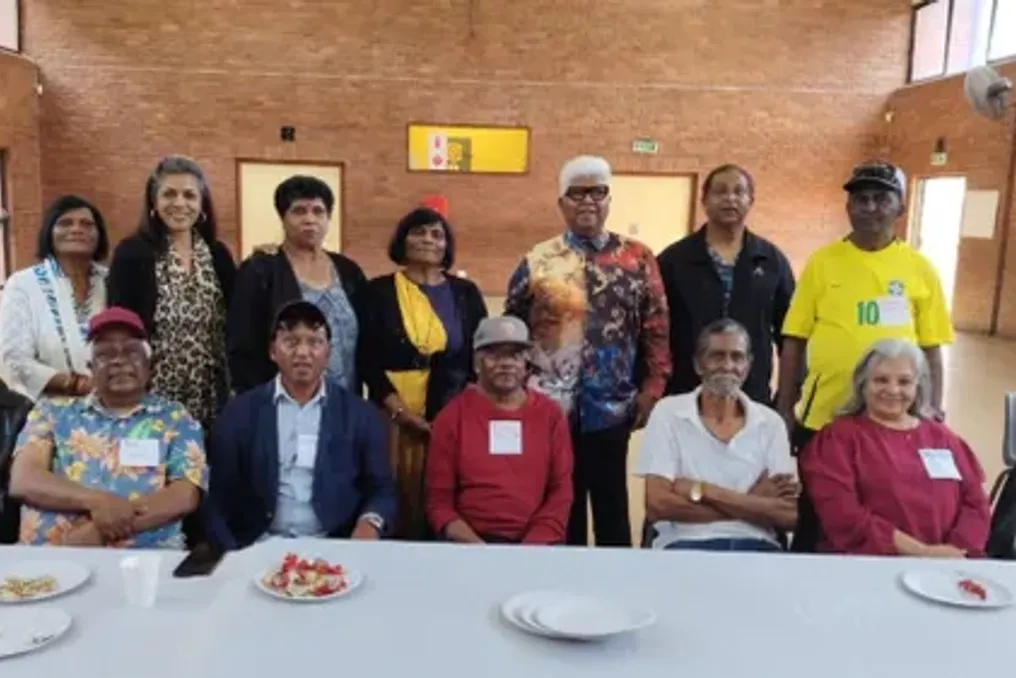
A small group of elderly people recently gathered at the Greenbury Hall in Phoenix to mark an important date—the 60th anniversary of the graduates of Wentworth State School, a government-funded school in India that was affectionately called Cabbage Primary School due to the extensive cabbage fields surrounding it.
This gathering brought together about fifty former students aged between 60 and 80 from areas such as Chatsworth, Merebank, Carwood, and Phoenix. For them, it was not just a reunion, but an opportunity to honor shared memories, heritage, and the strong friendships forged over the years of study.
Although the exact opening date of the school remains uncertain, some older individuals believe it might have occurred in the 1940s. According to participants, the school was established to serve the children of migrant workers who decided to stay in South Africa after completing their contracts. Children of passenger immigrants who settled in the region in the early 1900s also attended the school.
Families in the area made a living through fishing and selling vegetables at the local fresh produce market. As the population grew, the community recognized the need for an educational institution, leading to the establishment of Wentworth State School, funded by the Indian government, near the Wentworth railway station.
83-year-old Dan Govender from Phoenix recalled the early days of the school and the close-knit community it served. He recounted that the construction of Cabbage Primary School initially began with about four families. The first block included ten classrooms and was built in approximately six months or a year solely by local residents, with each family contributing to the fundraising for the facilities.
After construction was completed, the school expanded with government support, receiving a second block that formed the recognizable letter 'L'. Govender also remembered simple joys, such as enjoying delicious cocoa and savoring 'a thick layer of butter and jam on brown bread.'
However, as the 1960s approached, the introduction of the Group Areas Act changed the face of the community. Families were forcibly evicted, and shortly thereafter, the school was demolished.
Despite the loss of the physical structure, nostalgia flared up during the reunion. Former students, such as 70-year-old Solly Singh from Phoenix, shared memories of their childhood. Earlier this year, Singh created a WhatsApp group to reconnect with former classmates, which led to the organization of this reunion.
Singh noted that students came from Lingum Road, Dayal Road, Tickwood Road, Yuston Road, Bluff, Bayside, Brighton Beach, West, Finland, Kings Rest, and surrounding areas. They carried wooden wheelbarrows loaded with firewood and coal, played 'five stones and three jars', and most often went barefoot.
He concluded: 'Sixty years later we met. We have changed over time, but the stories brought so much laughter. The school may disappear, but our memories live on.' Singh, born in 1955, attended the school from first grade to sixth grade. He recalled that his family home was near the teachers' quarters, and he remembered how the teachers shared food with his family.
Singh, an active athlete specializing in javelin throwing and long jump, said the school was fun and exciting. He noted that the teachers cared for them but also maintained discipline. He also remembered the numerous fruit and vegetable farms around the school, from which students harvested crops. Singh recalled picking fruits such as guavas, avocados, and madonias, as well as catching guppies in wastewater used as bait for larger fish to feed their families. They also sold this bait to fishermen, using the money earned to buy sweets.
Another vivid memory was shared by Gonavathi Govender, 83, from Mount Edgecombe Estates. She spoke about the treats her father brought from a nearby whaling station. 'My father would bring us pieces of whale meat,' she said. 'We would wash, boil, and cook the meat in curry.'
At age 11, she was also crowned Miss Diwali during the annual Diwali celebrations at the school. She emphasized that this event was not just a beauty contest, but a celebration of cultural pride. 'All the little girls would dress up and participate in the procession during the festivals. I remember we had to use red food coloring as lipstick because the cosmetologist was absent.'
Govender, who was also athletic, recalled students bringing bricks from home to build the school's tennis court. She had to leave school at 16 to care for her younger siblings. 'My teachers would come home to persuade my mother to let me stay in school because I did well in all subjects, but she refused. My mother was a businesswoman and helped at my uncle's stall at the market. Later, she also sold vegetables at the market. My father worked at API (Amalgamated Packaging International) in Mbeneni, making cardboard and gift boxes for the local and export markets.'
As each elder introduced themselves and shared their memories, attendees decided to initiate more meetings and document their oral history in a book.