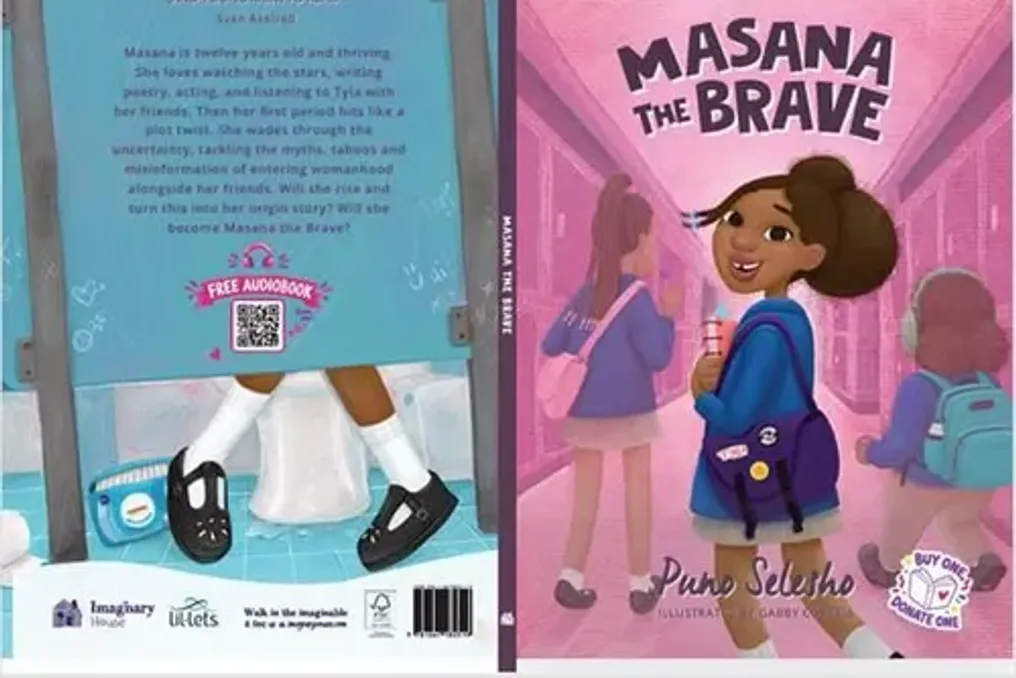
A new illustrated children's book, 'Masana, the Brave: A Story of Growing Up,' was released this month by South African author Puno Selesho. The book uses the story of a young girl to initiate conversations about menstruation, puberty, and growing up, serving as an educational tool to combat the stigma and silence surrounding menstruation.
Selesho noted that the collaboration became possible after her previous work with Lil-Lets as part of a social media campaign called 'Be You Period.' The goal of this partnership was to turn period information into a story understandable to young readers. Selesho emphasized: 'Sometimes a period can be the moment when a flower wilts. So this was just our way to do everything possible so the flower could bloom.'
The book is written by Selesho and illustrated by Gabby Corey. It tells the story of Masana—a bright and confident girl who is a dreamer, an artist, and loves her family, community, and dog. Masana experiences uncertainty when she starts menstruating, showing young readers that even confident girls can experience complex emotions during bodily changes.
Selesho explained that it was important for her to present this message through a story because traditional educational materials were difficult to grasp. She stated: 'Bravery means being able to keep showing up, even when I don't feel well.'
The author also addresses cultural norms and messages that can turn menstruation into a source of shame. Selesho mentioned that some girls hear that starting menstruation means they stop being girls, while others may internalize that menstruation makes them dirty or impure. Instead of claiming the book resolves these beliefs, Selesho said it is intended to give families a starting point for conversations, asserting: 'We created a tool that starts conversations and says that it is actually normal.'
Feedback from early readers and adults also highlighted the need to discuss menstruation. Some mothers told her they wished they had access to a book like 'Masana, the Brave: A Story of Growing Up' in their time, while some fathers called the book a useful starting point for conversations with their children.
Reflecting on her own experiences, Selesho shared that she wishes she had known that menstruation does not mean the end of childhood or freedom. She believes that 'life actually goes on, and it is the beginning of something new. It doesn't necessarily mean the end.'
Through this book, Selesho hopes to make practical period information more accessible while encouraging communication among parents and children, boys and girls, and young people themselves. She also hopes the story will inspire girls to see themselves as future writers, illustrators, and storytellers. Selesho concluded: 'I never want childhood taken away from a child. Let the wonder, joy, and magic of simple childhood live, even amidst changes in the body and in society.'