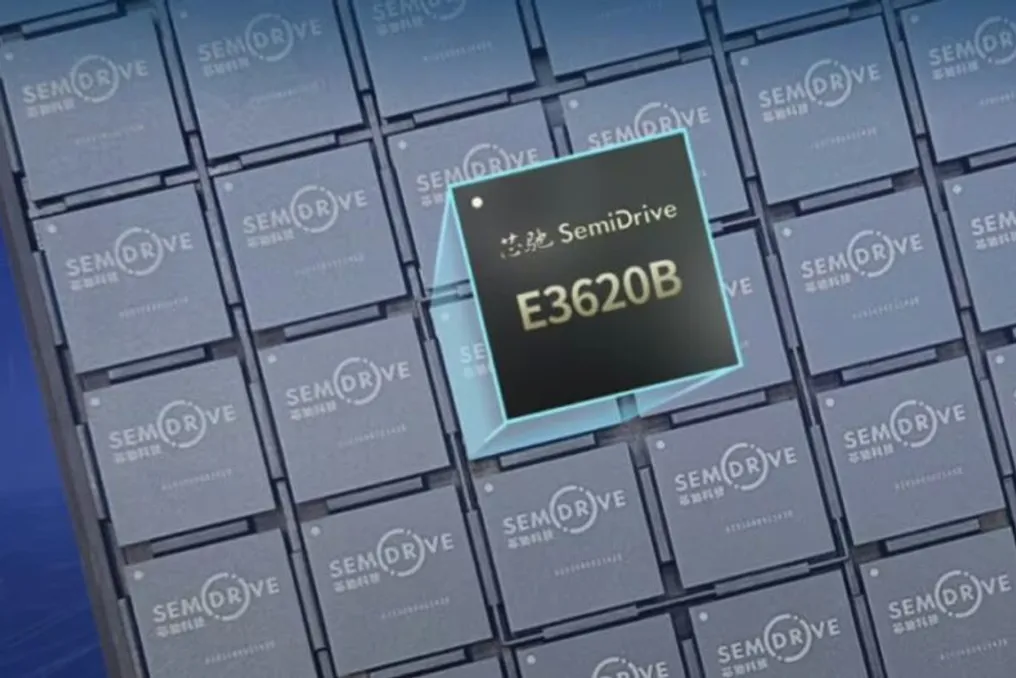
Automakers are increasingly moving away from numerous individual electronic control units in favor of centralized electrical architectures. Most modern smart cars use separate chips for the dashboard, camera, and a gateway that integrates all systems.
The Chinese startup SemiDrive aims to create a powerful system-on-chip solution capable of performing multiple functions simultaneously. To this end, SemiDrive has raised $150 million to support the full portfolio of this new architecture.
The company announced a Series C extension round of $150 million, increasing the total funding from seven rounds to over $500 million. This round followed a previous $100 million Series C funding, against a backdrop of automotive chip shipments exceeding 14 million units.
Initially, the company started with three chips for the smart cockpit, autonomous driving, and central gateway, later expanding its lineup to four main series that now cover almost all major categories of chips for next-generation electric architectures.
The company's product line is built around four families. Together, these four series form a comprehensive solution for next-generation electrical architectures, which many Chinese automakers prefer over sourcing chips from five different foreign suppliers.
From January to May 2026, the market for passenger vehicle cabin controllers in China continued to grow. Qualcomm maintains leadership with a share of about 71.8% and 2.7 million units, followed by Huawei with 7.3%, while SemiDrive joins the growing group alongside AMD and MediaTek.
Exceeding 14 million cumulative shipments puts SemiDrive ahead of most domestic competitors. The company reported serving over 260 clients and having nearly 200 projects slated for mass production, covering over 90% of Chinese automakers and several international major automakers. Previously, less than 10% of its chips were used in exported vehicles, but this share is expected to grow.
This figure also demonstrates scale. Automotive chips differ from phone chips in that each chip must undergo rigorous safety certification and vehicle-level testing, which can take two years. Reaching the 14 million shipment mark means the chips have passed this long cycle and are already installed in real vehicles on the road.
The $150 million raised will be directed towards three priority tasks. Firstly, strengthening research and development of more advanced automotive chips using cutting-edge process nodes. This could accelerate the commercial application of autonomous vehicles, including the next-generation AI cockpit chip X10 and the V9S central computing platform.
Secondly, bolstering large-scale mass production and service capabilities. Automotive supply requires a guarantee of production capacity for a decade, necessitating deep partnerships with semiconductor fabrication plants and Tier 1 suppliers.
Thirdly, accelerating global expansion. With over 8 million chips deployed by 2025 and now 14 million in total, the company's partner network already comprises over 200 companies, encompassing operating system developers, algorithm providers, and Tier 1 suppliers.