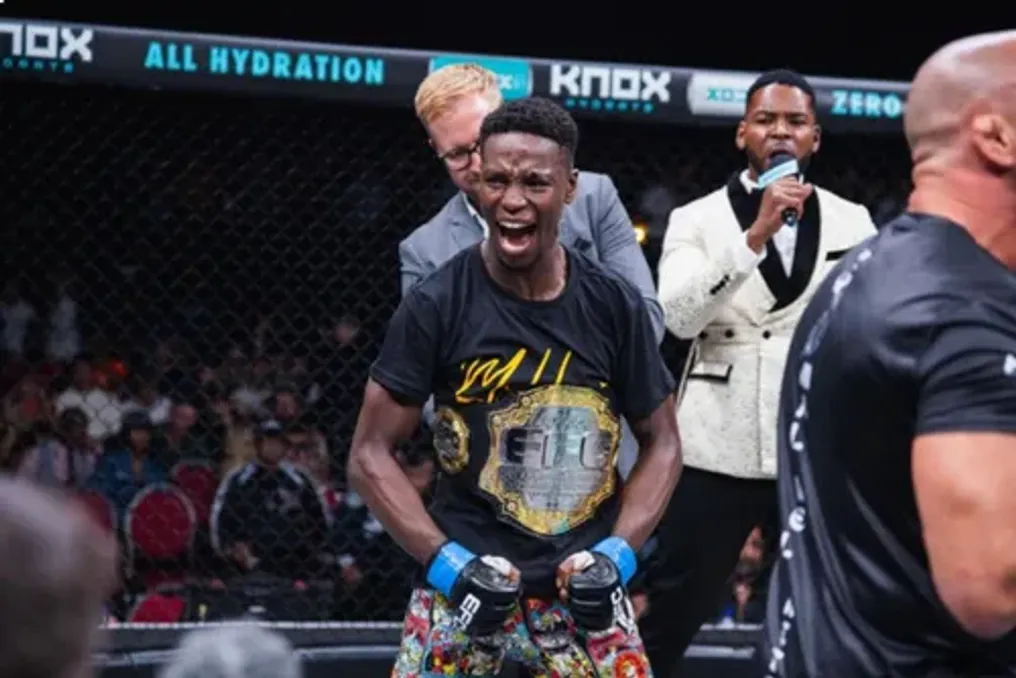
The sport, once dubbed the 'human cockfight' and previously banned in many parts of the US, is now actively seeking inclusion in the Olympic program. Mixed Martial Arts (MMA) debuts at the Asian Games in Japan this week, marking an important step that fighters and organizers hope could lead to greater achievements in the future.
Galstein Tan, CEO of the International Mixed Martial Arts Federation, noted that participation in the Asian Games represents a 'big step.' He told AFP in Nagoya that inclusion in continental competitions demonstrates a sound management structure, sufficient membership and athletes, as well as readiness in rules and judging.
In a compact hall resembling a school gymnasium, men and women compete in separate categories before a modest but enthusiastic audience. Participants include countries with rich histories of combat sports, such as Thailand, Kazakhstan, the Philippines, and the host nation, Japan.
Inspiration for the New Generation
For fans of the Ultimate Fighting Championship (UFC), a promoter closely associated with the sport, there is one significant difference. In the UFC, where an event took place on the South Lawn of the White House in June, fights occur inside an octagon cage. However, at the Asian Games, athletes fight on a white-gray mat without being enclosed.
Tan believes that for martial arts masters accustomed to cage fighting, adapting to open space is difficult because 'caging does not entirely align with Olympic values.' One of the main obstacles in MMA's path to the Olympics is achieving consensus among all parties regarding competition rules, including permissible techniques.
Teo Hui Hoon from Singapore, who is guaranteed at least a silver medal, stated that recognition from the Asian Games and the Olympics motivates an entire generation to engage in the sport. She emphasized that this will significantly expand the talent pool and encourage more children and teenagers to take the sport seriously, as there is now a clear pathway: join the national team and then aim for the Olympics.
MMA is not the only sport debuting at Asia's premier sporting event and aspiring to reach the Olympics; these include tekvol—a hybrid of football and table tennis—and the rapidly growing racket sport padel. This creates a competitive environment among many other sports with Olympic ambitions.
MMA has much work and political lobbying ahead of it. Tan reported that they have been negotiating with the IOC and other stakeholders influencing the sport's recognition. Furthermore, Dana Mitchell, head of the UFC, openly supports its inclusion in the Olympic Games.
Among other issues on the long road to Olympic recognition is the opinion that MMA is too violent. Nevertheless, thanks to the phenomenal success of the UFC, MMA has become mainstream, which is vastly different from the 1990s when U.S. Senator John McCain compared the early version of the sport to cockfighting. It is also crucial that all of MMA unites around a single governing body to achieve an Olympic spot.
Tan expressed optimism, noting that Los Angeles in 2028 is too early, followed by Brisbane in four years. He stated: 'Nothing is impossible.' He hopes that the Olympics will find significance in MMA and be able to connect with both adults and youth, as it is a globally appealing sport ready for inclusion in major competition schedules. He added: 'If the IOC or LA28 reaches out and asks if MMA wants to participate as a medal or demonstration sport, we are ready.'