
NSE IPO attracts fourfold interest; analysts provide investment recommendations
Read more
Aaj Tak
www.aajtak.in

NSE IPO attracts fourfold interest; analysts provide investment recommendations

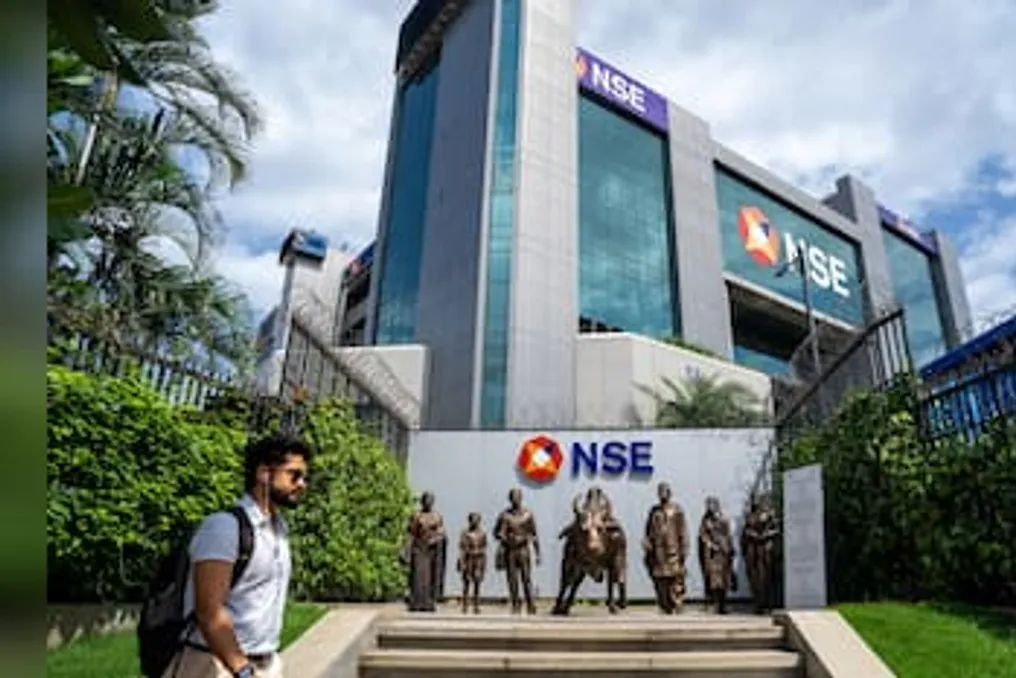
The deadline for deciding on an investment in the NSE IPO is approaching, with only a few hours remaining. This IPO opened on September 17, and the subscription window is about to close. The total volume of the NSE IPO is 225,615.7 crore rupees, and this entire mega-offering represents an Offer for Sale (OFS) to shareholders.

The IPO price range is set between 1,700 and 1,785 rupees per share. The minimum amount a retail investor must invest per lot is 14,280 rupees, as one lot includes eight shares. Since the offering is entirely an OFS, the funds from the IPO will go to the shareholders, and the company will not receive new financing. The company attracted 674.618 crore rupees from anchor investors.

NSE is India's largest and leading multi-cap exchange globally. NSE's market share in the money market reaches 99.79%, and in the stock options market—about 99.48%. For the fiscal year 2026, the company recorded total revenue of 187,133.7 crore rupees and a net profit after tax (PAT) of 103,020.6 crore rupees. In the first quarter of the 2026 fiscal year, the company earned a net profit of 3,120.08 crore rupees.

On the last day of the NSE IPO, it was subscribed approximately 4.17 times. Meanwhile, the QIB quota was filled 8 times, the NII quota 5.56 times, and the smallest category of retail investors 1.18 times. Retail investors show low enthusiasm for this IPO. Nevertheless, many major brokerage houses recommended investing in this IPO for the long term.

Experts note that a significant portion of investors are opting out because the IPO is exclusively an OFS, as well as due to the low grey market premium (GMP). As of Monday at 2:00 PM, the GMP was less than 5 percent, which reduces the likelihood of making a significant profit upon listing.

Despite this, experts believe that NSE is a good company and a market leader. They believe that NSE will benefit the most from India's economic growth and the increasing participation of retail investors in financial markets. The company has the potential to become a key stock in a long-term portfolio.

Typically, large investors participating in OFS IPOs make significant profits and withdraw their funds, but the situation with NSE is different. NSE's largest institutional shareholder, LIC, which owns 10.72% of the shares, did not sell a single share in this IPO. Other key shareholders, such as Aranda Investments, State Bank Capitals, and ChrysCapital, decided to sell only an average of 7% of their stakes.

policy_notes:
Similar stories

India's National Stock Exchange IPO attracts unexpectedly high demand, book size reaches over 6000 crore rupees
Read more
business-standard.com

India's National Stock Exchange IPO attracts unexpectedly high demand, book size reaches over 6000 crore rupees

The National Stock Exchange of India (NSE) reported that its Initial Public Offering (IPO) attracted 'unexpectedly large' demand, significantly exceeding the number of shares available for distribution, stated Managing Director and CEO of NSE Ashishkumar Chauhan on Tuesday.

Chauhan did not disclose the ratio between Domestic Institutional Investors (DIIs) and Foreign Portfolio Investors (FPIs), noting that the allocation process is still ongoing. He also mentioned that the initially expected book size of around 9000 crore rupees was reduced to over 6000 crore rupees, despite sustained high demand.

'The demand is unexpectedly large,' emphasized Chauhan, adding that the offering interested a large number of investors wishing to acquire a limited number of shares.

The allocation will be made among various categories of institutional investors, including domestic mutual funds, other domestic institutions, and FPIs, in accordance with prevailing regulations. The NSE IPO is scheduled to begin subscription on September 17 and conclude on September 21. The price band is set at 1700–1785 rupees per share. The offering is a Follow-on Public Offer (OFS), wherein existing shareholders sell up to 12.64 crore shares; no new NSE shares are being issued.

Chauhan also noted that initially, some shareholders were reluctant to sell their stakes at the proposed valuation, which led to a reduction in the offer from the previously stated 6.2% to 5.11%. Furthermore, NSE had to approach some of its shareholders to participate in the OFS so that the exchange could meet listing requirements.

Listing the exchange will provide existing shareholders with a more transparent and liquid way to realize their assets. Currently, NSE shares trade in a private market, where shareholders may face increased transaction costs and counterparty risks, according to Chauhan.

According to the company's IPO prospectus, the shares will be listed on BSE. Regarding pricing, Chauhan clarified that the company's bankers consulted with investors both in India and abroad, including large institutions, mutual funds, pension funds, and retail investors. He explained that during discussions, it was decided to maintain the option for retail investors.

The proposed IPO comes as NSE remains India's largest stock exchange by turnover in several key segments. According to the IPO prospectus, as of June 30, 2026, NSE accounted for 93.05% of India's money market turnover and 68.48% of equity options turnover based on the premium turnover for the three months ending June 2026.

Chauhan also refuted the notion that NSE's operations heavily depend on weekly options. He stated that weekly options currently account for about 42% of NSE's total revenue, compared to 60–70% three to four years ago. The rest of the revenue comes from monthly index options, equity options, stocks, equity futures, colocation services, data, indices, and other business areas. The exchange has also expanded its activities into various asset classes, including equities, currencies, commodities, interest rates, and power.

NSE's integrated business model includes exchange listings, trading, clearing and settlement, indices, and market data. Chauhan explained part of the decrease in NSE's EBITDA margin last year due to a large one-time fine, noting that the exchange's normalized EBITDA margin remained in the range of 76–79% over the past five years.

As per the company's IPO prospectus, NSE's consolidated operating revenue grew by 9% year-on-year to 4560 crore rupees in the quarter ending June 2026, and net profit increased to 3121 crore rupees compared to 2811 crore rupees the previous year.

Chauhan stated that NSE's investor base has significantly expanded beyond major cities in the country, and the exchange will continue efforts to attract more investors and companies from regions such as Jammu and Kashmir, Northeast, Odisha, Jharkhand, and Chhattisgarh to the capital market. As of June 30, NSE had 13.237 crore unique registered investors and 26.136 crore registered investor accounts, with investors spread across over 99% of India's postal codes. 3005 organizations are registered on the exchange platform with a cumulative market capitalization of 474.08 trillion rupees.

NSE sets IPO price band at ₹1700–₹1785; subscription begins September 17
Read more
yourstory.com

NSE sets IPO price band at ₹1700–₹1785; subscription begins September 17

The National Stock Exchange (NSE) has determined the price band for its highly anticipated Initial Public Offering (IPO) at ₹1700–₹1785 per share. Subscription for this offering will commence on September 17.

The total IPO size will be ₹22,569 crore and will conclude on September 21. This will make it the second-largest public offering in the country after Hyundai Motor India's offer of ₹27,870 crore in 2024.

This IPO takes place nearly a decade after NSE's plans to list were suspended due to regulatory hurdles. Now that approval has been received from Sebi, the exchange plans to debut in the market on September 24.

According to the public announcement, the auction for anchor investors will take place on September 16. The IPO will entirely consist of an Offer for Sale (OFS) of up to 12.64 crore shares among existing shareholders, which is less than the previously planned 14.9 crore shares.

The reduction in the OFS volume led to a decrease in the overall issue size from the initial estimate of ₹30,000 crore. At the lower end of the price band, the issue is valued at ₹21,494 crore, and at the upper end, at approximately ₹22,569 crore, which will prevent it from becoming the largest public offering in India.

The NSE IPO will surpass the Life Insurance Corporation of India's offering of ₹21,000 crore, which took place in 2022, but Hyundai Motor India retains the record for the largest public offering in the country with its ₹27,870 crore proposal.

As part of this offering, the company has reserved shares worth up to ₹70 crore for eligible employees. NSE employees will also be offered a discount of ₹170 per share.

Share allocation will include a 50% reserve for qualified institutional buyers, 15% for non-institutional investors, and 35% for retail investors.

According to the Red Herring Prospectus (RHP), existing shareholders have also reduced the volume of their stake sales. State Bank of India has reduced its proposed OFS to approximately 1.60 crore shares from 2.47 crore shares, and MS Strategic (Mauritius) Ltd has reduced its offer to 1.1 crore shares from 1.6 crore shares.

Bank of Baroda, Stock Holding Corporation of India Ltd, and General Insurance Corporation of India have also reduced the volume of shares offered for sale, while SBI Capital Markets Ltd is a new selling shareholder in the RHP.

Since the offering is entirely an OFS, the proceeds from the share sale will go to the selling shareholders, not to NSE itself.

This public offering marks a significant milestone for NSE after the market regulator Sebi granted the exchange permission to conduct the offering last week. Listing plans had been frozen for almost ten years due to regulatory issues, including a dispute over co-listing.

The NSE offering will compete with the Jio Platforms offer, a digital services division of Reliance Industries conglomerate led by billionaire Mukesh Ambani. The Jio offer is valued at ₹37,700 crore, although its timeline has not yet been announced.

Wave of IPOs expected in Indian stock market this week, attracting funds from 12 companies
Read more
www.aajtak.in

Wave of IPOs expected in Indian stock market this week, attracting funds from 12 companies

The Indian stock market is preparing for a significant surge in Initial Public Offerings (IPOs) this week. Between September 7 and 11, 12 companies are set to enter the market, planning to raise approximately 7,180 crore rupees from investors.

These IPOs are taking place at a time when major IPOs, such as NSE, are also anticipated later this month.

The total volume of these 12 IPOs amounts to approximately 7,179.84 crore rupees. Some companies will raise capital by issuing new shares, while others will allow existing investors to sell their stakes. Of the total issuance, about 2,814.10 crore rupees will be raised through fresh issues, and 4,365.74 crore rupees will come through an Offer For Sale (OFS).

The largest IPO this week is Rentomojo with a volume of 1,255.57 crore rupees, while the smallest will be Manika Plastic's offering at 125.50 crore rupees.

The companies entering the market this week represent various sectors. The IPO of Pranav Constructions will be available from September 7 to 9. Following that, the IPOs of Glas Wolf Systems, Prasol Chemicals, and Kanohar Electricals will open to investors from September 8 to 10.

From September 9 to 11, investors can participate in the IPOs of Karmatar Engineering, LCC Projects, Steamhouse, Manipal Payment and Identity Solutions, Asset Reconstruction, and Rentomojo. Additionally, Vigaland Developers' IPO will be open from September 10 to 15, and Manika Plastic's from September 11 to 16.

It is important to note that the Asset Reconstruction IPO is entirely based on OFS, meaning the company is not issuing new shares as part of this offering.

To participate in these IPOs, retail investors will need to invest an average of 14,500 to 15,000 rupees per lot. Karmatar Engineering's IPO requires the highest amount, around 14,986 rupees per lot, while a lot in Kanohar Electricals can be purchased for approximately 14,536 rupees.

The simultaneous appearance of so many IPOs provides investors with numerous options; however, due to limited capital, choosing between different offerings may prove difficult.

Despite the total IPO volume of 7,180 crore rupees this week, market attention is also focused on two potential mega-IPOs. According to reports, the proposed NSE IPO could be around 30,000 crore rupees and might appear in the week starting September 21. Furthermore, Jio Platforms has received SEBI approval, and its IPO could reach a volume of approximately 37,700 crore rupees.

If this size is maintained, it could surpass the Hyundai Motor India IPO of 27,859 crore rupees and become the largest IPO in the country. Thus, high activity is expected in the primary market over the next few months.

Good IPOs are often oversubscribed several times, after which allocation is done via lottery. In such a situation, applying for 1 lot from different demo accounts linked to family members (parents, spouses, siblings) using their separate PAN cards significantly increases the probability of receiving an allocation.

Popular