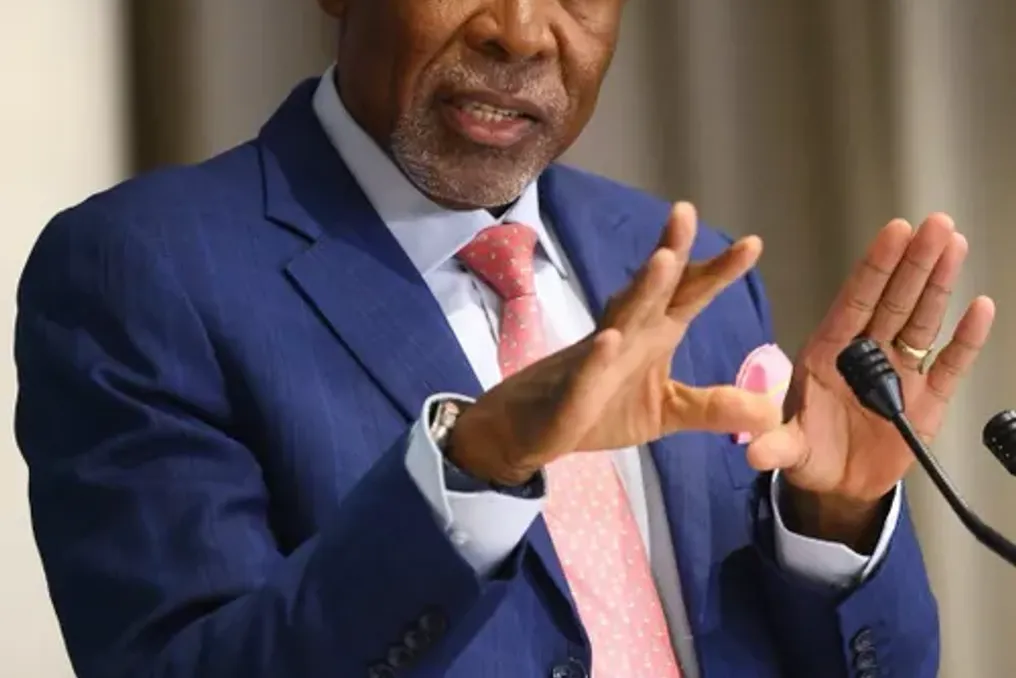
Financial markets are anticipating an interest rate hike in South Africa on Wednesday as rising oil prices and recent moves by the US Federal Reserve intensify inflation concerns. South African Reserve Bank Governor Lesetja Kganyago will announce the interest rate decision on that day.
The South African Reserve Bank's Monetary Policy Committee (SARB) will present its latest interest rate decision on Wednesday, with the probability of a 25 basis point increase growing. Investec Chief Economist Annabel Bishop noted that financial markets had already priced in the likelihood of such a hike at nearly 85%, and a second increase by year-end is fully accounted for.
This increase would raise the repo rate from 7% to 7.25%, and the base rate from 10.5% to 10.75%.
Impact of the Fed
Bishop previously pointed out that the US Federal Reserve's decision to raise the target range by 25 basis points to between 3.75% and 4% increased the chances that SARB would follow suit. She stated that 'for South Africa, this outcome strengthens the probability of an interest rate hike at the Monetary Policy Committee meeting next week.'
Investec Economist Lara Hode also forecasts a SARB rate hike, despite expecting August inflation to be a relatively moderate 4.5% year-on-year and 0.1% month-on-month. The drop in gasoline prices in August by 52 cents per liter reduced transport pressure, and food and non-alcoholic beverage inflation is expected to remain subdued after further declines in July.
Hode added that meat prices softened significantly, and grain crops benefited from favorable harvests.
Warnings
However, the situation has become less favorable since then. According to Hode, Brent crude exceeded the $106 per barrel mark amid escalating global tensions, increasing the risk of renewed inflationary pressure. Furthermore, the Fed's decision added another factor for the Monetary Policy Committee to consider.
Trading Economics reported that expectations for a hike rose following the Fed's move, as the narrowing of the interest rate differential could put pressure on the rand, which in turn would lead to higher inflation. Nevertheless, the resource described Wednesday's decision as uncertain.
Inflation showed an upward trend, except for a dip in July after falling fuel prices, while the South African economy contracted in the second quarter. Concurrently, inflation expectations fell in the third quarter, which could potentially reduce the need for rate hikes.
Possibly Not
PSG Financial Services Senior Economist Johan Els still believes that the Monetary Policy Committee will leave rates unchanged. His view is partly based on the latest inflation expectations survey from the Bureau of Economic Research, which showed stabilization or a decrease in expectations across several indicators.
Household inflation expectations for next year decreased from 6% to 4.9%, and five-year expectations dropped from 9.1% to 8.3%. The overall professional five-year inflation expectation index from BER fell from 4.1% to 4.0% in the third quarter. Analysts forecast inflation at 3.4% in 2028 and 3.5% over five years. Union expectations are higher but also declining: 4.1% for 2027, 3.9% for 2028, and 4.3% over five years.
Els reported last week that the Fed's decision slightly altered the balance, but he still expects SARB to keep rates unchanged. The Committee will announce its decision on Wednesday at 3:00 PM.