How the use of exclamation marks in messages affects the working life of Generation Z
Read more
Aaj Tak
www.aajtak.in

How the use of exclamation marks in messages affects the working life of Generation Z

Communication methods in the office are rapidly changing. If previously most interaction took place in person or via email, now office chats occupy a significant share. In this environment, even a small word or just an exclamation mark (!) can change the meaning and tone of a message.

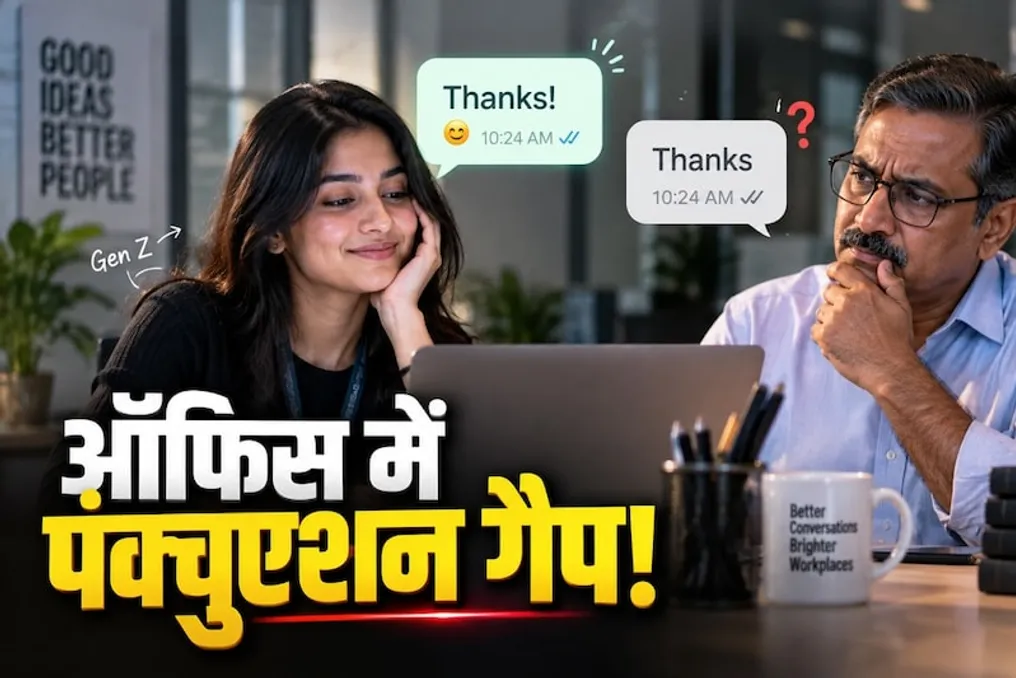
For example, if a manager writes in an office chat: 'Please send the notes from today's meeting,' and the reply is 'OK,' this is a completely standard response. However, if the reply sounds like 'OK, thanks!', this message might seem friendlier and more positive. Thus, in digital communication, the mood of a message can be changed not only by the words themselves but also by small signs like the exclamation mark.

The difference in office communication manners between Generation Z and older generations is now being documented in studies. In July 2026, Censuswide conducted a survey among 2400 employees in the US to study workplaces. According to this survey, 80% of Gen Z employees stated that differences in language and communication styles between generations create problems at work. The proportion of such statements among baby boomers was 30%.

According to the report, 51% of Gen Z representatives noted that linguistic discrepancies are a constant or frequent challenge in their office environment. Researchers believe that manner of speaking, use of short words, and minor nuances in office vocabulary can affect teamwork, trust, and rapport.

In a study published in the journal 'General of Experimental Social Psychology' in 2025, five different studies attempted to understand how people perceive the exclamation mark and what impact it has on the message's image. The essence of the difference lies not only in the exclamation mark itself but in the overall communication style. For Generation Z, chats and social networks are part of daily communication, so their communication may be more informal. Whereas for other generations, office communication remains more formal.

That is, for a manager, 'thank you' might just be gratitude, whereas for an employee, 'thank you!' sounds friendlier. The words remain the same, but the way they are understood can differ. The main difference lies not so much in punctuation marks as in different habits and expectations in communication. For Generation Z, chats and social media are a daily practice, while for older generations, office dialogue is more formalized. Thus, every small digital detail is not necessarily a sign of attitude; often it is just a reflection of a changing communication style.
Similar stories

When and how to use new Gen Z slang words: From Rizz to Mogging
Read more
www.aajtak.in

When and how to use new Gen Z slang words: From Rizz to Mogging

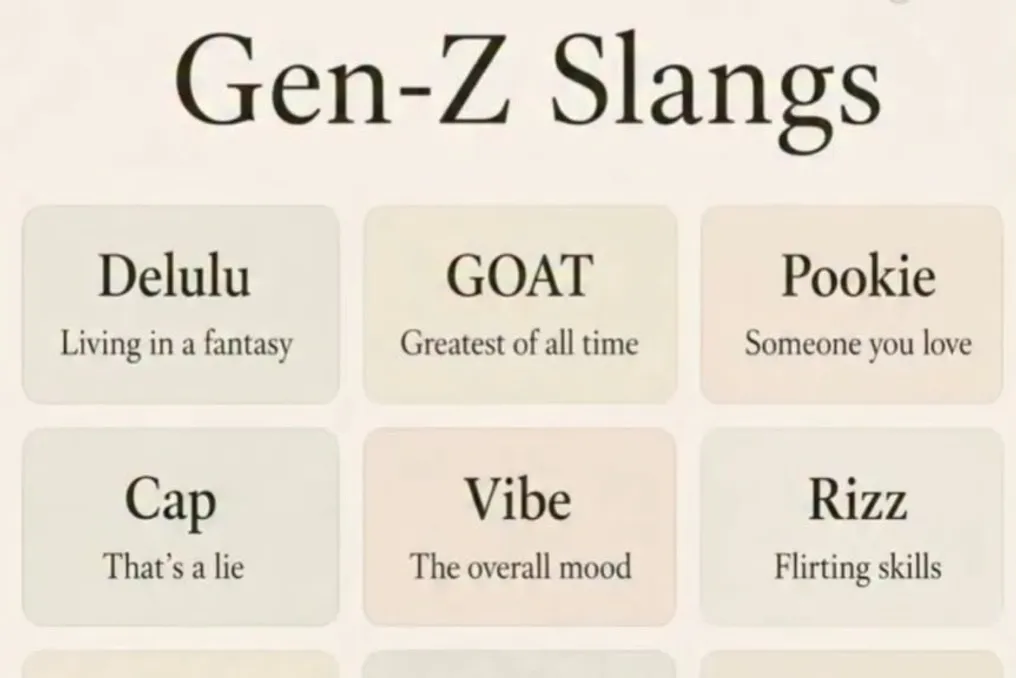
The communication of Generation Z features numerous new words that may be unfamiliar to those hearing them for the first time. Internet culture, memes, music, and social media have significantly altered the language of this generation. Slang expressions such as Rizz, Drip, No Cap, Ate, and Left No Crumbs have moved beyond being purely online terms and have become part of casual conversations among friends. These words are characterized by their ability to convey a complete reaction using just a few words instead of long explanations.

Rizz: When it comes to charm

The word Rizz is used to describe someone's ability to flirt or attract attention. If a person can impress a conversational partner without much effort, they are said to have 'Rizz'. For example, the phrase 'He made her laugh in two minutes, he has Rizz' means it applies to charisma, confidence, or flirting skills.

Drip: When the look is flawless

Drip is used to describe stylish and fashionable clothing or a person's overall appearance. If an outfit looks very impressive, one might say: 'Look at his Drip.' This expression is primarily used in the context of fashion, clothing, and personal style, for instance: 'His Drip today is fire.'

No Cap means absolute truth, stated without hesitation or embellishment. When Gen Z says 'No Cap,' it implies that what is being said is sincere, without lies, doubt, or exaggeration. It is used to emphasize the truthfulness of one's statement or to present something completely openly. For example: 'No Cap, I saw the best movie of my life.'

Ate: When someone exceeded expectations

If someone performs, showcases an outfit, gives a speech, or accomplishes something exceptionally brilliantly, Gen Z might say: 'She ate.' Here, 'Ate' does not mean 'to eat,' but rather signifies performing something at the highest level. Example: 'She performed so well on stage, she ate!'

Left No Crumbs is a stronger form of 'Ate.' It means that a person handled something so wonderfully that there were no flaws in their work. (In other words, they succeeded completely). Example: 'Her look on the red carpet? She ate and left no crumbs.'

Mogging: When someone overshadows everyone else

The word Mogging is used when one person significantly surpasses another in comparison regarding appearance, physique, style, or overall charisma. In social media, this is often seen in internet battles and comparisons based on looks. For example: 'He outshines everyone in this photo.'

Skibidi: Random internet atmosphere

Skibidi does not have one fixed meaning. It became popular through internet memes and is most often used to humorously describe some random, strange, or chaotic situation. If a friend suddenly behaves very unusually, you might ask: 'What was that Skibidi moment?' This sounds more natural in informal, meme-style conversations.

The main rule of slang is context

The enjoyment of Gen Z slang lies not only in memorizing these words but also in knowing how to apply them in the appropriate context. It is not necessary to insert Rizz, Drip, or Ate into every conversation. Although the popularity of these words originated from internet culture, their correct usage is only possible when they organically fit the situation. Thus, Gen Z is not just changing its vocabulary; it is transforming the very approach to expressing thoughts.

Popular