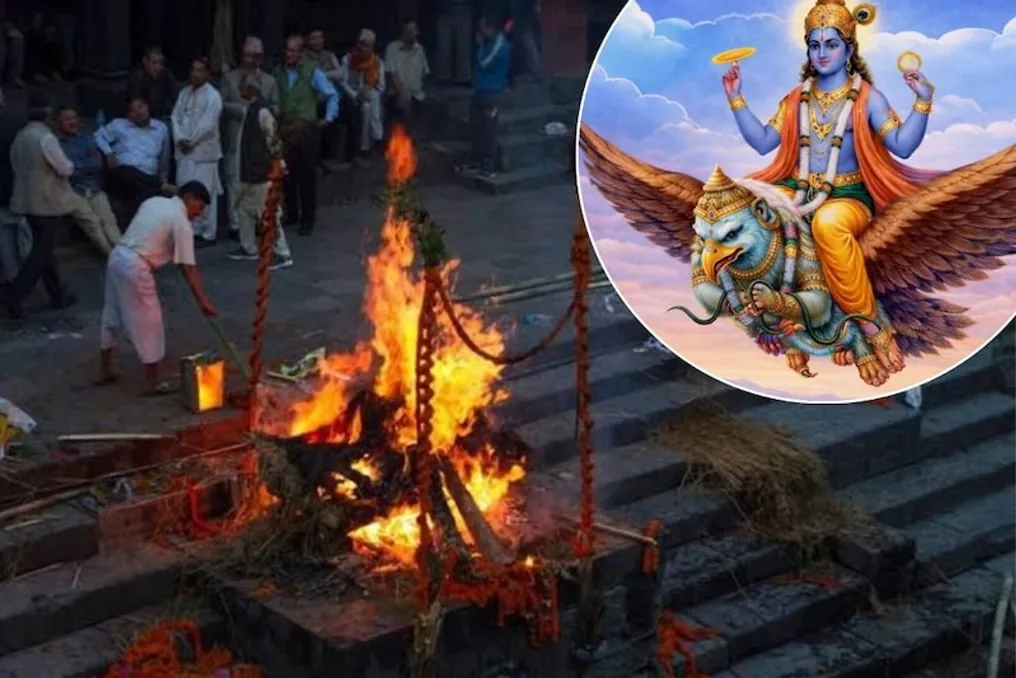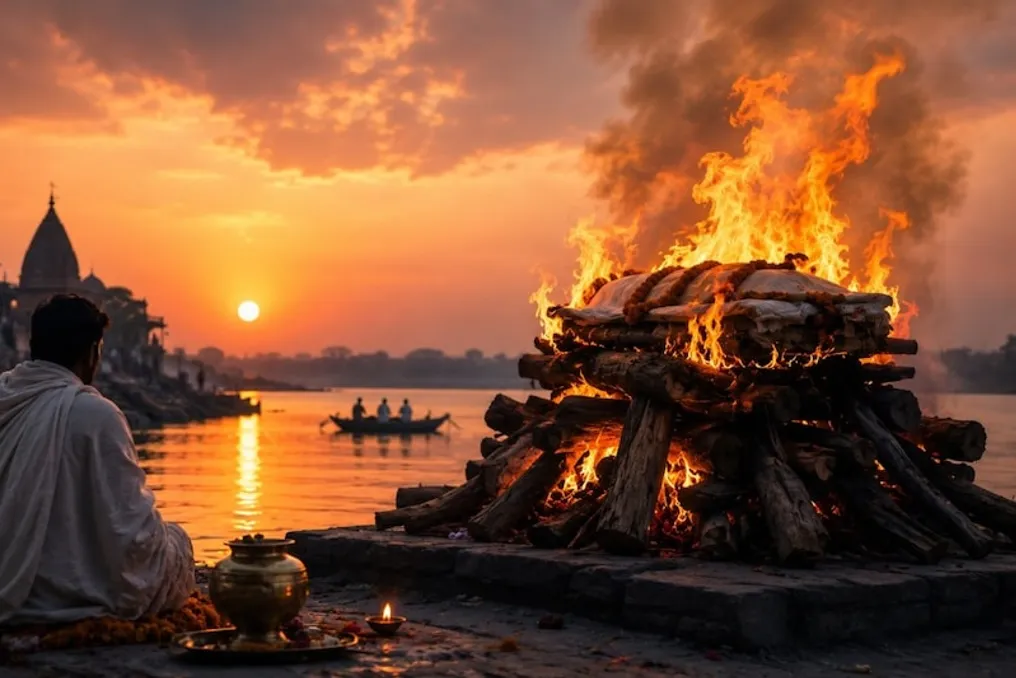
In Hindu traditions, after the death of a father, the eldest son is often tasked with performing funeral rites for him, including the passing of the fire. This raises the question of whether this is merely a family custom or if it is rooted in a deep religious belief.
Funeral rituals after death are considered extremely important in Hinduism. It is believed that a properly conducted rite opens the path for the deceased's soul to continue its journey. This is why the ancient tradition stipulates that a close family member, especially the son, should conduct the cremation.
Why does the eldest son perform the cremation?
In Hindu tradition, the son is viewed as one who fulfills his duties towards his father. According to several religious beliefs, by completing the funerals and subsequent rituals for parents, the son repays his debt to them. Therefore, traditionally, the responsibility for conducting the father's cremation falls upon the eldest son. However, this is not a universal mandatory rule for every family or region; funeral practices can vary depending on the community and traditions, and in some places, younger sons or other close relatives conduct the burials.
What do religious beliefs say about the son?
Religious teachings view the son as one who performs obligations towards his parents. In a common religious interpretation, the word 'son' is associated with a person who helps guide their parents through difficult times. Based on this concept, the funerals, Shraddha, and other religious acts performed by the son for his parents hold great significance. However, this does not mean that only rituals performed by the son ensure the liberation of the deceased; different views exist on this matter across various classical traditions and regions.
Why is cremation considered important?
The funeral rite in Hinduism, called 'Antyeshti Sanskar,' is one of the 16 life rituals of a person. The tradition of cremation exists to dissolve the body into the five elements after death. From a religious perspective, the human body is explained on gross and subtle levels. The gross body is what we can see and touch, while the subtle body is connected to the mind, intellect, prana, and senses.
Some religious texts and traditions link the subtle body to seventeen elements, including the five senses, five organs of action, five pranas, mind, and intellect. It is believed that after death, the soul separates from the gross body and begins its journey. The tradition of using fire for the body is based on the belief that fire in Hinduism is a means of purification and transformation. During cremation, it is assumed that the body dissolves into the natural elements through fire. Following this, bone burial rituals and Shraddha take place. The purpose of these actions, according to religious tradition, is to fulfill the final duty to the deceased and wish them peace.
What does the tradition of breaking a pot mean?
In many Hindu traditions, before or during the cremation, there is a described method where the son circumambulates the body and then breaks an earthen vessel filled with water on the ground. This custom symbolizes the transience of life and the body. The breaking of the pot is interpreted as a sign that the connection with the material body ends, and the soul's journey begins. Differences in this practice are also observed depending on the region and community.
Why are sandalwood, ghee, and other materials placed in the Chatti?
The practice of using sandalwood, ghee, camphor, and other materials at funerals is found in many places. These substances are considered religiously pure, and their application in the fire ritual is done according to various traditions. It is incorrect to state that this is done solely to prevent contamination; the use of these materials is primarily part of the religious and traditional procedure.
Can only the eldest son perform the cremation?
It is important to remember that although the tradition of the eldest son passing the fire is widespread, it cannot be considered a single and mandatory rule for every Hindu family. If the eldest son is absent or cannot perform the funeral for any reason, in some traditions, the younger son or another close family member may do so. Furthermore, in some families and communities, there is a tradition where daughters perform their parents' funerals. Therefore, it is more appropriate to view the passing of the fire not as a right of the son, but as the final act of duty and reverence towards the deceased.