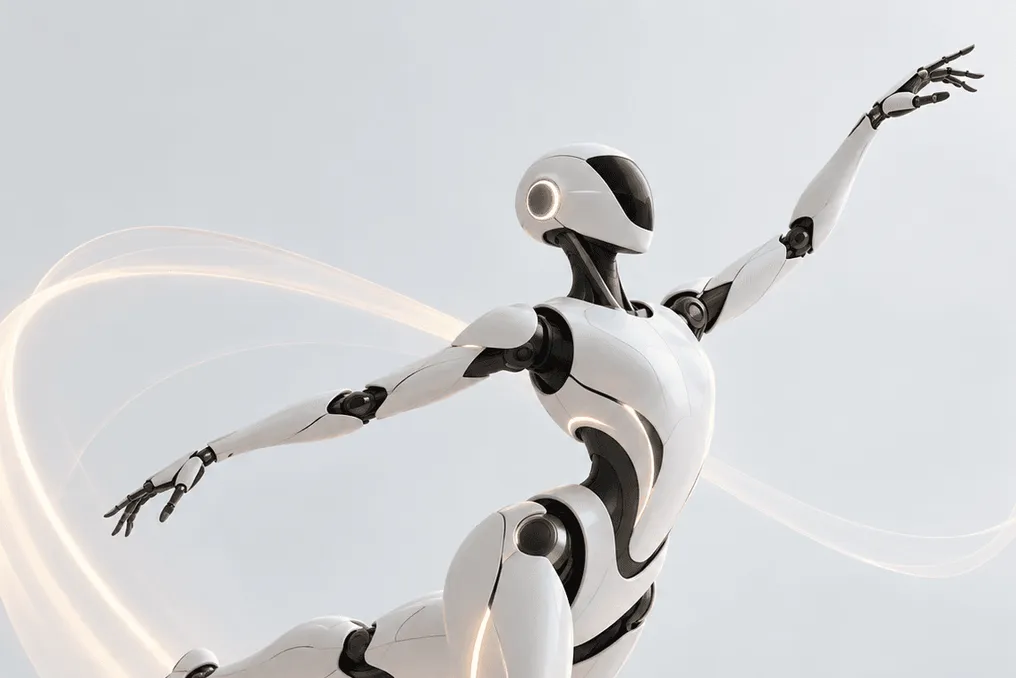
AgiBot introduces AGILE 2.0 model for autonomous navigation in open environments
Read more
Pandaily
pandaily.com

AgiBot introduces AGILE 2.0 model for autonomous navigation in open environments

AgiBot has released AGILE 2.0, which stands for AGIBOT Generative Intelligent Locomotion Engine. This model is a sensory and control system that integrates visual perception, terrain understanding, traversable space reasoning, whole-body movement, and precise end-effector contact into a single end-to-end cycle.

The company views this update as a transition of robots from systems assembled from discrete components—such as 'first walking, then manipulation'—to a 'locomotion-manipulation with open vision' mode in unrestricted conditions. This software release differs from AgiBot's deployment at the Chimelong park and the commercial use of A3 Ultra, but it complements AgiBot's previously published work on scaling the GE-Act 2.0 world actions for manipulation pre-training.

Although AGILE 1.0 already linked perception with movement, allowing parallel execution of navigation and manipulation, AgiBot noted that the previous version lacked unified dynamics for high-speed interaction with high balance and precise contact switching. AGILE 2.0 eliminates the division into intermediate stages: cameras continuously manage planning and control, preventing millisecond-scale actuator jerks due to vision latency when the body is already mid-stride.

Demonstration examples created on the Lingxi X2 platform include jumping through a ring of fire, playing diabolo, synchronized long-rope jumping by multiple robots, collaborative box stacking, and—stated as the first for bipedal humanoids—maintaining balance while riding a large ball, which requires constant visual feedback under unstable contact conditions.

Beyond the spectacle, AgiBot emphasizes the availability of deployable features: real-time closed visual loops when obstacles change, state exchange between robots for multi-agent tasks, and safe recovery when humans enter the workspace. The main message is the need for finer engineering customization for unstructured areas where predefined route points become ineffective with changes in lighting, flooring, or pedestrian presence.

Upon announcing AGILE 2.0, no measured success metrics, latency budgets, or third-party reproducibility were presented; the circus clips remain a marketing tool until actual metrics emerge. Combined with the native GE-Act 2.0 world action pre-training line, AgiBot forms a two-layer structure—sensory and locomotion control plus world actions for manipulation—but AGILE 2.0 itself must be judged by how well dynamic balance is maintained with open vision outside of staged sets.
Similar stories

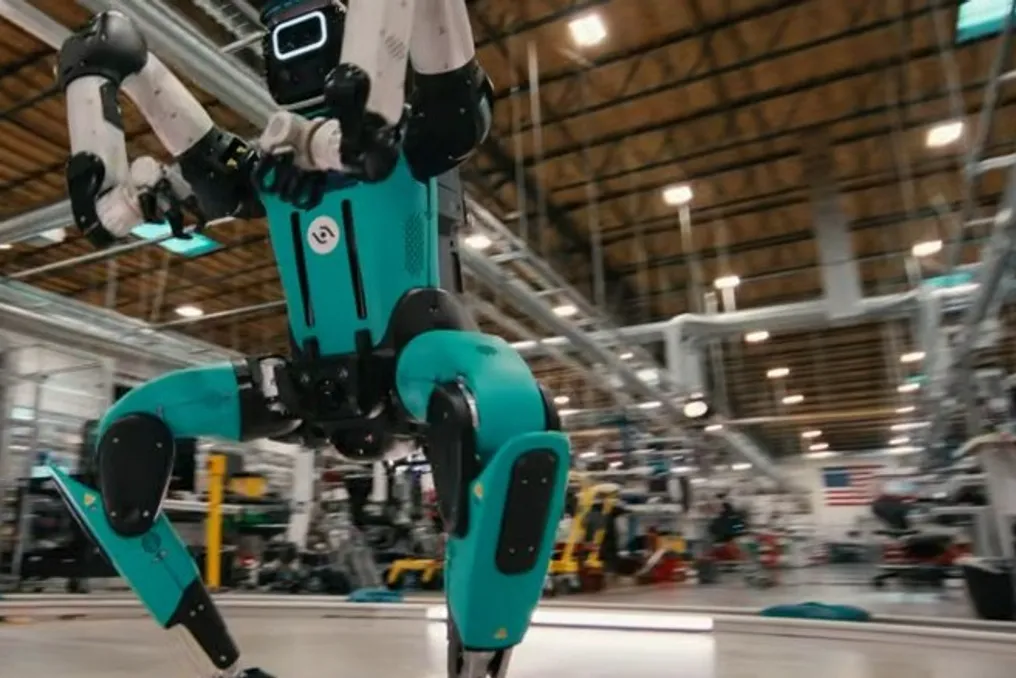
Android Agility Robotics squats when people approach to ensure safety in production
Read more
nplus1.ru

Android Agility Robotics squats when people approach to ensure safety in production

The American corporation Agility Robotics demonstrated its new android Digit 5, which is designed for use in industrial facilities and warehouse complexes. Developers claim that thanks to a set of sensors and special algorithms, the 129-kilogram robot is capable of timely recognizing and avoiding people in close proximity.

The system alerts about potential human movements using visual and auditory signals. In case of a dangerous situation upon approach, the robot either stops moving or assumes a seated position. According to the press release published on the company's official website, this functionality will allow the robot to operate near people without the need for additional protective barriers.

Shengshu Technology introduces Motus2—a self-evolving world model for high-precision manipulation
Read more
pandaily.com

Shengshu Technology introduces Motus2—a self-evolving world model for high-precision manipulation

Shengshu Technology has released Motus2, which is a self-evolving general world model specifically designed for complex robotic manipulations. Co-founder and CEO Luo Yihang demonstrated this system at the Bund summit in 2026.

The authors of the Motus2 project include Shengshu's research identity, GensPI, as well as Tsinghua University; the technical paper was published on arXiv under the number 2608.30237. Unlike many systems that connect an action module to a separate world simulator, Motus2 integrates policy, simulation, and evaluation into a single video-action network with shared parameters.

This network provides three control interfaces. The world-action model offers executable action blocks. The action-conditioned world model predicts the visual outcomes of these blocks. And the value model evaluates the predicted outcomes for selection and learning. During testing, Best-of-N planning analyzes several options, imagines their future, and executes the branch with the highest value before the robot observes the real scene again and replans.

After training, model-based reinforcement learning transforms the same value signal into policy updates, while the prediction and evaluation weights remain frozen so that feedback does not erase the learned dynamics. Furthermore, an action-oriented information mask prevents the policy from looking into future video tokens before making an action decision—this prevents a failure that the team associates with earlier simplified methods combining vision and control.

When performing tasks such as phone placement and multi-finger operations on real robots, the baseline policy achieved about 65% success. Self-planning showed around 67.5%; model-based reinforcement learning showed about 72.5%; and the combination of both methods provided success at about 75%. A lightweight tactile expert, which reuses base features to refine short sub-blocks, increased the success rate of cup retrieval and paper tearing from approximately 60% to 72.5%.

Training data includes a human-centric pyramid consisting of approximately 130,000 hours of egocentric recordings from monocular to synchronized stereo vision, as well as over 100 hours of robot trajectories and human-robot co-occurrence. Scaling stereo imagery from 2,000 to 20,000 hours continued to reduce action prediction error in deferred tests.

Hardware demonstrations include high-degree-of-freedom platforms such as Sharpa Wave and Wuji Hand 2, which are used for screwing in light bulbs, turning pages, and other multi-finger contact tasks requiring verification of both vision and touch.

The team positions Motus2 as an early cycle of recursive self-improvement within constrained tasks—using simulated outcomes to adjust the policy, rather than as open autonomous learning in unbounded environments. For potential technology implementation buyers, the key signal is the closed loop of WAM, AC-WM, and the value model, as well as the measured improvement in phone and multi-finger contact-rich tasks. Shengshu views this loop as progress toward its general world model from L3 to L4, without claiming full autonomy in the open world at this time.

Popular