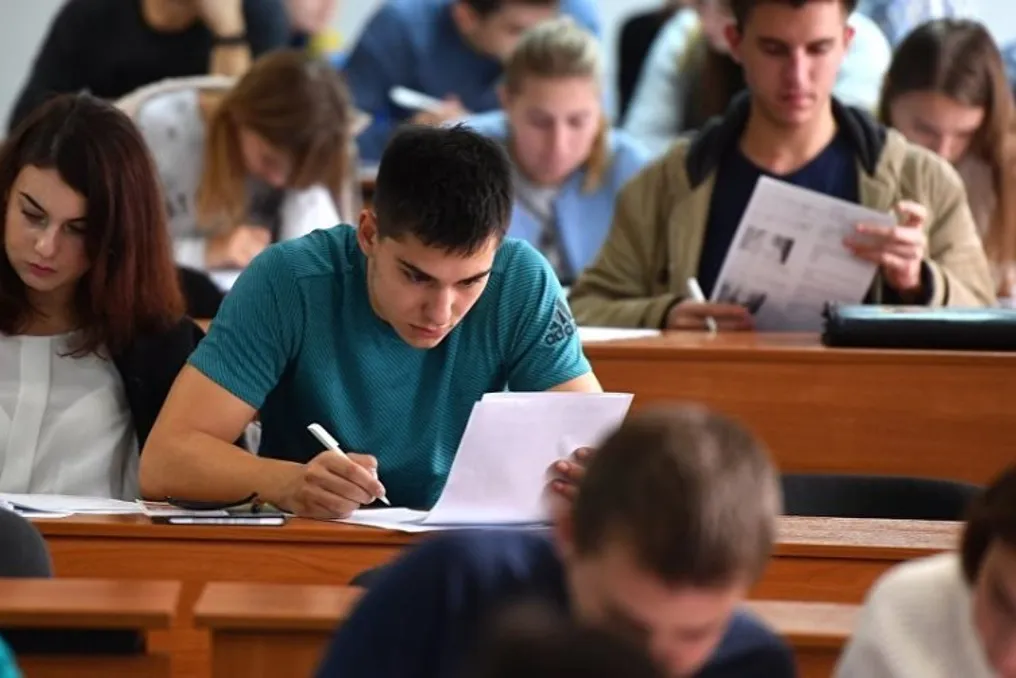
Payment deadlines for student contracts extended in Uzbekistan for the 2026/2027 academic year
Read more
Podrobno.uz [uz]
podrobno.uz

Payment deadlines for student contracts extended in Uzbekistan for the 2026/2027 academic year

A decision has been made in Uzbekistan to extend deadlines for students regarding the payment of educational contracts and enrollment in higher education institutions. The new final deadline is set for October 15, inclusive, for the 2026/2027 academic year.

This change affects applicants who were recommended to enroll in bachelor's and master's programs. The extension also applies to students who transferred, reinstated after dismissal, or underwent reinstatement procedures due to transfer.

Under the new conditions, a specific amount must be paid by October 15. For a basic contract, the minimum payment must be at least one-quarter of the total annual cost. In the case of a differentiated contract, half of the annual cost must be paid.

Thus, students and their families have received additional time to make the necessary payments and complete all formalities related to the start of the new academic year.

Previously, information was provided on how to apply for dormitory accommodation in state universities. Applications can be submitted remotely through the Unified Portal of Interactive Public Services or via the kontrakt.edu.uz system. The acceptance of such applications will continue until the end of the current academic year.
Similar stories

Master's programs in Uzbekistan will be divided into practical and scientific-pedagogical tracks
Read more
podrobno.uz

Master's programs in Uzbekistan will be divided into practical and scientific-pedagogical tracks

Starting from the current academic year, the master's program in Uzbekistan is being divided into two separate tracks: practical and scientific-pedagogical. This new procedure is established by Government Decree No. 500.

The duration of study depends on the chosen track: the program focused on production or practice will take at least one year, while the scientific-pedagogical program will require at least two years of study.

Students can complete their master's degree in various formats—full-time, part-time, or distance learning—depending on the requirements of the specific specialty. Graduates of the practical track are exempt from writing a dissertation; instead, they may submit a design or engineering project, a startup, an innovation idea, a practical creative work, or another type of final product.

For those who choose the scientific-pedagogical track, the requirement to defend a master's dissertation remains. Before defense, the work will undergo plagiarism checks and be subjected to 'blind expert peer review.' Additionally, students whose articles have been published in scientific journals will receive incentives.

Some educational institutions are excluded from these new rules. These include the Academy of Justice, the Academy of State Policy and Management, the Banking and Finance Academy, the Higher School of Business and Entrepreneurship under the Cabinet of Ministers, Tashkent State Law University, as well as all higher military and paramilitary educational institutions.

27.2 trillion soums invested in education in Uzbekistan over the first seven months of 2026
Read more
podrobno.uz

27.2 trillion soums invested in education in Uzbekistan over the first seven months of 2026

In the first seven months of 2026, the total volume of services in the education sector of Uzbekistan reached 27.2 trillion soums. This figure demonstrates an increase of 18.4% compared to the same period last year.

According to data from the National Committee on Statistics, higher education accounts for a significant share of the total volume of educational services, making up 41.2%, which is almost half of all services.

Leaders in Educational Service Volume

Tashkent is the leader in the volume of educational services provided, reaching 14.5 trillion soums in the capital over seven months. Thus, more than half of the country's total educational service volume fell to the capital.

Among the regions, the highest indicators were recorded in Samarkand and Fergana regions, where the volume of services amounted to 1.7 trillion soums each. Next are Namangan and Andijan regions with a figure of 1.3 trillion soums, as well as Tashkent region, which showed 1.2 trillion soums.

In Bukhara region, the volume of educational services reached 1.1 trillion soums, and in Kashkadarya region—972.7 billion. The indicator in Karakalpakstan was 771.7 billion soums.

In Surkhandarya, educational services amounting to 712.0 billion soums were provided during the period from January to July, and in Khorezm region—694.1 billion. In Navoi region, this figure was 423.9 billion soums.

The smallest volume of educational services among the regions was registered in Jizzakh and Syrdarya regions, where the amounts were 361.8 billion and 357.1 billion soums, respectively.

Additionally, it should be noted that in the first half of 2026, commercial banks in Uzbekistan provided preferential educational loans totaling 115.9 billion soums.

Popular