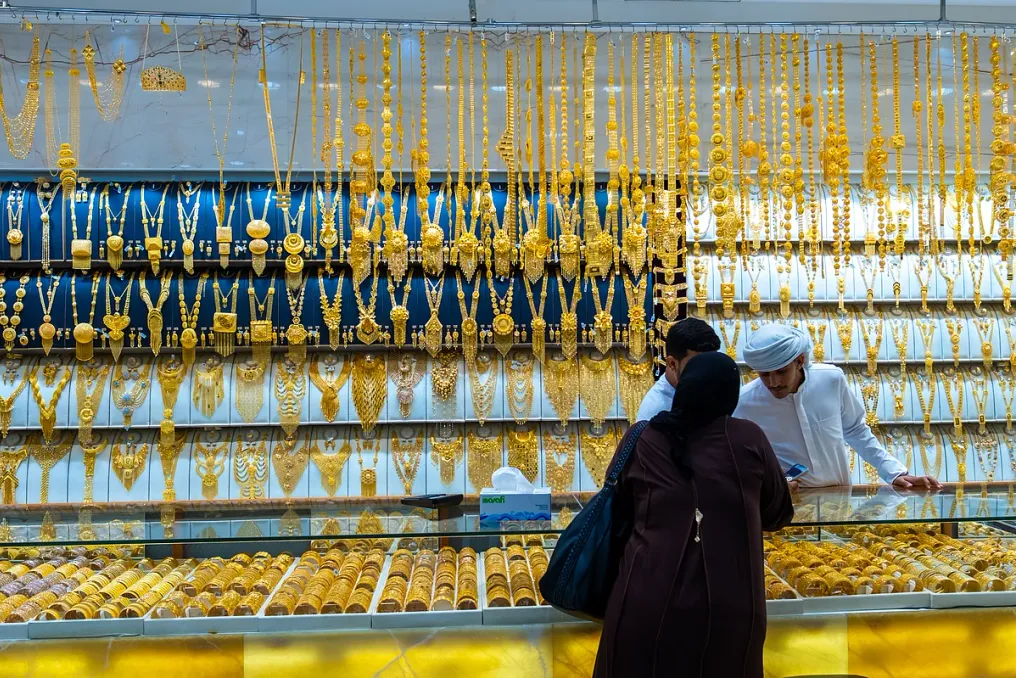
The start of the week was marked by a decrease in gold prices in Dubai amid concerns about further interest rate hikes in the US and inflation. According to data from Dubai Jewellery Group, on Monday morning, 24K gold traded at 525.0 dirhams per gram, which is lower than the 527.5 dirhams per gram recorded at the end of trading last weekend.
Similarly, 22K, 21K, and 18K gold showed a decline to 486.0, 466.0, and 399.5 dirhams per gram, respectively. In the spot market, gold fell by 0.45 percent, reaching the mark of $4357 per ounce, while silver remained stable at $66.16 per ounce.
Previously, on Friday, gold had risen by approximately 1 percent, holding around the $4380 per ounce mark. The Federal Reserve raised the interest rate last week, and further increases were anticipated in the coming months.
Simon-Peter Massabni, Head of Business Development at XS.com, noted that the metal recovered after immediate concerns about energy supply disruptions in the Middle East weakened, aided by Saudi Arabia redirecting crude oil exports. This relief allowed gold to withstand the negative impact from the Federal Reserve after the central bank raised rates for the first time in three years.
Tension in the energy market intensified following attacks on a pumping station along the East-West pipeline and an export terminal in the port of Yanbu. These incidents threatened to reduce global crude oil supplies by nearly 4 percent.
News agencies reported that Saudi Arabia successfully rerouted crude oil sales, transporting about 60 million barrels through Ras Tanura and the Omani port of Sohar, located beyond the Strait of Hormuz. This shift restored export volumes to August levels or higher and helped lower crude oil prices from recent peaks.
On Monday morning, oil prices decreased, but they were still trading near the $100 per barrel mark. Massabni added that the drop in energy prices brings critical relief to broader inflationary pressure. Lower crude oil prices help limit bond yields and ease the severe liquidity shortage that previously constrained global capital. As sovereign yields decline, financial capital, especially from Asian and Middle Eastern investors, finds new opportunities to return to gold assets.