Suchika Tarial did not advance to the Asian Games final after a draw due to weight rule
Read more
Aaj Tak
www.aajtak.in

Suchika Tarial did not advance to the Asian Games final after a draw due to weight rule

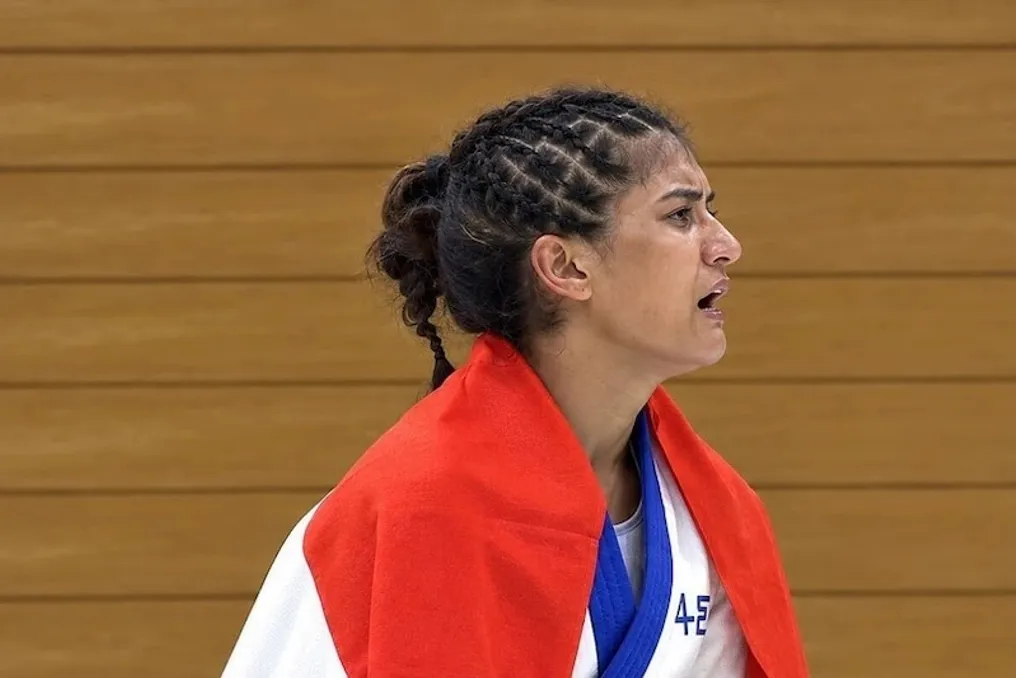
Details of Suchika Tarial's experience at the 2026 Asian Games became known after the match held on Monday, September 21. In the semi-final of the women's traditional MMA discipline at 60 kg, Suchika Tarial from India faced Theo Hui Hung from Singapore.

The initial decision in favor of the Singaporean athlete was disputed by India, which filed an official complaint. A non-refundable fee of 1000 US dollars was paid for this appeal by the Federation and Nihil Kunder. Following this, the match video recording was re-analyzed.

Although such bouts are usually decided by a panel of three judges, after the appeal was filed, the arbitration process was handed over to 10 judges to study the recording. Based on the thorough analysis of all aspects, the match was declared a draw.

The situation was complicated by the fact that according to the regulations, in case of a draw, the weight rule is applied to determine the winner. During this procedure, Suchika Tarial weighed 700 grams heavier than her opponent. Consequently, the decision was made in favor of Theo Hui Hung from Singapore based on the weight criterion, which deprived Suchika of the chance to reach the final.

Thus, Suchika Tarial was not eliminated from the tournament due to a direct loss. Although the re-review of the match after the official protest recognized it as a draw, the weight rule played against her, and she had to settle for a bronze medal.

After the match, Suchika Tarial appeared very upset. When both athletes were invited onto the stage for the official announcement of results, she initially refused to go there. Only after being persuaded by Indian coaches did she reach the stage, but the results brought tears to her eyes.

Nevertheless, Suchika Tarial achieved a historic feat at the 2026 Asian Games. MMA was included in the Asian Games program for the first time, and Suchika won the first medal for India in this sport. Previously, she reached the semi-finals by defeating Altanchimeg Baigalma from Mongolia with a score of 2:0 in the quarter-finals. Despite winning bronze, the way the result was determined through the weight rule after a draw made this defeat extremely emotional.

Hailing from Rohtak, Suchika Tarial began practicing judo at the age of 12. She decided to learn judo for self-defense after an incident of harassment. Subsequently, she became an eight-time national judo champion and also won a gold medal at the 2019 Commonwealth Judo Championships and at the South Asian Games. She represented India in more than twenty international competitions. After starting MMA training in 2017, she took a break from sports for about seven years but returned to professional MMA in 2024.

Similar stories

Indian Women's Cricket Team Reaches Asian Games Final, Ahead of Gold Medal
Read more
www.aajtak.in

Indian Women's Cricket Team Reaches Asian Games Final, Ahead of Gold Medal

The Indian women's team demonstrated outstanding results at the Asian Games, bringing honor to the country. The start of this major sporting event was exceptionally successful for Indian female athletes.

In particular, the Indian team, led by Harmanpreet Kaur, achieved a convincing victory over Bangladesh by a margin of 114 runs, thereby securing their place in the final. Now the Indian team will face Sri Lanka for the gold medal on September 22.

Questions about Mohisin Naqvi presenting medals after the Indian team's victory at the Asian Games
Read more
www.aajtak.in

Questions about Mohisin Naqvi presenting medals after the Indian team's victory at the Asian Games

The Indian women's cricket team maintained its dominant status by winning its eighth Asian Championship title at the Asia Cup. However, despite this victory, the team under Harmanpreet Kaur did not attend the awards ceremony and celebrated the triumph without the trophy.

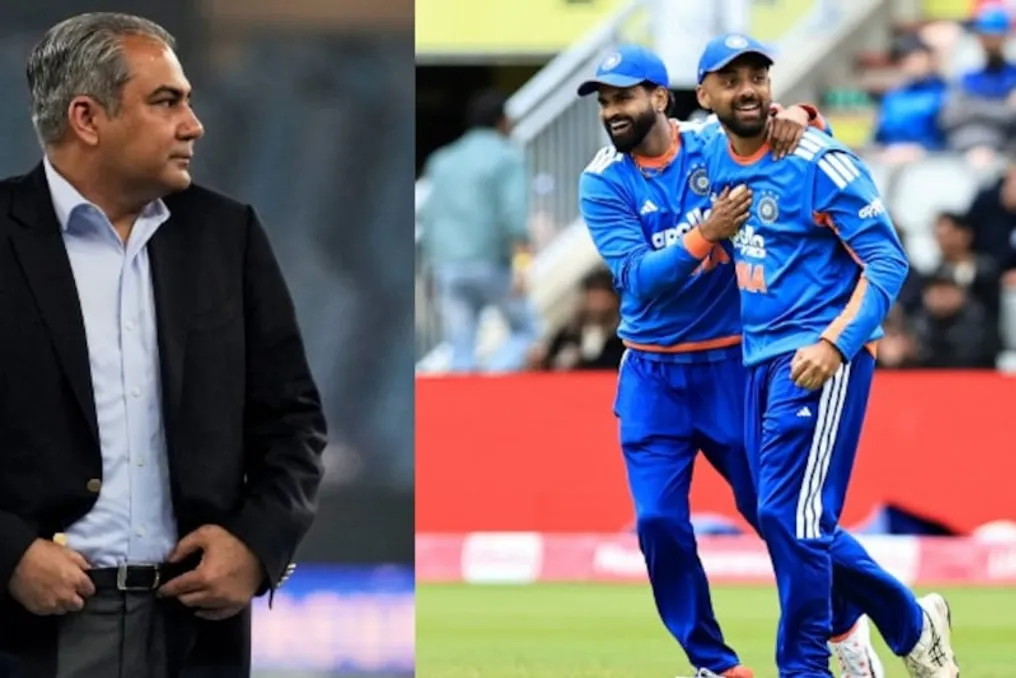
Consequently, a new question arose among fans regarding Mohsin Naqvi, President of the Pakistan Cricket Board (PCB) and head of the Asian Cricket Council (ACC): if the Indian cricket team wins a gold medal at the 2026 Asian Games, will Naqvi be present on stage to present the medal?

The Indian women's team, led by Harmanpreet Kaur, defeated Sri Lanka in the 2026 Asia Cup. More attention from the public was drawn not to the sporting contest itself, but to the trophy presentation ceremony. Fans actively discussed this topic on social media.

After the victory, the Indian team directly refused to accept the trophy from Mohsin Naqvi, returning without it. The team's head coach, Amol Majumdar, supported this decision, stating that the team's main focus is now on the Asian Games.

If India wins a gold medal at the 2026 Asian Games, the probability of Mohsin Naqvi presenting the medals is extremely low. The reason lies in the regulations of the Asian Games. These competitions are held in accordance with the rules of the Olympic Council of Asia (OCA) and the International Olympic Committee (IOC).

The right to present medals belongs exclusively to designated officials of the OCA and representatives of the local organizing committee. Unlike cricket tournaments, one council head does not have the authority to distribute medals independently here.

Previously, at the 2022/2023 Asian Games held in Hangzhou, China, both the men's and women's Indian cricket teams won gold medals. At that time, the medals were also presented according to official protocol.

Now, India is preparing to contend for gold again at the upcoming games, which will take place in Aichi-Nagoya, Japan. The match for the Indian women's cricket team for the gold medal is scheduled for September 22nd at 10:30 AM, and the men's team will begin its campaign on September 28th.

After 35 Years, Tension Flares Up Again at the Tulip Cup Final: A Comparison of Incidents from 1991 and 2026
Read more
www.aajtak.in

After 35 Years, Tension Flares Up Again at the Tulip Cup Final: A Comparison of Incidents from 1991 and 2026

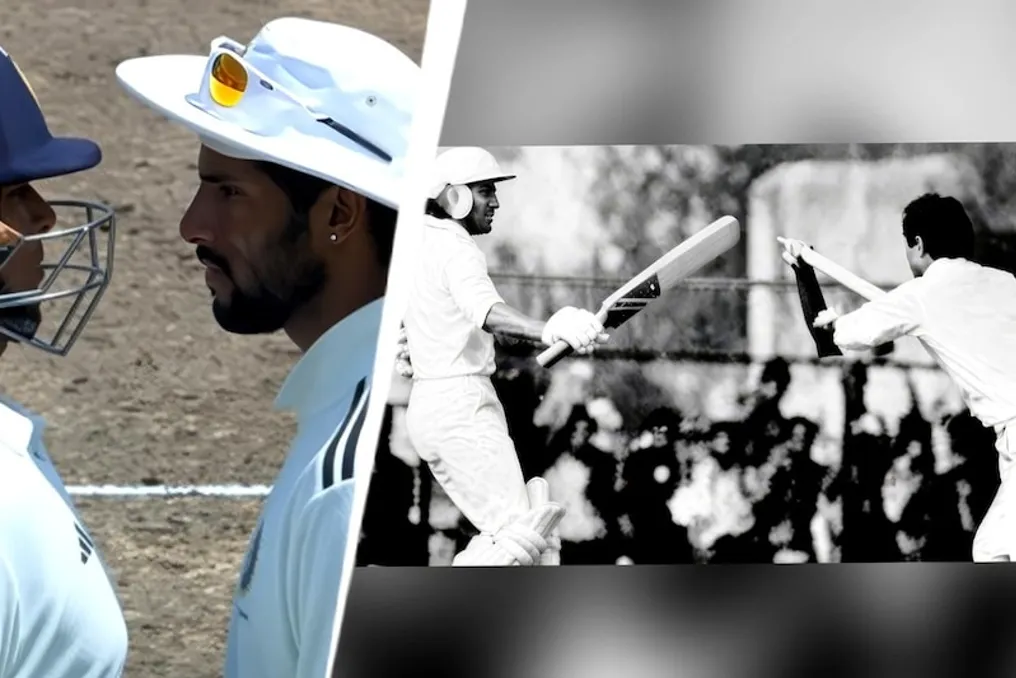
In the world of cricket, some matches remain unforgettable not because of the sporting moments, but due to sudden bursts of emotion that sweep over the field. The Tulip Cup demonstrated such a scene 35 years ago in Jamshedpur. In the 1991 final, anger reached a point where the stumps became the target. Now, in the 2026 final in Chennai, a similar moment occurred again: the tense atmosphere between 15-year-old Vaibhav Suryavanshi and South Region captain Tilak Verma attracted the attention of all spectators.

There is a gap of 35 years between these two events. On one hand, it was the most scandalous incident in the history of Indian domestic cricket; on the other, it was a brief moment of passion between two young and prominent players of the new generation. However, both cases share one question: how high can the temperature rise on the field when the Tulip Cup match ceases to be just a battle of bat and ball?

When the East Region started its innings in Chepauk, all eyes were fixed on Vaibhav Suryavanshi. He is only 15 years old, yet he played as if he had been performing on a big arena for many years. His opponent was Mohammed Siraj, a recognized fast bowler in Indian cricket. But Vaibhav paid no attention to his age; he focused on the ball. He aggressively attacked Siraj, hitting a four, a six, and another four in just one over at the start of the final, showing that he came not just to gain experience.

Later, another interesting scene unfolded on the field. South Region captain Tilak Verma approached Vaibhav. They were having a conversation. Cameras captured this moment, and it quickly became one of the most discussed events of the final. Some reports described it as a heated exchange of remarks, while others interpreted it as light teasing or a casual chat.

However, the real intrigue of this scene lay not so much in the words as in the difference in age and status of the participants. On one side—15-year-old Vaibhav, and on the other—Tilak Verma, who had already made a name for himself in Indian cricket. This picture reminded one of another story from the Tulip Cup, which happened 35 years ago.

The last day of the five-day final, held at the Keenan Stadium in Jamshedpur between the North and West Regions, turned into a dark day in the history of Indian domestic cricket. The West Region team, represented by Rashid Patel, went ahead to attack the stumps of the North Region batsman, Raman Lamba. Lamba himself tried to defend. Everyone present at the stadium was stunned by what was happening.

It was the fifth and final day of the match. The North Region's victory was predetermined based on the first innings. The North Region team, led by Kapil Dev, scored an impressive 729/9 runs and declared their innings. In response, the West Region team, led by Ravi Shastri, was bowled out for 561 runs. Thus, four days passed for these large scores. On the last day, the North Region began its second innings with remaining time. But what happened in the tenth over was not good.

The start of the North Region's second innings was made by Ajay Jadeja and Raman Lamba, who scored 180 runs in the first innings. Both played very well. The score reached 59/0 after 9.5 overs. Rashid Patel bowled around the wicket in anger, directing them into a dangerous zone for Lamba. At this moment, Lamba showed the handle of his bat, expressing his dissatisfaction.

Then Rashid lost control and threw the ball at Lamba almost halfway down the field. Lamba's head barely avoided being hit. Rashid did not stop. He turned, snatched the stumps, and ran after Lamba, trying to strike him while he ran towards the boundary line. At this time, Lamba was trying to defend himself. Eventually, the confrontation ended.

Spectators, seeing this scene on the field, became excited and started throwing stones. Vinod Kambli, who was fielding near the boundary, was injured. After this, all players were isolated in the dressing room. Inside, the winners were presented with the trophy. Ultimately, Rashid Patel was given a 13-month ban. Lamba also faced this and received a 10-month ban.

Raman Lamba's era often witnessed player anger on the field. Today, cricket is much more professional, but the thirst for rivalry remains the same. The only difference is that Vaibhav still has his entire career ahead of him. Lamba's story reminds us that in cricket, skill and aggression are not everything; self-control is also important. Vaibhav's challenge is not just about hitting sixes against bowlers or holding his ground among senior players. The real challenge is coping with growing status, increased attention, and field pressure.

Unfortunately, Raman Lamba's story ended tragically. In 1998, during a club cricket match in Bangladesh, while fielding on the short leg side, he...

_

Popular