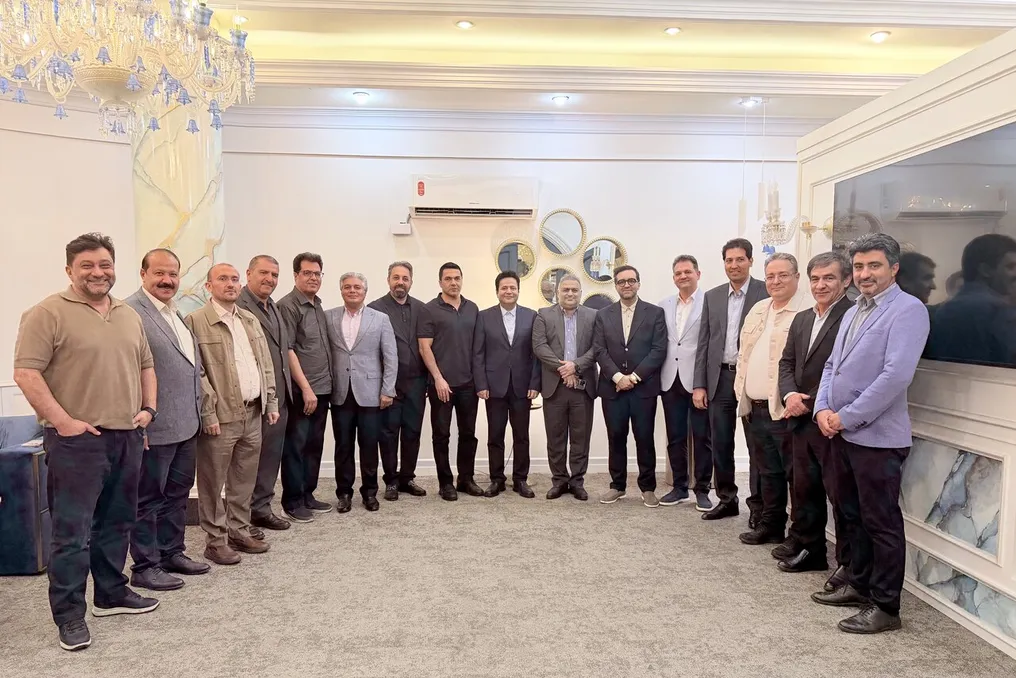
Hossein Pir-Moazen, Vice President of the Iranian Chamber of Commerce, Industry, Mining and Agriculture (ICCIMA), traveled to Tashkent leading a specialized delegation. This delegation includes heads of provincial chambers, leaders of specialized committees of the Iranian Chamber, association heads, as well as individuals involved in the food industry, agriculture, and related sectors.
Members of the trade delegation are accompanying Gholamreza Nouri Gezeljeh, the Minister of Agriculture. According to preliminary plans, an Economic and Agricultural Conference between Iran and Uzbekistan will take place.
Conference and Cooperation Program
The conference will feature speeches by the ministers of agriculture of both countries and the Vice President of the Iranian Chamber who is leading the trade delegation. Following this, bilateral meetings are scheduled between Uzbek economic figures and the Iranian delegation. Furthermore, a memorandum of cooperation will be signed between the chambers of commerce of the two states.
The conference focuses on three main topics: production and trade of livestock, poultry, aquatic animals, and their feed; production and trade of field, horticultural, and greenhouse products; and the production and trade of agricultural machinery, processing industries, and technical-engineering services.
The trip includes visits to farms, agro-industrial enterprises, and processing facilities in various cities of Uzbekistan. This will allow members of the Iranian delegation to familiarize themselves with the country's potential in food and agriculture. Additionally, according to previously reached agreements, several memorandums and cooperation contracts are planned to be signed between members of the Iranian delegation and Uzbek companies.
Phytosanitary Dialogue
A meeting took place last December between the heads of the Plant Protection Organizations of Iran and Uzbekistan, where emphasis was placed on developing bilateral cooperation in the fields of plant quarantine, pest control, and ensuring safe trade of agricultural products.
Maryam Jalili-Moghadam, head of the Iranian Plant Protection Organization, noted the measures taken and the growing trend in plant protection activities during her discussion with Ibrohim Ergashov, head of the Plant Protection and Quarantine Agency of Uzbekistan. She stated: 'Cooperation between the national plant protection organizations of the two countries can play an effective role in developing agricultural trade and guaranteeing the health of agricultural product exchanges.'
She added that the national plant protection organizations, acting based on responsibility, are making every effort to ensure the safe trade of agricultural products between the countries and protect them from harmful plant pests.
The head of the Iranian Plant Protection Organization emphasized the role of her organization in ensuring the health of agricultural products and compliance with quarantine requirements: 'The Islamic Republic of Iran is ready to share its scientific, technical, and executive potential in combating pests, managing plant health, and exchanging specialized information with the Uzbek side, as well as benefiting from the experience and specialized knowledge of the Uzbek side.'
She viewed the development of structured cooperation between the two states as an effective factor in eliminating technical barriers and facilitating the exchange of agricultural products. Jalili-Moghadam also stressed the need to expand scientific and technical interaction, exchange experiences, strengthen health monitoring, and improve coordination between the responsible plant quarantine institutions of both countries, noting that 'increased expert interaction, holding joint technical meetings, and creating coordinated mechanisms can lead to simplifying the process of agricultural trade.'
Prospects for Partnership Development
Continuing the meeting, Ibragim Ergashov, head of the Plant Protection and Quarantine Agency of Uzbekistan, highlighted the special and outstanding position of the Plant Protection Organization of the Islamic Republic of Iran among countries exporting agricultural products to Uzbekistan. He considered this a reflection of the discipline, precision, and competence of the leaders and specialists of the Iranian Plant Protection Organization.
Welcoming the presented views, he focused on the existing opportunities for developing agricultural and phytosanitary cooperation between the two countries. Ergashov also called for simplifying quarantine procedures and establishing electronic interaction between the relevant systems of both countries, emphasizing: 'Developing structured cooperation creates a basis for increasing trust and accelerating trade exchanges.'
In conclusion, both sides emphasized the importance of continuing technical dialogues, strengthening organizational cooperation, and developing joint programs in the field of plant protection and quarantine.