New iPhone models from Apple went on sale in the UAE on Friday, generating significant customer interest. People lined up outside the Dubai Mall store early in the morning, with some traveling specifically for this purchase. Two Dubai residents spent over 550,000 dirhams on 76 devices.
The initial stock was quickly sold out, and devices began reselling with markups up to 3,000 dirhams above the original price before stores closed. These long queues demonstrate that interest in the latest Apple phones has not waned.
The current lineup features a thinner profile compared to previous years. Apple has not announced a standard iPhone 18 or provided a release date for it, nor has it released an updated iPhone Air. Since the foldable iPhone Duo will only be available at the end of October, only two models were available for sale on Friday, and both were more expensive than last year: the iPhone 18 Pro cost 5,099 dirhams, and the iPhone 18 Pro Max cost 5,499 dirhams. Meanwhile, the iPhone 17 Pro and iPhone 17 Pro Max increased in price by 400 dirhams.
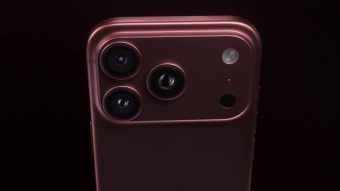
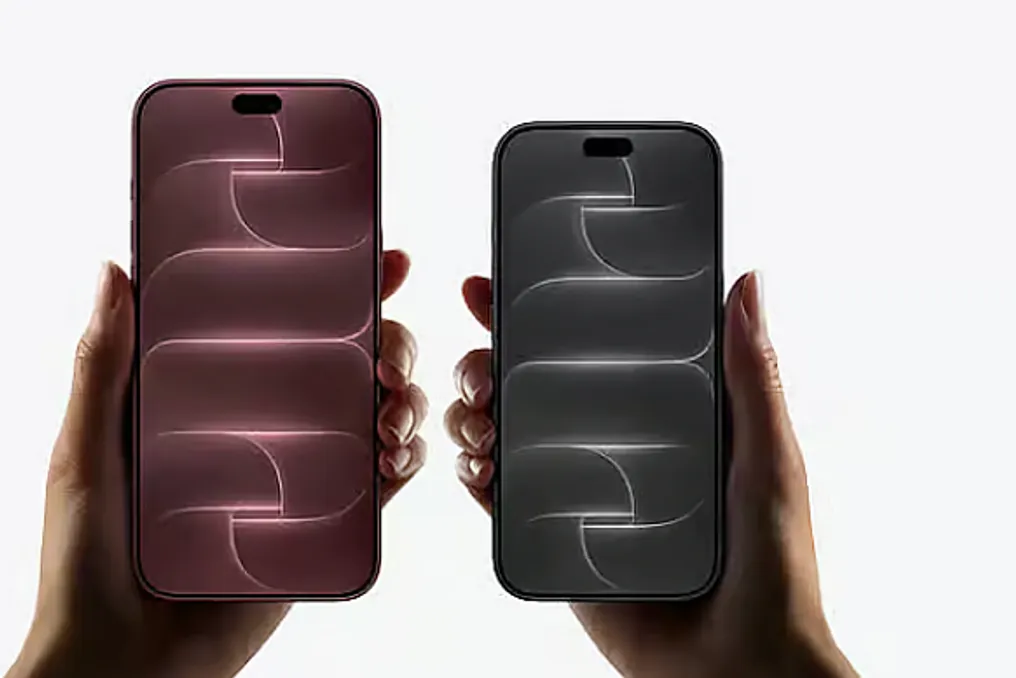
Aside from new color options and a reduced Dynamic Island, distinguishing the new iPhones from last year's models is difficult. However, there are substantial improvements, especially in the cameras and battery packs.
Key Camera and Chip Updates
Major camera improvements include a variable aperture and manual controls. The iPhone 18 Pro's main camera is equipped with a 48-megapixel sensor featuring a mechanical iris with six blades, allowing the aperture to be adjusted between f/1.48 and f/4. This contrasts with the fixed f/1.78 aperture of the iPhone 17 Pro. This feature, known as variable aperture, is typically found in professional cameras where control over depth of field and light is critical.
Apple claims that low-light performance has improved by 50%, which is supported by early reviews in darkness and close-up shooting, although no noticeable differences were found in normal daylight. Along with the variable aperture, manual camera settings have been introduced, finally giving users of the iPhone 18 Pro Pro model fine control over shutter speed, white balance, and live histogram, which previously required third-party applications.
Furthermore, Apple has implemented a photo authenticity check feature—Apple Reference Image. This system works on the iPhone 18 Pro and iPhone 18 Pro Max main cameras by signing the image both on the sensor and in the Apple cloud, allowing it to be checked later for manipulation. This is a separate camera mode that most users are unlikely to activate. It launches concurrently with iOS 27, which introduced photorealistic image generation via Image Playground and the ability to edit real photos using text descriptions.
It is important to note the computing power Apple has integrated into its phones. The company's most affordable laptop, the MacBook Neo, uses the A18 Pro chip, similar to the one in the iPhone 16 Pro. The new phones are equipped with the A20 Pro chip, which is two generations more advanced and is the first 2-nanometer chip installed in an iPhone. This chip is placed under a vapor chamber three times larger than last year's to prevent throttling under heavy load. Initial tests matched Apple's claimed speed metrics.
The neural engine holds the greatest potential, having doubled in size. Although modern Apple devices do not require such a large volume of its operation, the industry is moving towards on-device artificial intelligence, keeping data processing within the phone.
A more immediate advantage is the battery. Since the batteries in the new phones have not become significantly larger, the gain in efficiency comes from a more energy-efficient chip. Apple states that the smaller iPhone 18 Pro now provides the same battery life as last year's iPhone 17 Pro Max.
When to Buy
It is recommended to purchase the model if photography is the main focus and professional control and improved low-light performance are needed. It is also worth considering a purchase if you have an iPhone 15 Pro or an older model, as the advantages accumulate. Additionally, if you plan to use the phone for a long time, the doubled neural engine will aid in long-term AI usage.
When to Refrain from Buying
It is not advisable to buy if high performance is not required, as the base iPhone 18 is expected next spring. It is also not worthwhile to buy if you already own an iPhone 17 Pro, as the improvements do not justify the price increase. Finally, one should avoid purchasing models with large storage capacities because the price increase for them is too significant.
Regarding pricing, at the minimum storage capacity, both phones are 400 dirhams more expensive than the iPhone 17 Pro and iPhone 17 Pro Max at launch, which is the figure most often cited in reviews. However, this is only true for the lowest configuration. At 1 TB capacity, the difference increases to 1,250 dirhams on both models, and the most expensive iPhone 18 Pro Max costs 2,100 dirhams more than the most expensive iPhone 17 Pro Max. The reason for this is memory, which reportedly now accounts for about a third of the phone's production cost, compared to one-tenth last year.
The price increase is not solely due to Apple. Memory shortages are increasing the cost of phones across the entire industry over the year, and Apple is just the most noticeable example. Thus, the new iPhone 18 Pro models generally justify their cost, but with a caveat. The camera and chip represent real advancements, not just cosmetic updates. At 5,099 dirhams, the smaller iPhone 18 Pro is the better choice of the two. Since the price increase is most noticeable in the top configurations, a sensible decision would be to choose a lower storage capacity and store photos and videos in iCloud. The 2,550 dirham difference between the 256GB and 1TB iPhone 18 Pro models will be recouped in over five years through an iCloud+ subscription of 2TB at 39.99 dirhams per month. Alternatively, the iPhone 17 Pro remains a very worthy device, and its price has noticeably dropped as retailers clear out remaining stock.