Who is Kalki and when will his appearance occur according to Hindu beliefs
Read more
Aaj Tak
www.aajtak.in

Who is Kalki and when will his appearance occur according to Hindu beliefs

The texts of Hinduism describe various incarnations of the God Vishnu. According to beliefs, whenever lawlessness increases and righteousness weakens on Earth, God takes some incarnation to restore Dharma. Scriptures and religious traditions mention avatars of Vishnu such as Matsya, Kurma, Varaha, Narasimha, Vamana, Parashurama, Rama, Krishna, and Buddha. Following these, the Tenth and final avatar—the avatar of Kalki—is mentioned.

There is a belief that in the final phase of Kali Yuga, when lawlessness reaches its peak, God Vishnu will appear in the form of Kalki and restore Dharma. However, people's minds still hold curiosity about when and where God Kalki will be born, who his parents will be, and what his appearance will be like. The following examines the main religious concepts regarding such an avatar and its description as laid out in the Puranas.

God Incarnates to Establish Dharma

In the Bhagavad Gita, Krishna asserts that whenever Dharma declines and lawlessness increases, He takes an incarnation to restore it. This idea is connected to the tradition of various avatars of God Vishnu. The avatar of Kalki is considered the future incarnation in this sequence. The description of the Kalki avatar is contained in the XII Skanda of the Shrimad Bhagavatam Mahapurana. According to this text, the appearance of God Kalki will happen in the last stage of Kali Yuga.

Where Will God Kalki Be Born?

The Shrimad Bhagavatam Mahapurana indicates that God Kalki will be born in the house of a Brahmin named Vishnuya in the village of Shambhal. The same text states that God Kalki will appear in the house of the eminent Brahmin Vishnuyasha in Shambhal. Thus, the religious scriptures mention Shambhal as the birthplace of God Kalki. Nevertheless, there are differing opinions among religious and scholarly traditions regarding the geographical identification of Shambhal.

What Will God Kalki Look Like?

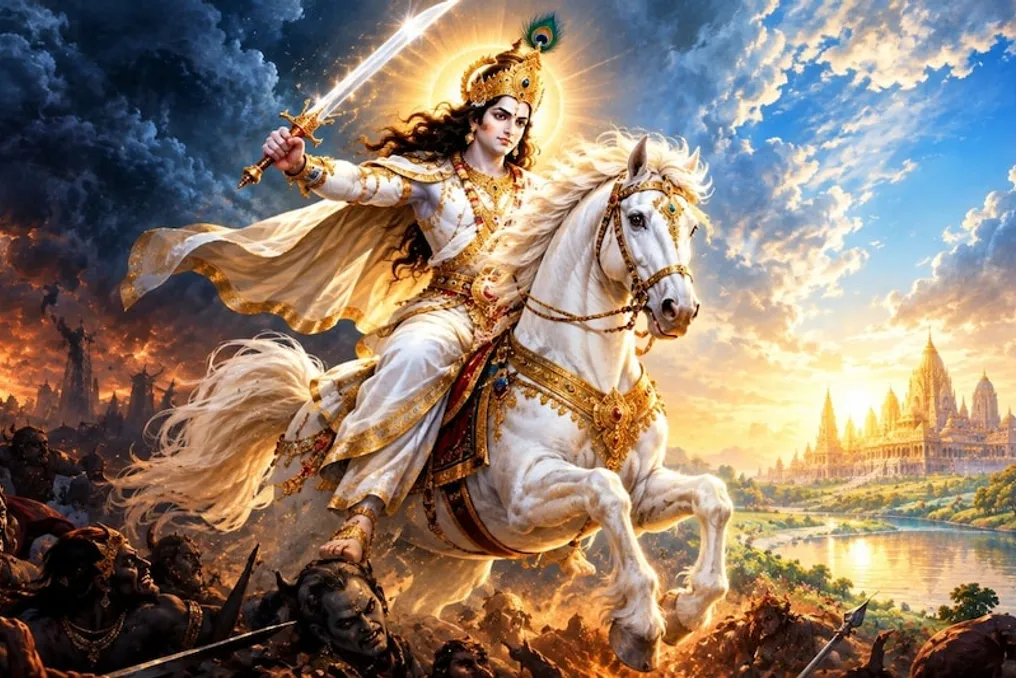
According to religious beliefs, God Kalki will appear as a divine warrior. He is described as a rider on a horse, holding a sword in his hand. In the Puranic descriptions, his mount is named Devadatta, a divine horse. It is believed that in the last stage of Kali Yuga, God Kalki, on this horse, will end lawlessness and tyranny. After this, the restoration of Dharma will occur, and the process of epoch change will begin.

Who Will Be God Kalki's Mother Named?

In mythological traditions, the father of God Kalki is named Vishnuyasha, and the mother is Sumati. It is in this family that the religious concept of God Kalki's appearance exists. Detailed stories related to the Kalki avatar are found not only in the Shrimad Bhagavatam Purana but also in other texts and Puranic traditions. Therefore, differences may be observed in the descriptions of his family, marriage, and other details depending on the source.

Who Will Be God Kalki's Teacher?

In the Puranic tales associated with the Kalki avatar, special mention is given to Parashurama. It is believed that Parashurama will teach Kalki military arts and weaponry. For this reason, the connection between Kalki and Parashurama is considered special in the Hindu religious tradition.

When Will the Kalki Avatar Occur?

The most important question is when exactly the avatar of God Kalki will occur. In religious texts, the Kalki avatar is linked to the last stage of Kali Yuga. According to Hindu chronology, the period of Kali Yuga is considered very long, and according to religious beliefs, there is still much time left until then. Consequently, the scriptures do not establish any specific date or year for the appearance of God Kalki at present.

The Kalki avatar is viewed as a future event that will happen when Kali Yuga reaches its conclusion, and God Vishnu will appear in the form of Kalki to restore Dharma.

What Will Happen After the Kalki Avatar?

According to Puranic beliefs, when lawlessness, injustice, and chaos reach their limit in the last stage of Kali Yuga, the appearance of God Kalki will take place. He will put an end to lawlessness and restore Dharma. After this, the process of epoch change will begin, and there is a religious belief in the revival of Satya Yuga.

Thus, the Kalki avatar is not just a story about the last incarnation of God Vishnu, but an important Puranic concept related to the restoration of Dharma and the change of epochs. However, the time of God Kalki's appearance relates to religious questions of the future, so establishing an exact date for his avatar does not align with the teachings at present.
Similar stories

Radha Ashtami 2026: Celebration Date, Auspicious Time, and Worship Ritual
Read more
www.aajtak.in

Radha Ashtami 2026: Celebration Date, Auspicious Time, and Worship Ritual

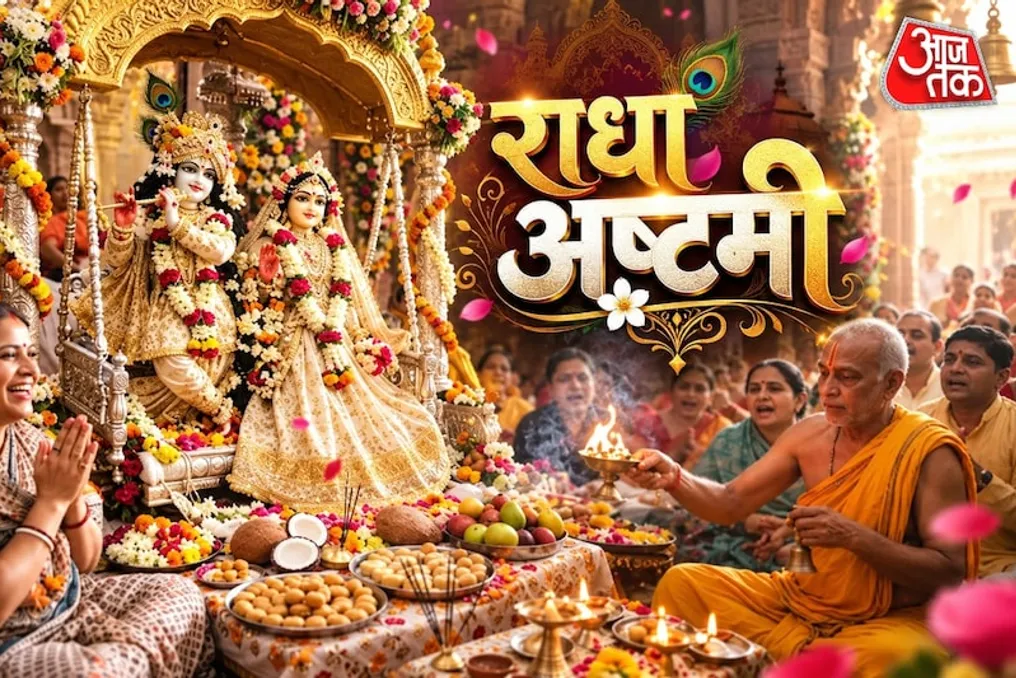
The festival of Radha Ashtami in 2026 is celebrated today, September 19, 2026. This day is dedicated to celebrating the appearance of Radha Rani. Radha Ashtami falls on Ashtami Tithi in the Bhadrapada month, during the Shukla lunar half. This festival is also known as Radhika Ashtami or Radha Jayanti, and on this day, worship is performed for Radha and Krishna. Special enthusiasm during this celebration is observed in Barsana, Mathura, and Vrindavan.

According to the Panchang, the Ashtami Tithi of Bhadrapada Shukla began on September 18 at 13:02. This date will conclude on September 19 at 15:28. Since the Ashtami Tithi is present on September 19 during sunrise, Radha Ashtami this year is celebrated on September 19, Saturday, based on the sunrise date.

For the worship of Radha Rani on Radha Ashtami, the midday time is particularly significant. According to the Panchang, the auspicious time for worship today, September 19, will be from 11:01 AM to 1:28 PM. Due to differences in sunrise and sunset times in various cities, there may be slight variations in the ritual timing.

On Radha Ashtami, one should take a morning shower and wear clean clothes. After that, the place for worship must be thoroughly cleaned. A red or yellow woven material should be spread on the platform. Then, images or statues of Radha Rani and Lord Krishna are installed. The worship begins with lighting a lamp. Radha Rani should be adorned with flowers, fruits, sweets, and other items for worship. If possible, the ritual of Abhisheka for Radha Rani with Panchamrita should be performed. After this, she is presented with beautiful clothes, ornaments, and flowers. During the worship, mantras of Radha Rani and Krishna should be recited. The ritual concludes with Aarti.

Tradition states that on Radha Ashtami, items for sixteen adornments should be offered to Radha Rani. According to religious beliefs, this helps preserve love and sweetness in married life. Incense can also be offered to Radha-Krishna during the worship. Along with this, roses, jasmine, or other fresh flowers should be placed. In religious views, these items are considered auspicious for worshipping Radha and Krishna.

A large number of devotees observe a fast on Radha Ashtami. The rules for breaking the fast vary depending on the region and traditions. According to the Panchang, the fast can be broken after 6:08 AM on September 20. Nevertheless, devotees observing a fast should break it according to the Panchang of their region and family traditions.

Radha Ashtami is celebrated as the birthday of Radha Rani. In the Vaishnava tradition, Radha Rani holds a special place as the greatest devotee of Krishna and His divine power. This is why the worship of Radha and Krishna on this day is considered especially significant. In Barsana, Vrindavan, and other areas of Braj, temples are decorated. Special worships, abhishekas, aartis, and singing of bhajans are conducted. Pilgrims arrive at the temples to see and worship Radha Rani.

Flowers, fruits, and sweets are offered to Radha Rani. In some local traditions of Braj, vegetarian dishes made from arbi are also included in the offerings to Radha Rani. Furthermore, the offerings include sweets made from milk, yogurt, khoya, and ghee. Greater importance is given to sincerity and devotion in the offering, rather than the quantity of dishes. On this day of Radha Ashtami, devotees pray to Radha Rani and Krishna, wishing for happiness, peace, and love.

Radha Ashtami 2026: Celebration Date, Auspicious Time, and Worship Ritual
Read more
www.aajtak.in

Radha Ashtami 2026: Celebration Date, Auspicious Time, and Worship Ritual

The festival of Radha Ashtami is celebrated annually on the eighth day of the lunar month of Bhadrapada. This day is dedicated to the birthday of Shri Radha Rani, the beloved and powerful form of Lord Krishna. According to religious beliefs, Radha Rani's birth occurs 15 days after the birth of Krishna (Janmashtami).

It is believed that devotees who sincerely pray and observe a fast on this day in honor of Shri Radha and Krishna attain prosperity, love, and peace in their lives. It is asserted that worshiping only Krishna does not yield complete results until Radha Rani is also worshipped.

On this day, many people observe a fast, and in Barsana and Mathura-Vrindavan, this festival is celebrated very grandly and solemnly. As in previous years, there is some uncertainty regarding the date of Radha Ashtami this year, as some claim it should be celebrated tomorrow, while others say today.

When will Radha Ashtami 2026 be celebrated?

According to the Dik Panchang and the rising date, it is recommended to celebrate Radha Ashtami on September 19, 2026, which is Saturday, i.e., tomorrow.

Date of Radha Ashtami 2026

According to Dik Panchang, the date of Radha Ashtami will begin today, September 18, at 13:00, and conclude on September 19 at 15:26.

Auspicious Time for Radha Ashtami Worship 2026

The most suitable time for performing worship on Radha Ashtami is in the morning of September 19, from 11:00 to 13:28. This is considered the best time for prayer because, according to sacred scriptures, Shri Radha Rani was born during the day.

Radha Ashtami Worship Ritual 2026

On the day of Radha Ashtami, one must take a bath early in the morning and wear clean clothes, and then take the vow of fasting. After this, a clean mat should be spread at the place of worship, and a red or yellow cloth placed over it. A pitcher made of copper or clay is then placed on the platform. Next to the pitcher or on the platform, an idol or image of Shri Radha and Krishna is placed. If possible, Radha Rani should be anointed with Panchamrita. Radha Rani is adorned with beautiful clothing and jewelry. Then, offerings of roli, akshat (rice), sandalwood, flowers, incense, a lamp, and naivedya (fruits and sweets) are presented to them. The ritual concludes with reciting the mantra 'Om Shri Radhayai Namah', listening to stories, and lighting a lamp for Aarti.

Items for Radha Ashtami

During the worship on Radha Ashtami, items of bridal attire should be offered to Shri Radha Rani. After the worship, a small amount of this sindoor or prasad in the form of wedding accessories can be given to married women in the house or left at the feet of Mother Rani. This promotes increased love and sweetness in married life.

It is also recommended to offer perfumery and yellow flowers to Radha-Krishna, as Radha Rani and Krishna greatly love fragrance. On this day, perfume of roses or jasmine, as well as fresh yellow or pink flowers (such as hibiscus or bouquets of roses), should be offered to them. Performing this brings positive energy and attractiveness into life.

Naim Karoli Baba: The Legendary Saint Whose Miracles Remain a Mystery to the World
Read more
www.aajtak.in

Naim Karoli Baba: The Legendary Saint Whose Miracles Remain a Mystery to the World

Paramah-siddha saint Naim Karoli Baba, the spiritual guide of Kanti Dham located in the sacred valleys of Uttarakhand, is a living example of divine abilities and boundless compassion. Millions of followers consider him a direct incarnation of Lord Hanuman in Kali Yuga. Baba's life was extremely simple and unostentatious: he often sat covered only by a blanket, yet no pilgrim who came to him left empty-handed.

Countless events occurred during his lifetime when the laws of nature yielded to his spiritual power. Below are five such miracles from the life of Naim Karoli Baba that continue to inspire deep reverence and faith among his followers.

Transformation of River Water into Pure Ghee

At the beginning of the construction of the Kanti Dham ashram, a large feast was organized. Due to the huge number of arriving pilgrims, the ghee for frying puri ran out. The servants panicked and immediately reported this to Baba. Baba calmly replied: 'Do not worry, bring two barrels of water from the nearby river.'

The servants quickly brought the river water. When the water was added to the hot pan for frying puri as per Baba's instruction, it instantly transformed into pure ghee with a divine aroma. All the puris for the entire banquet were fried with this ghee. The next day, upon Baba's direction, the same amount of ghee was purchased from the shop and returned to the river.

Transformation of Salty Water into Sweet, Like Gangajal

One day, the only natural water source near Baba's ashram became completely salty. The water was so bitter that it could not be used for drinking or cooking. Local residents and ashram devotees were greatly concerned about this.

When Baba learned of this problem, he went himself to the source. With deep feeling, he added a little Sharantra (sacred drink) to the water and began chanting mantras, meditating on God. After this, when people drank this water, they were astonished: the salty water not only became completely sweet and easily digestible but also acquired a divine freshness, similar to the water of the Ganga.

Taking On the Fatal Illness of a Pilgrim

Naim Karoli Baba loved his devotees like a mother. When any close pilgrim suffered from an incurable, fatal illness or unbearable pain, Baba's compassion would awaken. He used his spiritual power to take on the karmic burden and suffering of the sick.

There were many instances where a pilgrim suddenly recovered and stood up, while Baba, on the other hand, might be seen writhing in pain inside his blanket. He patiently accepted the suffering of his children, smiling so that nothing would threaten them.

Samadhi in the River During Severe Frost

During the harsh winters of Uttarakhand, when ordinary people freeze even in several layers of warm clothing, Baba lived only in a cotton dhoti and blanket. Many times, on frosty nights, Baba descended into the cold river water and remained in aquatic samadhi for hours.

When he emerged from the aquatic samadhi, there were no traces of cold on his body. His body shone as if he had simply been at normal temperature. This yogic practice served as direct proof of his high level of attainment as a Siddhi Yogi.

Granting New Life to a Pilgrim

In Baba's temple, there were no limits to devotion, and there were no limits to his blessings. There were cases where the lives of many of his devotees were threatened due to severe illnesses or accidents, and doctors diagnosed inevitable death. In such moments, the relatives of the patients turned only to Baba, or gave the patient 'Arogya Prasad' (or Sharantra) touched by him.

Thanks to Baba's protective promise and determination, even time receded. Patients who reached the gates of Yamaraja miraculously recovered completely, remaining an unsolved mystery to the doctors forever.

Popular