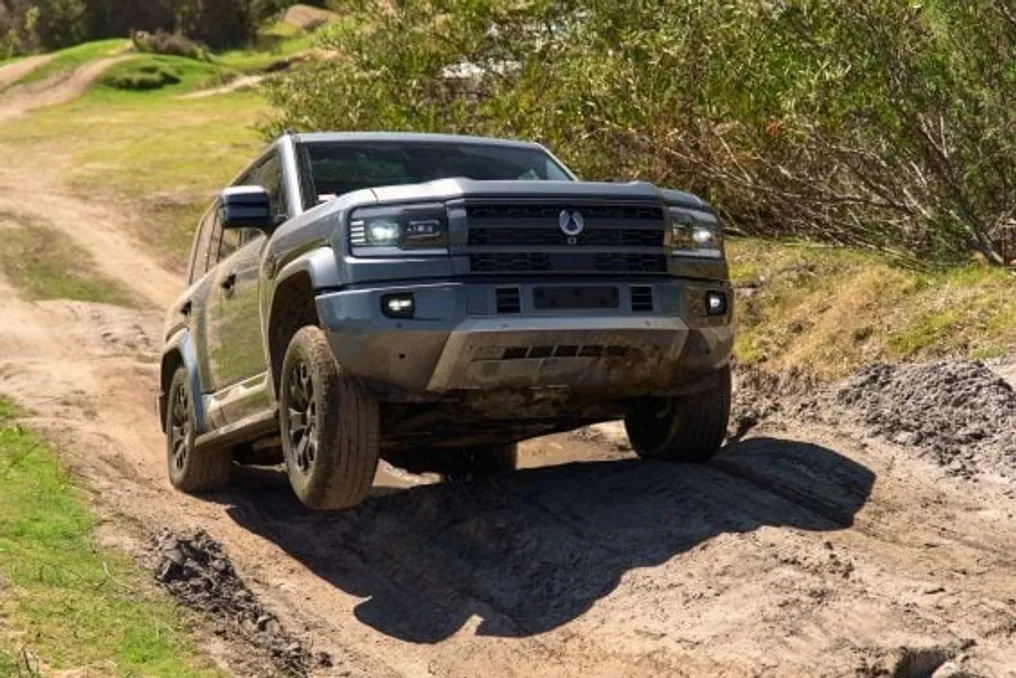
In August, the best-selling premium vehicle in Brazil was an SUV that had only been introduced to the country a year prior. The Denza B5, from the luxury brand BYD, achieved 677 registrations, surpassing the BMW X1, which registered 509 units. This marked the third consecutive month of leadership for the Denza B5, according to data provided by Bright Consulting.
Although the premium segment saw a 16% year-on-year decline in August, totaling 3,757 units, the accumulation of licenses throughout the year shows a 6.4% drop, with 31,601 registrations in the first eight months of 2025, compared to 33,780 in the same period last year. In contrast, the Brazilian market as a whole showed a 19.3% advance over the same interval.
Despite this, the share of Chinese vehicles in the premium market experienced a significant jump, rising from 1.3% to 20.1% over twelve months. This is due to an increase of 60 registrations in August 2025 to 757.
BMW followed a different trajectory within its own category, selling 1,255 units in the month, corresponding to a 33.4% share. However, the performance just below it revealed difficulties: Denza finished August in second place with 18.2% share, while Mercedes-Benz and Volvo combined lost almost nine percentage points in a single month. Porsche concluded 2025 in Brazil with 5,520 units, representing an 11.8% reduction, following a global first quarter decline of 15%, a scenario preceding the arrival of Denza.
Cássio Pagliarini, from Bright Consulting, explains this situation by attributing it to a 'strong migration of premium customers' towards electrified Chinese vehicles that are not strictly in the luxury segment, as they offer greater technology, more power, more space, and a lower cost.
Maiara Kososki, an expert in branding and the luxury market and a doctor in marketing strategy, questions how long traditional brands can maintain customer loyalty when their products cease to be superior. She argues that the brand has weight, but it is essential to differentiate two often confused concepts: 'recognition makes a company memorable, while brand equity makes the consumer trust, desire, and accept paying more for it.'
In the automotive sector, this brand weight is amplified, given that acquisition involves financial risks, safety issues, maintenance, and resale. Traditional brands sell a trust built over time, which Kososki describes as 'a kind of advance credit granted by the consumer.' It is this credit that sustains sales even when the product loses its top position in the category, as the buyer acquires not only power and autonomy but also reputation and social acceptance. However, Kososki warns that this balance is not eternal, stating that 'tradition may grant the company time, but it does not offer immunity.'
When the product disparity becomes clear and persistent over multiple cycles, perceived quality decreases, and perceived quality is a pillar of brand value itself. The acceleration of electrification intensified this clock, as it redefined standards of excellence. Consumers began considering software, range, and the digital experience as aspects that were previously not considered. Kososki summarizes that, 'in this new territory, Chinese brands do not necessarily need to surpass more than one hundred years of history; they need to demonstrate competence in the attributes that have come to define the future of the automobile.'
Kososki also differentiates between premium and luxury: a car can be expensive, powerful, and modern, but not be perceived as luxury if it lacks identity, legitimacy, and symbolic value. She points out that 'technology can be developed quickly, but a brand's aura needs to be settled by time.'
This distinction is not new. In The Luxury Strategy, an industry reference, Jean-Noël Kapferer and Vincent Bastien classify products whose price is entirely justified by their superior performance as premium, citing Audi and BMW as examples of this group. Two distinct sales approaches arise from this classification. Chinese brands persuade through the product, while European and American brands market a symbolic universe, based on origin, design codes, and cultural moments in which they have been involved.
Kososki compares: 'Chinese brands are saying 'look at everything this car can do'; traditional brands say 'look at everything this brand represents'.' Despite this, the emblem still holds monetary value. A survey conducted by Startline Motor Finance in Great Britain this month indicated that 44% of drivers willing to spend £50,000 would trade a prestigious brand for a Chinese car, although 19% stated that heritage weighs more as the value increases.
Denza itself seems to have understood this dynamic. With the launch of the B5 at R$ 436 thousand, the brand aimed to compete with a Land Rover Defender, which costs approximately double, and plans to expand from five to 22 stores by December. Werner Schaal, the brand's director in Brazil, told Bloomberg Línea that 'Denza cannot rush, but it needs presence.'
Kososki concludes that the barrier between the two models is disappearing in both directions: Chinese companies realized that technology alone is not enough, and traditional ones discovered that heritage alone does not meet new expectations. She suggests that the future will be defined by 'two types of legitimacy: that built by history and that conquered by the ability to interpret the future.' The next challenge is already underway, with Denza preparing the Z9 GT, valued at R$ 650 thousand, and an electric supercar estimated at around R$ 1.5 million.