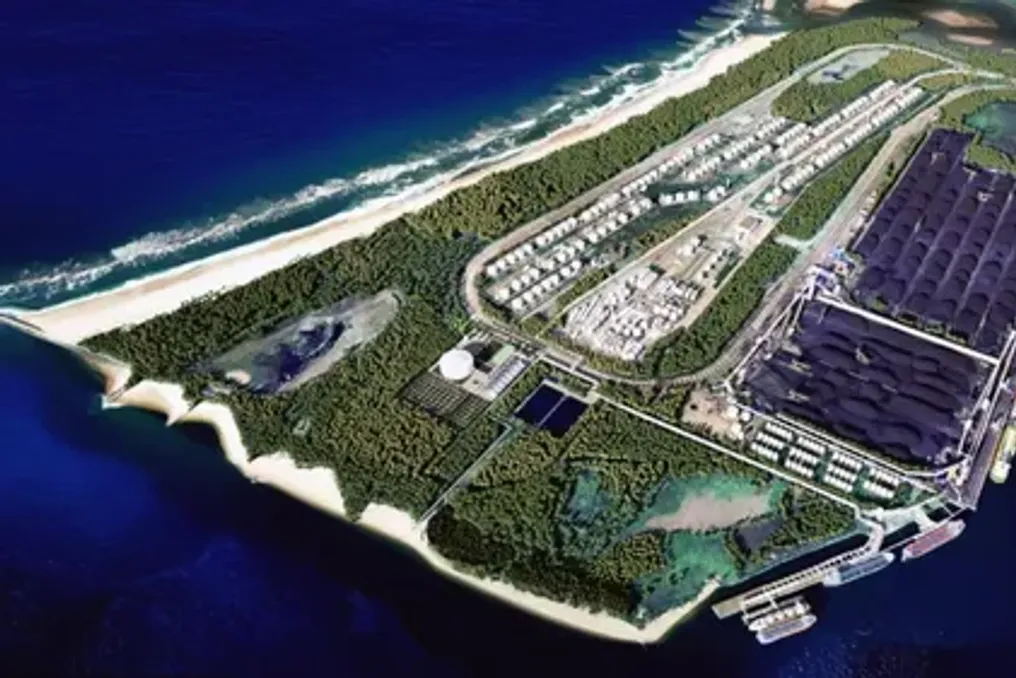
Richards Bay becomes a potential energy hub for Africa due to port infrastructure development
Read more
IOL
iol.co.za

Richards Bay becomes a potential energy hub for Africa due to port infrastructure development

The Port of Richards Bay has been designated for the construction of a liquefied natural gas (LNG) import terminal, which will include a floating storage unit. Experts believe that Richards Bay possesses unique conditions to ensure energy security, industrialization, and economic growth.

For a long time, Richards Bay has been recognized as one of Africa's most important ports, serving as a key export gateway for raw materials, finished products, and bulk goods. Despite past difficulties, the city is now on the threshold of greater opportunities, becoming a catalyst for achieving energy security, industrialization, and economic growth on the continent.

The role of the city should be viewed not only as a provincial development initiative but also as a strategic platform for enhancing national competitiveness and continental integration.

Strategic Location with Continental Significance

Richards Bay has several advantages that are hard to find in other African cities. Among them is one of the continent's largest deep-water ports, providing access to key regional markets, an existing industrial base, and direct links to major railway and road networks. These characteristics make it an ideal location for industrial and energy development.

The KwaZulu-Natal province is increasingly viewing Richards Bay as a central element of its long-term growth strategy, positioning the city as a national energy hub. It is capable of attracting investment in projects related to gas-to-energy conversion, renewable energy production, green hydrogen, energy storage systems, and LNG infrastructure.

The significance of this development extends beyond the province. As African economies grow and urbanize, reliable energy will become one of the continent's most important competitive advantages, and Richards Bay will play a central role in this. The immediate beneficiary will be KZN itself, as large investments in energy infrastructure stimulate construction, create jobs, and increase demand across various sectors.

This aligns perfectly with the provincial growth and development plan for KZN until 2035. One of the most interesting aspects of Richards Bay's development is its capacity to support industrialization. Historically, economic growth in Africa has often been limited by inadequate energy infrastructure. Access to affordable and reliable energy is a prerequisite for manufacturing, mineral processing, and petrochemicals.

The creation of LNG import facilities, liquid cargo terminals, fuel storage infrastructure, and gas distribution networks will form an industrial ecosystem capable of attracting significant domestic and international investment. This industrial agenda is consistent with South Africa's broader economic goals: increasing production capacity, reducing import dependence, and creating high-paying jobs.

For KZN, this could make Richards Bay the core of a wider development corridor, and for South Africa, it could help revitalize industrial competitiveness. For the entire continent, it could demonstrate how a port city can become a platform for energy-powered production and regional trade. The multiplier effect can be substantial: every major infrastructure project creates opportunities, and new industrial enterprises boost municipal revenue, foster skill development, and support secondary industries in Zululand and northern KZN.

Strengthening South Africa's Energy Security

South Africa faces a growing challenge known as the 'gas gap'. Existing gas reserves from the mature fields of Pande and Temane in Mozambique are expected to decline in the coming years, posing risks to industrial operations and energy-intensive sectors dependent on natural gas.

The planned LNG import infrastructure in Richards Bay could help address this issue by providing a new channel for importing, storing, and distributing natural gas among power producers and industrial consumers. This is not just an infrastructure project, but a strategic national asset.

Reliable gas supply can support the development of gas-fired power plants, including the proposed gas-to-energy conversion capacity in Richards Bay. Such developments can stabilize South Africa's energy supply, complementing the country's growing renewable energy capacity. By strengthening energy security, Richards Bay can boost investment confidence nationwide, allowing industries to expand production, create jobs, and improve competitiveness.

Beyond South Africa, Richards Bay has the potential to become one of Africa's most vital energy gateways. The continent continues to face a significant energy deficit, and many countries are seeking reliable access to affordable fuel and modern energy infrastructure. Richards Bay's strategic position on the Indian Ocean makes it a natural entry point for global LNG supplies and energy trade flows.

As trade expands within the African Continental Free Trade Area, ratified by 48 countries and valued at $450 billion by 2035, ports that efficiently facilitate the movement of energy products, industrial goods, and raw materials are becoming increasingly valuable. Richards Bay potentially could serve not only South Africa but also neighboring countries and developing regional markets.

Platform for Sustainable Growth

It is important to note that Richards Bay's future is not limited to traditional energy sources. The city's development plans may include renewable energy generation, green hydrogen production, and energy storage technologies. This opens up a powerful opportunity for South Africa to achieve a balanced energy transition that considers both energy security and economic growth while gradually developing cleaner industries.

Instead of choosing between development and sustainability, Richards Bay can demonstrate how these two aspects can advance in parallel.

Opportunities

The development of Richards Bay represents more than just a set of infrastructure projects. It is a strategic economic opportunity capable of transforming KwaZulu-Natal, strengthening South Africa's energy security, and preparing Africa for a more industrialized and prosperous future. With its world-class port, expanding energy infrastructure, growing investment portfolio, and strategic location, Richards Bay is becoming one of the continent's most crucial nodes of economic growth.

If successfully implemented, the city could become a model of how energy development, industrialization, and regional integration can work together to create jobs, attract investment, and ensure long-term prosperity for Africa. For KZN, Richards Bay is a growth engine; for South Africa, it is a vital artery; and for Africa, it is a gateway to the future.
Similar stories

South Africa's Unfinished Economic Story: Transitioning from Democracy to Economic Power
Read more
iol.co.za

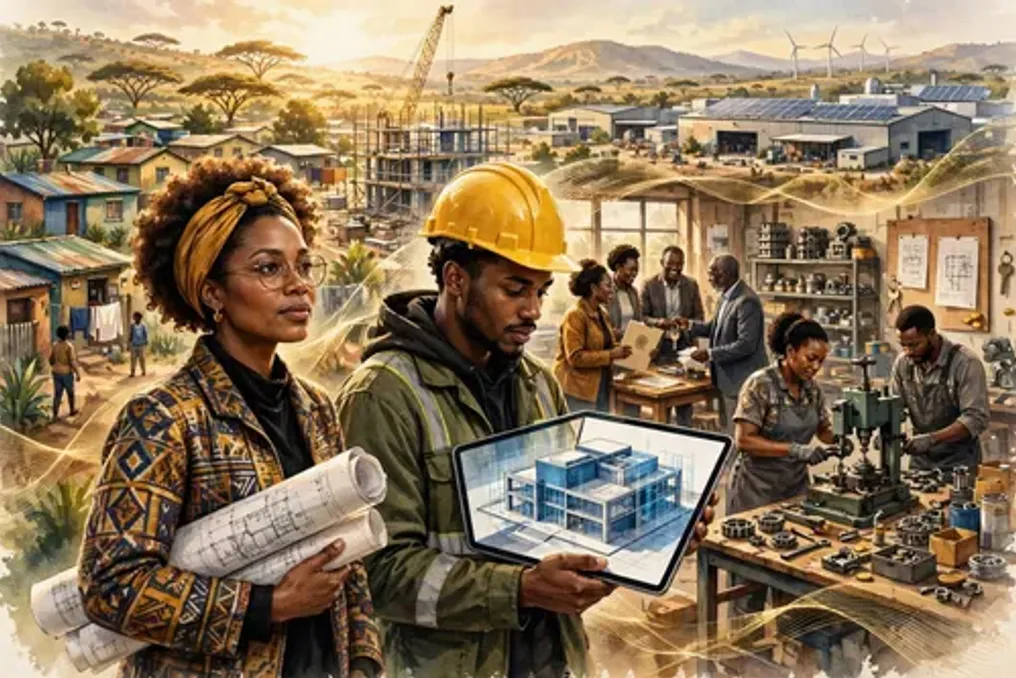
South Africa's Unfinished Economic Story: Transitioning from Democracy to Economic Power

As South Africa moves into the future, a key question remains: how to reimagine the economic landscape to empower the black majority and ensure sustainable success for future generations? The black majority in South Africa has held political power for thirty-two years, yet it has accumulated significantly less economic power necessary for genuine national transformation. This is not a critique of democracy itself, but rather a description of an incomplete task.

Although the country has become very adept at responding to racism—by discussing racist remarks, acknowledging historical injustices, challenging symbols, and reviewing apartheid crimes, which is often justified—there is another question that deserves equal urgency: what are we building? Political liberation alone does not generate economic power. Economic power is not merely about having jobs; it is tied to owning productive assets, controlling capital, creating companies, generating intellectual property, shaping institutions, influencing markets, and possessing the purchasing power that dictates what the economy produces.

The example of Eskom illustrates this problem. If Eskom is assessed solely through the lens of profit and loss, its fundamental purpose—development—is overlooked. Established as the Electricity Supply Commission in 1923, Eskom was created in industrializing South Africa to provide electricity, a vital input for economic growth. Its initial mandate was closely linked to expanding mining, railways, industry, and the economy as a whole.

Electricity has never been just a consumer good. The built environment sector understands this deeply: construction, manufacturing, digital infrastructure, and Fourth Industrial Revolution technologies transforming design and facility management all depend on a reliable power supply as a basic resource. Power outages did not just inconvenience households; they delayed construction projects valued at 47 billion rand since 2019, stalled industrial potential, and pushed back digital transformation timelines by years.

Of course, Eskom must be financially sustainable, efficiently managed, and accountable for the use of public resources. However, judging a development-oriented institution only by whether it makes money risks confusing means with ends. A more critical question is whether reliable and accessible electricity allows South Africa to produce more, employ more people, build more businesses, and become more competitive. The modern economy cannot function without abundant and reliable electricity, just as the strategy for black economic advancement cannot.

This leads to an uncomfortable reality: Black South Africans constitute the overwhelming majority of the population, but demographic superiority has not translated into equivalent economic power. According to the 2022 South African census, the black population accounted for 81.4%. Nevertheless, household income and wealth remain deeply unequal across races. This is not just an issue of consumption inequality; it is an issue of ownership and productive capacity.

A society can have millions of consumers without having millions of asset owners. This distinction matters. Consumption drives the movement of the economy, while ownership determines its direction. When a Black household buys goods from a multinational corporation, it participates in the economy. But when a Black enterprise produces those goods, hires workers, owns intellectual property, and retains profits, it exercises economic power. These are different things. Therefore, South Africa must broaden its definition of transformation.

Transformation cannot be measured solely by the number of employed people, the number of graduates entering the labor market, or the volume of social welfare spending. These factors are hugely important, but transformation must also ask: Who owns the productive economy? Who owns the enterprises? Who owns the intellectual property? Who owns the land and productive assets? Who controls the capital? Who creates the technology? Who owns the media platforms through which South Africans understand themselves and their economy?

The last question is particularly crucial because economic power and narrative power are closely linked. The black majority in South Africa does not control a comparable mass media ecosystem that reflects its demographic weight. SABC remains the country's most important public broadcaster, but its financial vulnerability has repeatedly threatened its public mandate.

This is important because the media does more than just report reality; it helps determine which issues become national priorities. The same logic applies to knowledge production. Knowledge in the South African built environment—its design standards, software systems, accreditation frameworks, and research infrastructure—is still predominantly shaped by Global North institutions. Black South African engineers, architects, and construction specialists train using curricula developed elsewhere, use foreign software, and build careers whose intellectual products are cited and valued outside the country.

Epistemic ownership is inseparable from economic ownership; it is one of its foundations. Recent public events have demonstrated that South Africa's historical narrative remains actively contested. But the more significant question is not whether history should be remembered—it must be remembered—but whether Black South Africans are actively involved enough in creating the institutions through which their own history is told. If we do not build institutions capable of telling our stories, others will continue to define the national conversation for us.

This also explains why the historical argument is relevant. South Africa's economic structure did not suddenly emerge in 1948. Apartheid intensified and institutionalized racial capitalism, but many foundations of the country's unequal economic order were laid during colonial conquest and the development of the mining economy even before the National Party took power. Systems of labor migration, racial land ownership, spatial segregation, and unequal access to education and capital have a history predating apartheid. Recognizing this is not an exercise in historical accusation; it is necessary to understand why the political changes of 1994 alone could not erase centuries of accumulated economic advantage.

The democratic state inherited an economy where ownership, capital, and productive assets were already highly concentrated. Three decades later, the question must be asked: was our transformation strategy ambitious enough? Perhaps it focused too heavily on redistribution after wealth creation, and not enough on creating new sources of wealth and ownership. Perhaps we spent too much time on how Black South Africans could access the existing economy, and not enough on how to build an economy where Black South Africans are the owners, producers, and providers of capital.

This is especially relevant for townships. Townships are often discussed primarily through the lens of poverty, unemployment, and service provision. But they also represent massive markets. They contain consumers, entrepreneurs, skills, informal businesses, and social networks. The challenge is to convert township purchasing power into productive capacity. Instead of simply asking how the government can increase spending in townships, we should ask how most of that spending can contribute to business development, asset building, and productive capacity within these communities.

How do we turn consumers into shareholders? How do we help informal businesses become formal, scalable enterprises? How do we create financial systems that recognize township entrepreneurs as economic actors, not perpetual beneficiaries? How do we ensure youth are trained not only to compete for jobs but also to create intellectual property, companies, and technologies? How do we build digital construction skill pipelines that make township contractors competitive in a procurement environment increasingly demanding BIM, digital project management, and structured data handover?

An infrastructure portfolio worth 395 billion rand slated for procurement represents an economic opportunity for township construction firms, but only if these firms possess the digital capabilities to participate in tenders and execute public contracts. These are far more complex questions than identifying a racist, but ultimately, they may be more important. There will always be people seeking to provoke, exclude, or humiliate Black South Africans. We cannot build a national economic strategy around reacting to every provocation. At some point, initiative must replace reaction.

The goal should not be the creation of prosperity for the black population as a tool of racial exclusion. The goal must be the construction of a broader South African economy in which the majority possesses sufficient economic strength to participate meaningfully in determining its direction. This requires electricity that supports industry; infrastructure that connects people to markets; education that prepares creators, not just employees; financial institutions willing to fund new ventures; media institutions capable of creating independent narratives; companies able to move from township markets to national and international markets, and, above all, a cultural shift from access to ownership.

South Africa has spent 32 years asking whether democracy provided enough. Perhaps we should ask a different question: have we built enough? Because the future of the black majority cannot indefinitely depend on government redistribution, corporate transformation assessment systems, or reacting to the latest racist provocation. Political power has changed who governs South Africa. The unfinished question is who owns, builds, and shapes its future. And for a scholar specializing in the built environment who has spent their entire working life asking why our townships remain spatially isolated from economic opportunities thirty years after liberation, this question is not abstract. It is work.

Popular