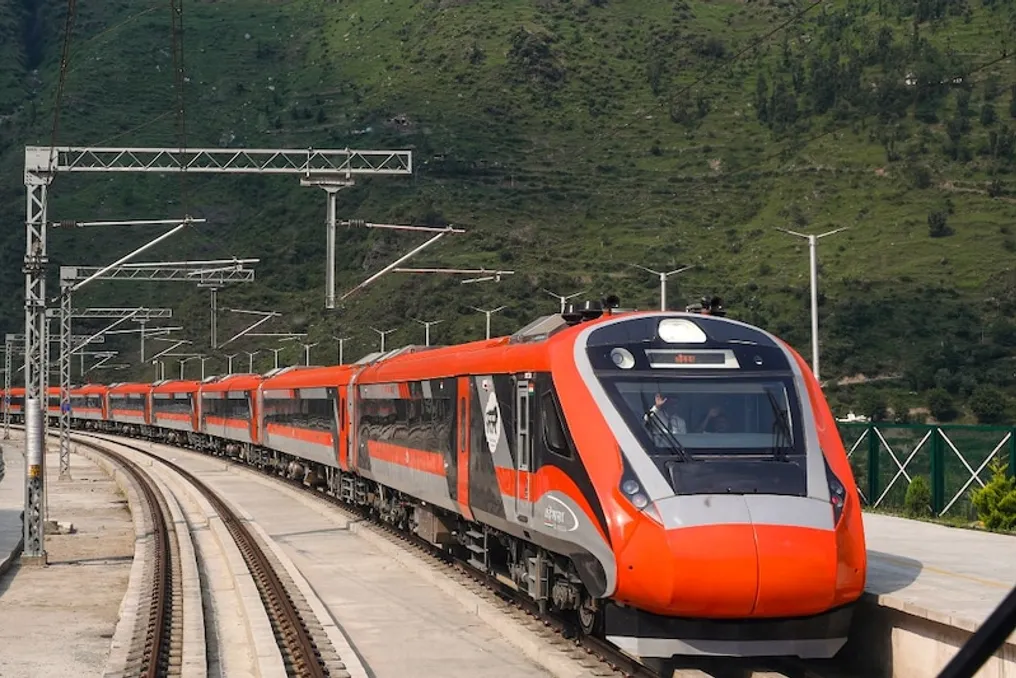
Indian hydrogen trains: Railway explores new routes to expand service to Delhi
Read more
Aaj Tak
www.aajtak.in

Indian hydrogen trains: Railway explores new routes to expand service to Delhi

India's first hydrogen train may soon reach Delhi, marking a new chapter in eco-friendly railway transport. According to reports, preparations are underway to expand the hydrogen train service, and Indian Railways is considering establishing a new rail route from Jind.

However, the preparation is currently in its initial stages as officials assess passenger demand, capacity, and operational challenges.

Despite the fact that the country's only hydrogen train can carry up to 2600 passengers, only about 40-60 people currently travel on the existing Jind-Sonipat route, which is 89 kilometers long. Due to this low passenger flow, the railway is forced to look for an alternative path for this train, preparing for its expansion to Delhi.

The hydrogen train may soon start running further than in Haryana. An extension of the route to Azadpur in Delhi, near the wholesale fruit and vegetable market, is being considered. Although officials are already conducting tests, the further development of this plan will depend on ensuring passenger safety and resolving operational issues.

Traveling to Delhi seems simple, but there is a serious complexity. The hydrogen train is equipped with ten carriages, whereas satisfying high passenger traffic on routes in Delhi often requires 18 to 20 carriages. This imbalance in capacity could be the biggest obstacle to the proposed expansion.

According to reports, one full tank of the hydrogen train allows it to cover a distance of 250-300 kilometers, while the distance from Jind to Delhi is approximately 130 kilometers. However, there is a major fuel issue here: hydrogen refueling is currently only available in Jind. This means that before expanding the route to Delhi, efforts must focus on creating refueling infrastructure for the train.

If servicing the train in Delhi proves difficult, this hydrogen train could be repurposed for an 180-kilometer route connecting the stations of Jind, Sonipat, Panipat, and Safidon. There is a possibility of increasing the daily number of passengers in Panipat due to industrial activity, and this backup route could solve the problem forcing the railway to revise its plans.

Similar stories

First ultra-luxury train in Saudi Arabia, 'Desert Dream,' will offer guests a five-star hotel experience
Read more
www.aajtak.in

First ultra-luxury train in Saudi Arabia, 'Desert Dream,' will offer guests a five-star hotel experience

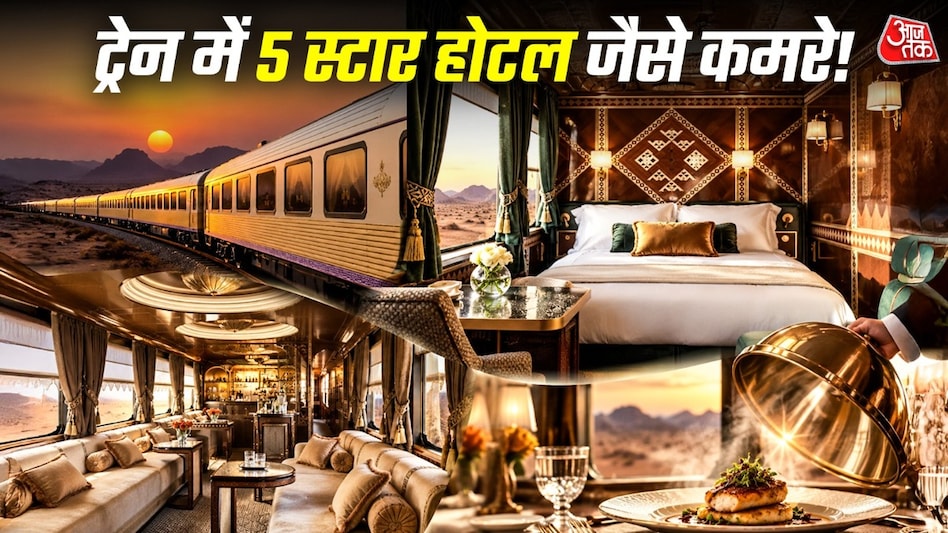
The opportunity to experience luxury travel on the move is presented: 24-hour butler service, hotel-level suites, magnificent restaurants, and views of the vast Saudi Arabian desert right from the train window. Saudi Arabia is preparing to offer a similar royal experience. The country's first ultra-luxury train, named 'Desert Dream,' is intended to provide passengers not just transportation from one point to another, but a complete elite travel experience. One night of such a journey will cost a huge amount, in exchange for a moving palace.

Saudi Arabia's new luxury train, 'Desert Dream,' attracts attention due to a number of features. Instead of ordinary seats or carriages, it will feature hotel-level suites, round-the-clock butler service, exquisite restaurants, and lounge areas. Notably, all these amenities will be accompanied by travel through the vast desert and historical regions of Saudi Arabia. This is why the ticket prices are significantly higher than those of ordinary trains.

According to reports, the initial price for one compartment is about 30,000 Saudi riyals, equivalent to approximately 30,000 dirhams per night. In Indian rupees, this amount is estimated at approximately 6.5–7 lakh rupees per night. The official website of 'Desert Dream' emphasizes that the train's specialty is not only its external splendor. Passengers are provided with luxurious suites, exquisite cuisine, lounge areas, live entertainment, and personal butlers. Furthermore, picturesque views of the desert and historical sites of Saudi Arabia open up from the train windows. Thus, the journey here is not just about reaching a destination, but a comprehensive experience of enjoying luxury in motion with a close acquaintance with the desert.

Reiterating the pricing issue, it is reported that the starting price for one compartment reaches 30,000 Saudi riyals, corresponding to approximately 30,000 dirhams per night, or about 6.5–7 lakh Indian rupees per night. This level of pricing indicates that 'Desert Dream' is positioned not as an ordinary railway trip, but as an exceptionally special experience of elite tourism.

'Desert Dream' is designed not as a standard passenger train. It will consist of 12 carriages, housing 34 passenger suites. The train can carry about 72 people simultaneously, ensuring no large crowds. The focus is on comfortable and private travel with a small number of passengers, aiming to create an impression comparable to staying in a five-star hotel.

The main highlight of this train will be the route itself. The train will allow passengers to view the desert and natural landscapes of the country up close, passing through various regions of Saudi Arabia. The train route will start in Riyadh and move in a northern direction, including locations such as Hail and Al-Quraiyat. Thus, the trip becomes not just a means of transport, but a self-sufficient tourist adventure.

According to information from the official website of 'Desert Dream,' the train is being developed so that passengers can feel the atmosphere of a premium hotel inside the carriage. It will feature luxurious suites, comfortable seating and sleeping areas, and high-class amenities for guests. The train's design aims to combine both Saudi Arabian culture and modern luxury. That is, the exterior will have a traditional desert look, while the interior will have ultra-modern amenities.

The most unique feature is the interior, which combines modern luxury with traditional Saudi Arabian culture. The design work was carried out by architect and interior designer Aline Asmar d’Amman and her studio Culture in Architect. Inside the train, one can see beautiful carved wooden elements, expensive fabrics, soft lighting, and attractive design. Many design elements are inspired by traditional Saudi Arabian equestrian art and culture. This means that passengers will immediately upon entering the train experience a blend of modern hotel comfort and authentic Saudi atmosphere.

The cost of this train causes the most astonishment. The starting price for one compartment is set at approximately 30,000 dirhams per night. Additionally, those interested in early trips can place a refundable deposit of about 2,500 dirhams to be included in the priority passenger list. This implies that the travel expenses will multiply the costs of an ordinary train journey. However, Saudi Arabia presents this not just as a trip, but as a unique experience of elite tourism.

In recent years, Saudi Arabia has been actively promoting tourism through the implementation of many large projects. 'Desert Dream' is considered a significant step in this direction. The project's goal is to give travelers the opportunity to see various regions of Saudi Arabia in a completely new and luxurious way. In the future, trips across Saudi Arabia will not be limited only to major cities and...

Vande Bharat Sleeper high-speed train tested at 160 km/h with Kavach system check
Read more
www.aajtak.in

Vande Bharat Sleeper high-speed train tested at 160 km/h with Kavach system check

During journeys, passengers usually pay attention to speed, schedule, and amenities; however, the faster the train moves, the more serious the safety issue becomes. This is especially relevant in conditions where the railway is preparing to expand its network of semi-high-speed and high-speed trains in the country. Therefore, it is crucial not only to accelerate train movement but also to ensure that the safety system operates quickly and reliably in case of danger.

As part of this process, Indian Railways has taken an important step. On the Hazrat Nizamuddin – Palwal route, a 16-coach Vande Bharat Sleeper train was run at a speed of 160 kilometers per hour to test the 'Kavach' safety system. During these tests, special attention was paid to the communication system between the train and the station.

The North Western Railway conducted this high-speed test between Hazrat Nizamuddin and Palwal. For the first time on this section, the 16-coach Vande Bharat Sleeper train was launched at a speed of 160 kilometers per hour. According to the report, the train departed from Hazrat Nizamuddin on September 9th around 13:38 and arrived at Palwal at 14:21. After a stop of approximately 31 minutes, the train departed again at 14:52 and returned to Hazrat Nizamuddin at 15:32.

Approximately 50 kilometers were covered between the two stations during this movement. However, the train did not move continuously at 160 kilometers per hour across the entire route. Construction work was underway on the Faridabad main line, and both main lines were closed. As a result, the train traveled on a loop line, and its speed had to be reduced when passing through stations.

The purpose of this high-speed run was not only to test the speed of the Vande Bharat Sleeper. The Kavach communication system was also tested during the trials. According to the report, communication between the driver and the station remained uninterrupted throughout the journey. Railway representatives stated that no communication failures were observed. This system is considered critically important when operating trains at high speeds.

Kavach is an indigenous automatic train protection system of Indian Railways. Its function is to provide the driver with necessary warnings during movement and enhance the level of safety in case of a threat. If necessary, this system can automatically brake the train. The goal of Kavach is to minimize risks associated with signal violations, train collisions, and human error. In January, the Ministry of Railways announced that the Kavach complex developed in the country has been installed in the Vande Bharat Sleeper train.

According to officials, the high-speed check was successful. Previously, about 30 such tests were conducted on the New Delhi – Palwal route. Now, Indian Railways is working on a large-scale expansion of the Kavach system across its network. This is important for the railway because the number of high-speed trains is planned to increase in the future. Under such conditions, simply increasing the train's speed is not enough; the safety technology must be equally reliable. This Vande Bharat Sleeper test is considered an important step in this direction.

Proposal for the launch of the Vande Bharat high-speed train between Tirupati and Shivamogga Town via Bangalore
Read more
www.aajtak.in

Proposal for the launch of the Vande Bharat high-speed train between Tirupati and Shivamogga Town via Bangalore

The Ministry of Railways has positively responded to the proposal for launching a new Vande Bharat express that will connect Tirupati and Shivamogga Town via Bangalore, covering a distance of 545 kilometers in a few hours. Although final approval and the start date for the train have not yet been announced, this new service is expected to benefit passengers traveling between Tirupati and Bangalore.

The initiative on this matter was put forward by the Tirupati MLA Maddila Gurumurthy. He sent a letter to the Chairman and Managing Director of the railway board demanding infrastructure improvements at the Tirupati railway station. Furthermore, he raised the issue of the need to launch new Vande Bharat services for Tirupati, given the growing number of pilgrims.

In response to the MLA's request, the railway board stated that the project to launch the Vande Bharat train from Tirupati to Shivamogga Town has been prepared. It is planned that this route will be served via Bangalore. The MLA viewed the response received from the railways as a positive step.

Tirupati is one of the country's major religious centers, attracting a large number of pilgrims. Due to the increasing flow of passengers, there is a constant demand for expanding station capabilities and introducing faster and more modern railway services. It is precisely with this in mind that the proposal for the Vande Bharat service connecting Tirupati with Shivamogga and Bangalore arose.

The proposed Vande Bharat service is expected to provide improved transport accessibility for people traveling between Tirupati and Bangalore. According to MLA Maddila Gurumurthy, the benefits will accrue not only to pilgrims but also to people traveling between these cities for educational, medical, and other urgent needs.

Currently, this service is at the proposal stage, and although the railway board has given a positive response, official information regarding final approval or the schedule for the train's operation is still unavailable. Therefore, passengers will have to wait for an announcement of the start date and the final route. In the near future, it is expected that the railway board will clarify the further process for the proposal, final approval, and operating schedule.

Popular