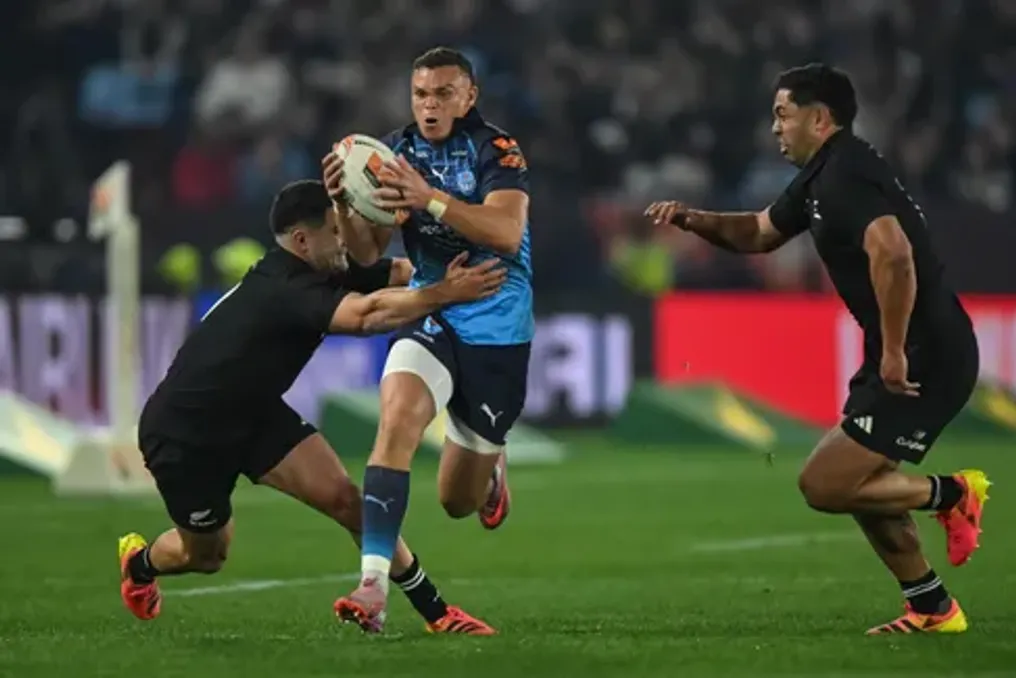
Stormers, Bulls, Lions, and Sharks aim for URC playoffs with four teams
Read more
IOL
iol.co.za

Stormers, Bulls, Lions, and Sharks aim for URC playoffs with four teams

Four South African franchises participating in the United Rugby Championship (URC) — Stormers, Bulls, Lions, and Sharks — are striving to qualify for the season's playoffs simultaneously for the first time. These teams enter the new campaign bolstered by Springbok-level players and international experience.

The main objective for all four squads is to transform their existing strength into consistency throughout the long URC and Champions Cup season. Considering the return of stars, ambitions for the 2027 Rugby World Cup, and the presence of experienced Boks players, they all have serious goals, aiming to secure a spot in the top eight.

United Rugby Championship

The Bulls, last season's finalists, intend to overcome the disappointment of losing the URC Grand Final. Having been 'eternal bridesmaids' for four seasons, they want to end this streak of setbacks. The Pretoria-based team has strengthened with new players and possesses young talents to supplement the squad. Now, success depends on the team and coaches to ensure a top-eight finish for playoff qualification. This lineup represents a quality mix, and they are likely to once again become a symbol of South Africa as they strive for more this season. Their first match is scheduled against Zebre on Saturday, September 26th, at Parma, starting at 18:45.

To watch the game, attention should be paid to flyhalf Kurven Boshoff and young player Chesville Joste.

The Stormers failed in the semi-finals against Leinster last season. They fought hard for a place in the final before the defending champions demonstrated their strength in Dublin, defeating the debut tournament winners. Stormers have attracted well-known Springbok players, and there is an expectation that with their availability by the end of the season, the team will be able to host at least quarter-final and semi-final matches. Last year's midfield slump cost them a chance to play at home in the final four. However, the assembled squad allows Stormers to become a formidable force, and this time they aim to go the distance.

Stormers' first match will be against Connacht on Friday, September 25th, in Galway, starting at 20:45. Keep an eye on Cheslin Kolbe (utility forward) and newcomer Jackeen Ahmed (flyhalf).

The Lions hold high hopes. Last season, they tested themselves in the rugby playoffs for the first time, and although they faced a difficult task, there is hope for greater success this time. Lions will meet Leinster in their first match and aim to avenge their quarter-final defeat earlier this year. Furthermore, it is a chance to build on the success of a brilliant match against the All Blacks during the Greatest Rugby Rivalry. Lions have proven they can compete with the best and want to maintain this confidence in the URC while their young players continue to shine.

Their first match is scheduled for Saturday, September 26th, at Ellis Park, starting at 13:30. Watch out for Franke Horn (number eight) and newcomer Siba Mahase (loosehead prop).

Sharks showed significant underperformance last season. With squad reinforcements and a full management team led by JP Pietersen, Sharks intend to start the season strongly. The Durban-based team must repay its fans. Pietersen's team is the only franchise from South Africa that did not make the Top 8, and their mission is to return to the playoffs and contend for a spot in the Champions Cup, starting their campaign at Kings Park. They have the players and coaches for a strong resistance, but everything will depend on their ability to find cohesion and avoid injuries, which complicated things for them last season. Sharks' first match will be against Ospreys on Saturday, September 26th, at Kings Park, starting at 16:00. Keep an eye on Vincent Tsitukwe (utility forward) and newcomer Zeketelo Siyaya (utility forward).

Similar stories

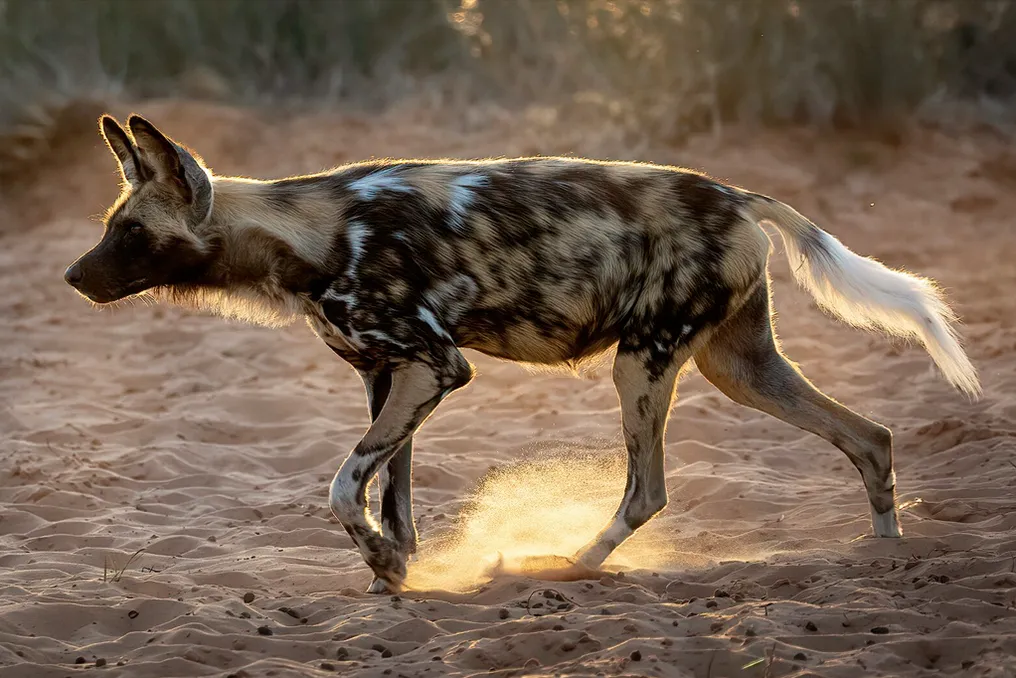
Pack of wild dogs sets distance record in Africa
Read more
super.abril.com.br

Pack of wild dogs sets distance record in Africa

A pack of African wild dogs undertook a long journey across Zambia, traversing the country along a winding route to find new breeding partners. This saga exceeded the 4,000 km mark, setting a new record for the distance traveled by African mammals.

In groups like this, reproduction is usually limited to one dominant male and one dominant female. Given this, pack members have two choices: submit to the alpha leader and assist in raising the family offspring, hoping for future leadership; or leave alone in search of more immediate mating opportunities.

Interestingly, Kafue National Park offers ideal conditions for wild dogs, covering over 22,000 square kilometers, with a great variety of prey and abundant food and shelter, suggesting a comfortable life for them.

However, the wild dogs chose to travel long distances, utilizing their endurance and long legs for locomotion. In biology, this movement is called dispersal, characterizing the displacement of animals in search of a mate, aiming to decrease competition for resources and avoid inbreeding.

In mid-July 2025, two sisters began the dispersal. Two weeks later, three more brothers followed the same path. To track this journey, researchers equipped one member of each group with a radio telemetry collar. The full account of this trip was detailed by the researchers in an article published in the journal Ecology.

The situation became complicated after the siblings left the den. Despite being carnivores, the wild dogs are constantly under threat from other predators. Lions pose a major danger to both adults and pups, while hyenas facilitate the theft of their prey. Furthermore, crossing rivers increases the risk of being attacked by crocodiles.

The females remained for several weeks in an area near the park that had less protection and fewer prey compared to Kafue National Park. The males, on the other hand, showed more audacity, marching east towards an unprotected area of Zambia.

After months apart, in September of the same year, the family briefly reunited, located a thousand kilometers from home. The siblings spent only one day together before heading south separately: the males avoided main roads, and the females used a wooded area.

This decision turned out to be decisive. In October, one of the unfitted females was likely captured in a trap intended for wild animal hunting. Subsequently, the collared female suffered the same fate, having her collar cut, which resulted in the loss of contact with the group's sisters by the researchers.

The males' luck was different. The group managed to establish itself in a new territory located on the Great Rift Valley, approximately 419 kilometers from their starting point. In total, their journey through Zambia amounted to 4,126 kilometers.

For the researchers, this case serves as evidence that African wild dogs have the capacity to recolonize areas where they were previously extinct. However, the adventure raises concern, as it is not ideal for these animals to have to travel long distances solely for mating purposes.

Springboks demonstrate growing superiority over All Blacks in series of matches
Read more
iol.co.za

Springboks demonstrate growing superiority over All Blacks in series of matches

Springboks captain Siya Kolisi and his teammates achieved an impressive result against the All Blacks led by Russell Erasmus, further solidifying the team's dominance over their arch-rival.

The triumphant series for the Springboks, with a score of 3:1 against the All Blacks, revealed a significant gap between these two Southern Hemisphere giants. After the fourth test in the greatest rugby rivalry in Baltimore, where the world champions won 43:28 and secured their first trophy, it is becoming increasingly difficult to claim that these two teams are evenly matched.

The Boks are now operating at a different level, and even the mighty representatives of New Zealand are struggling to keep up. To win three consecutive matches against the All Blacks requires a special team, and this is exactly what the Boks did, concluding the series after a loss in the first match at Ellis Park in August. However, three dominant performances, backed by immense squad depth, allowed them to defeat their bitter rivals.

Squad depth is the defining advantage of the Springboks

What makes the defeat of the world's second-ranked team even more significant is that in the last 10 encounters, the Springboks have won eight times, while the All Blacks have managed only two victories—one in Auckland and one in Ellis Park.

Meanwhile, the Boks have dominated them, especially in the match where they crushed the team 35:7 in Twickenham, the 43:10 victory in Wellington, and the latest win in Baltimore. This indicates that the evolution of the Springboks machine has surpassed the development of the mighty black team, and they are currently dominating their competitors. It is almost unheard of for the New Zealanders to lose three consecutive matches to the same team, let alone eight out of the last ten meetings against them.

However, this is the current situation between the two sides. And the most worrying thing is that in none of the Greatest Rivalry matches were the Boks playing at their best level. Issues such as lineup changes due to injuries, uncharacteristic errors, inability to convert numerous attacks in the 22-meter zone into points, and a high number of penalties slowed down the Springboks at various times. Nevertheless, even making these mistakes, the world champions find a way to win.

This is what currently distinguishes the teams: the depth of the Boks' squad, the ability of all players to fulfill any role, and the quality of that depth. New Zealand has failed to catch up over four tests, and injuries have severely undermined them, with the loss of captain Ardie Savea in the third match likely being the most significant. South Africa has shown them how to cope and win despite various changes, and this kind of depth is currently unprecedented in world rugby. The task now is to continue moving in this direction. Erasmus has demonstrated that they can change tactics and still beat the best in the world.

A warning for the 2027 World Cup

Before the matches against the Wallabies and Italy, before they meet France and Ireland in the Nations Cup, opportunities open up for further squad experimentation from Erasmus and his management. If they manage to include players such as Paul de Villiers, Cameron Hanekom, Johan Grobbelaar, Jan-Hendrik Vessels, Morne van den Berg, Ntutuku Mchunu, Zack Porten, Ben-Jason Dixon, Ethan Hooker, and Edwill van der Merwe, it will put the Boks in an even stronger position ahead of the 2027 Rugby World Cup.

The Boks have already won the World Cup, defeated the All Blacks on home soil, dominated them in South Africa, and crushed them on neutral ground. More importantly, they did this with different combinations, different players, and under different circumstances. Perhaps this is the biggest wake-up call for the rest of the world: this Springboks team is not just beating the All Blacks—it is building sustainable dominance over them, making it a dangerous contender. Currently, the New Zealanders are chasing the world champions, and Erasmus and his management will want to maintain this state for many years to come.

Young Stormers players demonstrate skill in friendly match against Bulls in Paarl
Read more
iol.co.za

Young Stormers players demonstrate skill in friendly match against Bulls in Paarl

Several young players from the Stormers team made a strong impression on rugby director John Dobson during the pre-season friendly match for the United Rugby Championship (URC). The game took place in Paarl against the Bulls on Friday.

Although the Stormers team lost to their opponents with a score of 38:26 at the Faure Street Stadium in Winelands, the final result should not cause serious problems for the Cape Town side.

Both teams had outstanding scrums in attack, and the Stormers frequently forced the Bulls backward, earning several penalties during this phase of the game. This advantage continued into the second half, as the Pretoria squad could not counter the powerful scrums.

Both teams successfully utilized rolling mauls, but the visitors dominated in this aspect, scoring several points thanks to their strong forwards. The Stormers were also able to earn a penalty try through a strong effort in the second half.

However, errors after the break, such as a charged kick from substitute flyhalf Yaqeen Ahmed and some confusion in the midfield that left a huge gap in defense, led to two tries that changed the course of the game in favor of the Bulls.

Experience exchange and player performances

A good early burst from experienced players, including captain Marcell Coetzee, number eight Jandré Rudolph, teammate Hanro Liebenberg, and fullback Willie le Roux, helped the visitors gain a 17:12 lead at halftime. Other notable performers for the Bulls included winger Sébastien de Clercq, who looked sharp in attack after a long injury layoff, scrumhalf Paul de Wet, and inside centre Stravino Jacobs.

Bulls coach Johan Ackermann stated after the match: "I just told Dobson that it was perfect in terms of what we wanted to see from the players." He added: "There were mistakes that we know we need to fix, but a big plus is the lack of injuries. Willie had a slight hamstring tightness, but otherwise, we went through the game unscathed. There were good moments, and we are pleased with that."

For the Stormers, speedy runner Roland Leighton Davids scored almost on the first touch, outpacing Bulls winger Taakir Abraham with his explosive speed to run down the sideline and score. Although Abraham is not weak himself, the manner in which Davids overtook him showed that he has something special.

Young fullback Dylan Miller scored two tries and looked reliable after active participation in the Stormers XXIII Currie Cup campaign. Newcomers to the squad, forwards Ollie Reid (prop), and loose forwards Louw Nel and Xola Nyali, also played well alongside number eight Hajiva Daimani.

Dobson noted after the game: "Listen, I am honestly very happy." He continued: "I thought, considering the number of guys we selectively brought into this game, 17 out of 31 players had never played in the URC before, so playing against this Bulls team was good. I am very excited about Leighton's performance. He was better than I expected. I think there is something truly special in him."

This match served as good preparation for both teams before the start of the URC at the end of September. Both coaches were able to conduct experiments and assess the players' readiness for the upcoming challenges. A positive aspect of the day in Paarl was the absence of injuries before the new season.

Match results

Final score: Stormers 26 (12) : Bulls 38 (17). Tries scored by halves: Dylan Miller (2), Leighton Davids, penalty try. Conversions: Yuri Matty (2). Bulls scored: Jandré Rudolph, Hanro Liebenberg, Taakir Abraham, Vian Mentour, J.J. Teron, Sébastien de Clercq. Conversions: Ruben Groenewald, Mentour (3).

Popular