A notable characteristic of reptiles is ectothermy, meaning dependence on ambient temperature for body regulation. However, over evolution, various lineages of ancient reptiles developed endothermy, the scientific term for the concept of 'warm-blooded'.
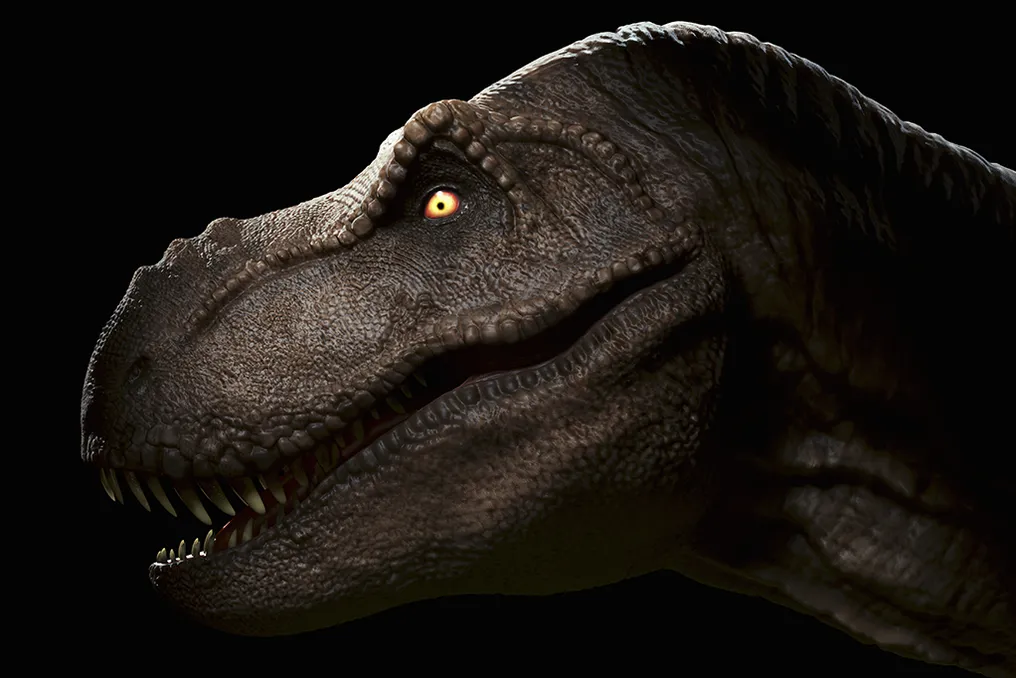
Tyrannosaurus rex is an example of this phenomenon. Although scientists suspected this dinosaur's warm metabolism for decades, the evidence was indirect. In 2022, for instance, a fossil footprint found in Alaska suggested that these predators thrived in areas where most cold-blooded reptiles could not survive.
Until recently, there were no direct indicators of T. rex's body temperature. However, a study published in the journal Science Advances presented the first estimate of this temperature. Unlike modern reptiles, which generally maintain temperatures between 28°C and 30°C, T. rex bodies reached about 36°C, similar to human temperature.
This finding is not entirely surprising, given that modern birds, which are descendants of dinosaurs and survived the extinction, are endotherms. This led scientists to anticipate that other groups of dinosaurs might exhibit this characteristic.
With the confirmation that T. rex were endotherms, researchers are reevaluating the existence of these dinosaurs, which lived between 69 and 66 million years ago. A warm-bodied T. rex strengthens the theory that they were predators with accelerated metabolism, capable of maintaining activity even in cold climates.
To determine the dinosaur's body temperature, researchers used its fossilized teeth as a kind of 'prehistoric thermometer'. The process involves analyzing the carbon and oxygen isotopes present in the outer layer of the tooth, called enamel. These isotopes form chemical bonds, and the quantity of these bonds is directly related to temperature: lower temperatures generate more bonds, while higher temperatures result in fewer bonds.
By drilling into the enamel and measuring these bonds, the authors were able to calculate the temperature at which the tooth formed, thus revealing the body temperature of T. rex. This method represents a new approach to investigating the issue. Aradhna Tripati, the study's author, commented to Scientific American: 'The chemistry of the enamel indeed records the temperature at which it formed, and 66 million years later, we can read this using these measurements.' She added that this is the best substitute to try to insert a thermometer into the animal.
Scientists dedicated more than a decade to refining this methodology, making the measurement viable. To date, the technique has been applied to some ancient species, including other dinosaurs, woolly mammoths, and megalodons. Future plans include expanding the analysis to cover all dinosaurs, including those currently classified as cold-blooded.