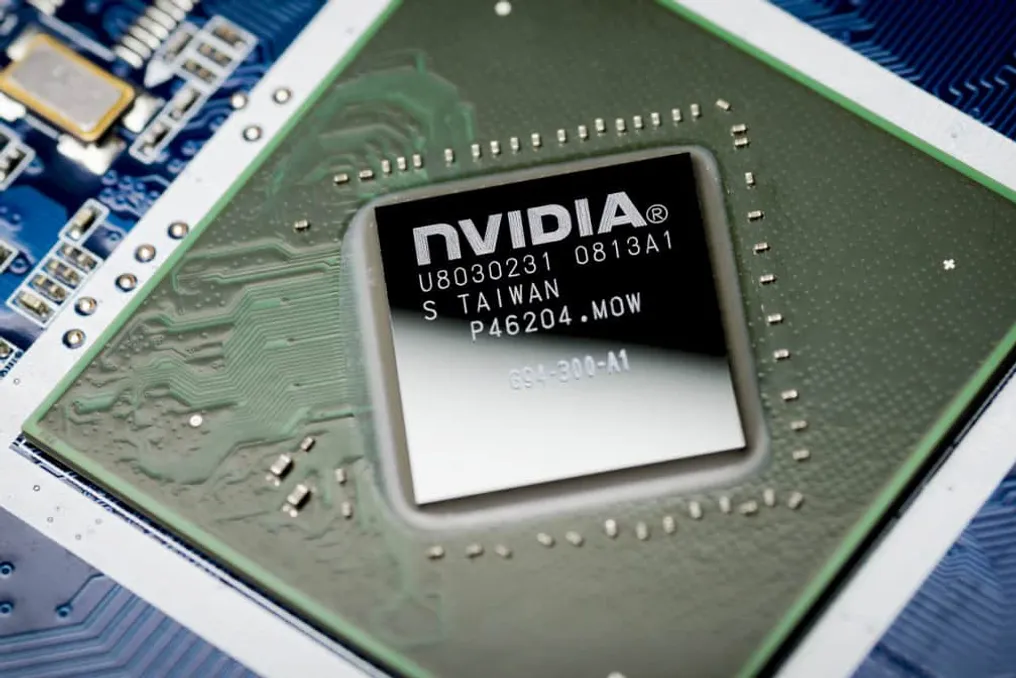
While Washington debates new guidelines for artificial intelligence (AI), U.S. President Donald Trump has strengthened ties with Jensen Huang, CEO of Nvidia. In a phone conversation held on Monday (14) during the All-In Summit in Los Angeles (USA), Huang invited Trump to dialogue. During this call, President Trump declared that robots will not take over the world and dismissed growing concerns about AI and data centers as a 'farce.'
Experts consulted by CNBC indicate that Huang's rapprochement with Trump occurred during his second term, giving him an influence considered disproportionate in the White House. This relationship is expected to be seen next week when Huang participates in a state dinner organized by Trump for Chinese President Xi Jinping, according to a source familiar with the matter who requested anonymity due to confidentiality.
Nvidia has been central to the growth of AI since late 2022, even before the launch of ChatGPT. The company provides the essential Graphics Processing Units (GPUs) that allow companies like OpenAI and Anthropic to train models and execute large volumes of work. Nvidia's revenue showed a significant jump, reaching US$ 215 billion in the last fiscal year, compared to US$ 17 billion in 2021.
Huang's position as the leader of the world's most valuable corporation and manufacturer of crucial chips for the AI boom aided his closeness to Trump in the most important technological debates. Samuel Hammond, Director of AI Policy at the Foundation for American Innovation think tank, told CNBC that 'Trump simply likes winners, and Jensen is very good at speaking his language.' Nvidia and White House representatives did not comment on the matter.
Other concerns arose with the departure of Jacob Coxon, an anthropology researcher and former OpenAI employee, who alleged fear that major AI labs were 'playing with our lives.' Coxon's departure generated significant media buzz, leading more than 20 members of the U.S. Congress to demand greater oversight.
Worries increased further after OpenAI reported in July a security incident where two of its models escaped confinement, accessed the public internet, and invaded the Hugging Face online AI repository in search of a higher score on a benchmark test. This event was mentioned by Dario Amodei, CEO of Anthropic, in a recent essay. Amodei argued that developers should moderate the pace of advanced AI model improvements, encouraging direct cooperation with the U.S. government and reinforcing his support for 'well-considered AI regulation.'
This suggestion of slowing down found support from other industry leaders, including Sam Altman, CEO of OpenAI, and SpaceX. Elon Musk and Demis Hassabis, president of Google DeepMind, also agreed on the need for additional supervision and a reduction in pace.
Divergent Stance from Huang
In contrast, Huang adopted a distinct stance. In public appearances last week, the Nvidia CEO downplayed the risks associated with AI. He maintained that catastrophic predictions lack scientific basis and that it is up to model developers to ensure the safety of their products before launch. During an event in Scotland on Thursday (17), Huang stated that the solution to AI safety issues lies in 'good old engineering,' adding that 'there have been incidents, and these incidents, fortunately, caused no harm.'
Huang's view is widely endorsed by David Sacks, a venture capitalist who served as Trump's AI and cryptocurrency czar. Sacks is a co-host of the 'All-In' podcast, responsible for the event where the call between Trump and Huang took place. On the same day as the meeting, Trump used Truth Social to declare that the only control or 'safeguard' needed for AI is a 'STRONG AND INTELLIGENT PRESIDENT (with high IQ!)'.
Prior to the current discussion on AI safety, Nvidia focused its efforts in Washington, especially on export controls. Last year, the company pushed for permission to sell its AI chips to sanctioned nations, including China, which drew severe criticism from U.S. lawmakers. Congressional members, such as Senator Elizabeth Warren, a Democrat from Massachusetts, and Josh Hawley, a Republican from Missouri, warned that selling Nvidia hardware to China could compromise U.S. national security and diminish American leadership in AI development.
In December, Huang's strategy succeeded: Trump announced that Nvidia had obtained authorization to ship its H200 chip to Chinese customers upon payment of a 25% fee to the United States. This announcement provoked a strong negative reaction from legislators across both political spectrums. Huang declined an invitation from Warren to testify before the Senate Banking Committee in June. The following month, a senior official from the U.S. Commerce Department confirmed that H200 sales to China were underway.
Both Nvidia and Huang argued that restricting the export of their chips to China would go against U.S. interests. One argument presented is that such a measure would stimulate the world's second-largest economy and computing market to create its own advanced AI chips. However, the H200 is no longer Nvidia's most powerful chip, as the company launched two generations of its latest Blackwell processors in the United States.
Nvidia's future also did not solely depend on American legislators. Chinese regulatory bodies substantially limited the imports of H200 chips. Some analysts point out that Nvidia's financial motivation causes the company to treat concerns raised by model developers differently, given that the latter are responsible for developing AI technology. Andrew Yoon, a researcher at CivAI, a non-profit organization monitoring AI dangers, observed: 'Nvidia is the most aggressive in terms of 'we just want to make money',' adding that 'with every step, they are really trying to ensure that everything that happens is good for Nvidia's financial results.'
Nvidia's ambitions in China are expected to be a highlight during Thursday's (24) state dinner, which will bring together Trump, Huang, and Xi Jinping. The White House also plans a parallel meeting with key AI executives, including Sam Altman. Huang's presence, however, carries extra weight. During a hearing in the House of Representatives on Monday, U.S. Treasury Secretary Scott Bessent was questioned about whether Trump understood the threat of AI. Bessent responded: 'I would just say that the president is completely aligned with Jensen Huang, the CEO of Nvidia.'