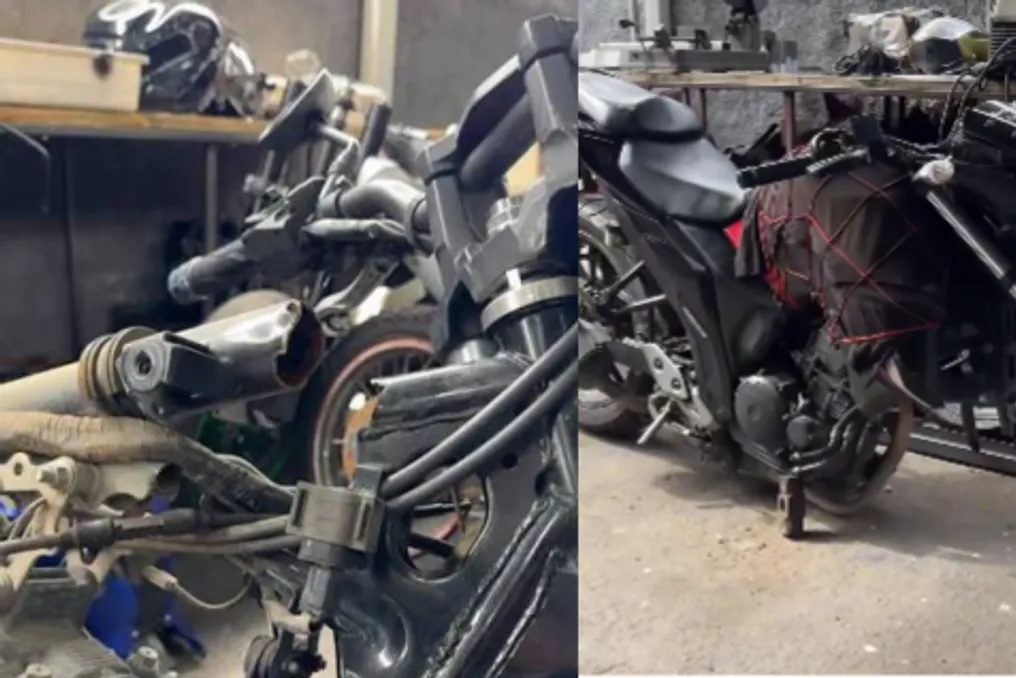
The Yamaha Fazer 250, which was renamed to FZ25 at the end of 2017 and entered its fourth generation in the 2018 version, attracted public attention due to its more modern aesthetics and incorporated technology. However, over the years, a systemic concern has arisen among potential buyers: rumors about the possibility of chassis breakage.
While some motorcyclists downplay the issue on social media, treating it as temporary or irrelevant, motorcycle structure specialist Douglas Braga strongly disagrees. For him, this model presents the highest frequency of structural problems.
The severity of the defect is compared to a spinal cord fracture because it prevents the motorcycle from being used unless high-quality repairs are made. Douglas Braga, owner of DG.Motocraft, a workshop specializing in structural adjustments in Duque de Caxias (RJ), states that the FZ25 leads in cases of chassis failure, based on over ten years of experience.
The mechanic confirmed that the problem is real and is directly linked to the new generation, started in 2018 and persisting to this day. The breakage occurs systematically in the upper section of the structure, specifically in the component that should support the motorcycle's greatest weight.
According to the specialist, the failure stems from the generational change, as the new FZ25 omitted crucial parts and did not make the necessary adjustments. He explains that the chassis formation of this model is quite fragile, unlike the previous model which used a double cradle—a type of chassis where two tubes descended from the steering column and passed under the engine, connecting the lower center part to the top of the frame. In current models, the engine begins to complement the structural function of the chassis.
Without this structure that 'embraces' the engine, the new version transfers the support responsibility to the powertrain. Douglas points out two problems resulting from this modification: the engine's elasticity and the fragility of the upper frame section. Vibration generated by internal components causes the chassis to vibrate excessively, while the upper section, the site of the crack, suffers from a lack of adequate reinforcement.
The specialist made a relevant comparison with the Honda CB 300F Twister, a direct competitor to the Yamaha FZ25, which shares a design concept of a chassis without a double cradle but does not exhibit the same defect. Douglas clarifies that although both use the same Twister chassis model, the Twisters have two reinforcing tubes on the top, whereas the FZ25 only has one.
Currently, there is no official solution for this chassis breakage problem, as Yamaha does not address the issue. The alternative found by the mechanic is to reinforce the upper area of the chassis by inserting an internal tube at the exact point of rupture. Douglas reported performing maintenance on approximately six to eight motorcycles per month that present this problem.
The specialist emphasizes that there is no defined parameter, whether in mileage or time of use, that determines when the defect will manifest. Just as there is no official position on the correction, there are also no guidelines on how to prevent the failure. Douglas's recommendations include safety alerts, as he has received reports from drivers who had accidents with the motorcycle disintegrating during the ride. He expressed great concern for the pilots' safety, warning that any event on the motorcycle can result in a fall.