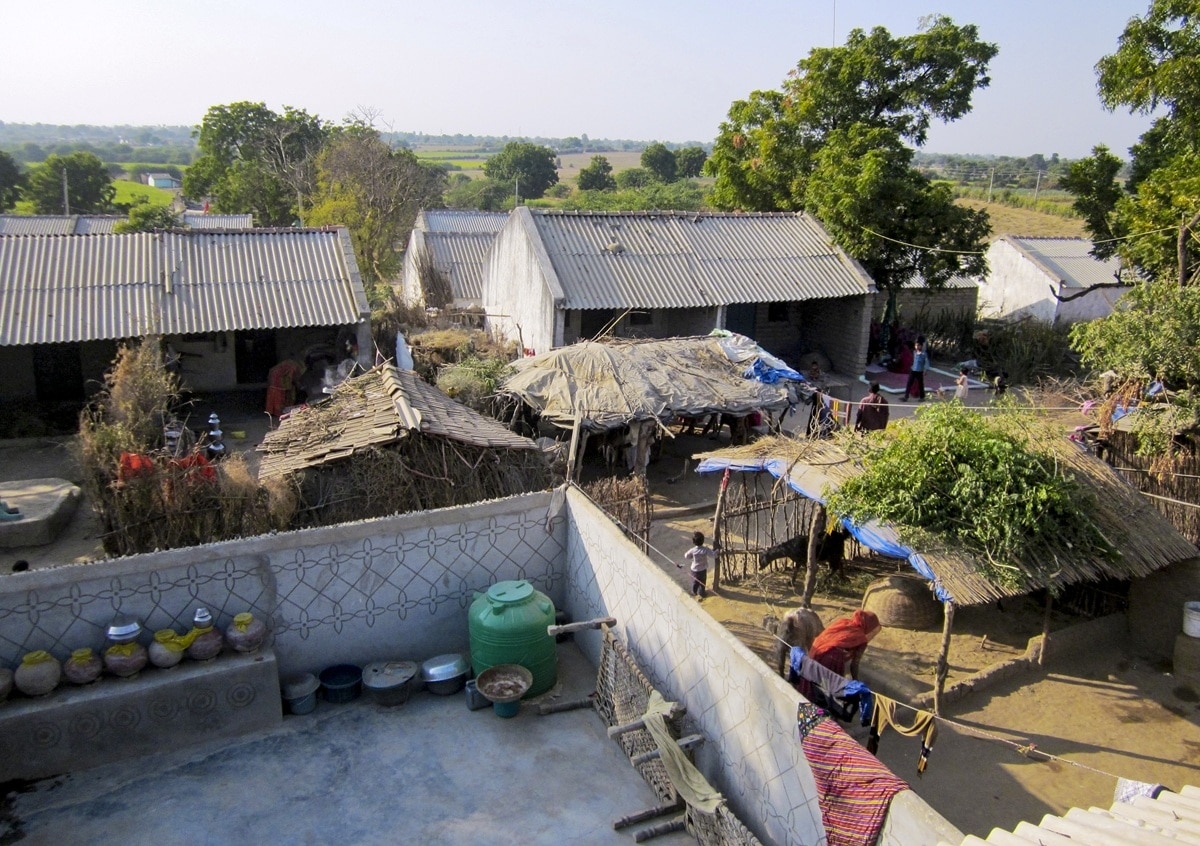
In the village of Wadi, located about 200 kilometers from Ahmedabad in the Banaskantha district, there are two perceived paths for young women: early marriage or prostitution. This situation is a contemporary reality, not a historical episode.
Traditionally, in this community, which is a nomadic tribe, women were forced into roles associated with the trade of bodies, while men acted as agents. Although women are trying to break free from these historically established roles, the practice persists.
Men in the village, which has about 750 residents, travel daily to the Palanpur-Tharad highway not in search of employment, but to find clients among truck drivers, travelers, and men from neighboring villages and cities.
Despite Indian laws prohibiting child marriage, the social conditions in Wadi have created a different scenario. Many families believe that early marriage can prevent a girl from entering this sphere after marriage.
Initiated by social workers and some families, marriage arrangements are being made with girls in neighboring villages or relatives' families. Some of these girls are aged between 7 and 12 years old. An informal agreement has developed in the village that girls who are already married or engaged will not be forced into the sex trade.
Nevertheless, social workers note that adopting early marriage as a solution represents a serious social problem.
A 19-year-old resident of the village serves as an example of this struggle. Her mother and grandmother were involved in the sex trade. She is now studying to be a nurse far away, dreaming of a future that seemed unattainable to her. Furthermore, she has already been married, and the decision regarding her groom was made when she was only 11 years old.
Speaking anonymously, she told the news agency that in childhood, she watched her father and uncle bring men for her mother and grandmother. This continued until they could satisfy the desires of the clients. Her mother reported that she was not forced, but due to poverty, it became a common practice. Her mother was also unsure if her father and biological father were the same.
She continued that her mother decided to prevent her from going down that path. At age 11, she was betrothed at a public event, and she got married at 18.
Thanks to the efforts of social workers and some families, engagements are being arranged for girls aged seven to twelve in families from neighboring villages or relatives. The local community has established an informal agreement that girls who are married or engaged will not be involved in the sex trade.
The arrival of people is closely monitored. One hot day, some men sat on cots and asked every stranger entering the village about the reason for their visit. Among the women in bright ghagra-cholis were either brides/married women or elderly women who had left this activity.
According to a local resident, the women involved in the sex trade mostly stay at home, while family members or intermediaries search for clients for them.
In Wadi, where about 750 people live, there are about 350 women. The social stigma associated with fatherhood has kept the women of Wadi from marrying for generations.
Chandra Sarania recounted that when she wanted to marry off her daughter, she was advised to accept the fate of the local girls and not rebel. She betrothed her daughter at age 12, and the wedding took place at 18. The groom's family gave them one rupee and some clothes to seal the engagement.
Sandu, who was only 15 years old, was involved in the sex trade. Now she runs a small dairy farm. In 1963, the government allocated land to her family for agriculture, but due to the lack of irrigation in the village, she had to engage in the sex trade. She used the money earned from this activity to raise three children (two sons and one daughter). However, she was firm in her determination that the shadow of her past would not overshadow the future of her children, especially her daughter.
Changes occurred in 2012 when NGOs convinced some families not to allow their daughters into the sex trade, and collective wedding ceremonies were organized for the first time. Since then, similar wedding or engagement celebrations have been held annually in Wadi.