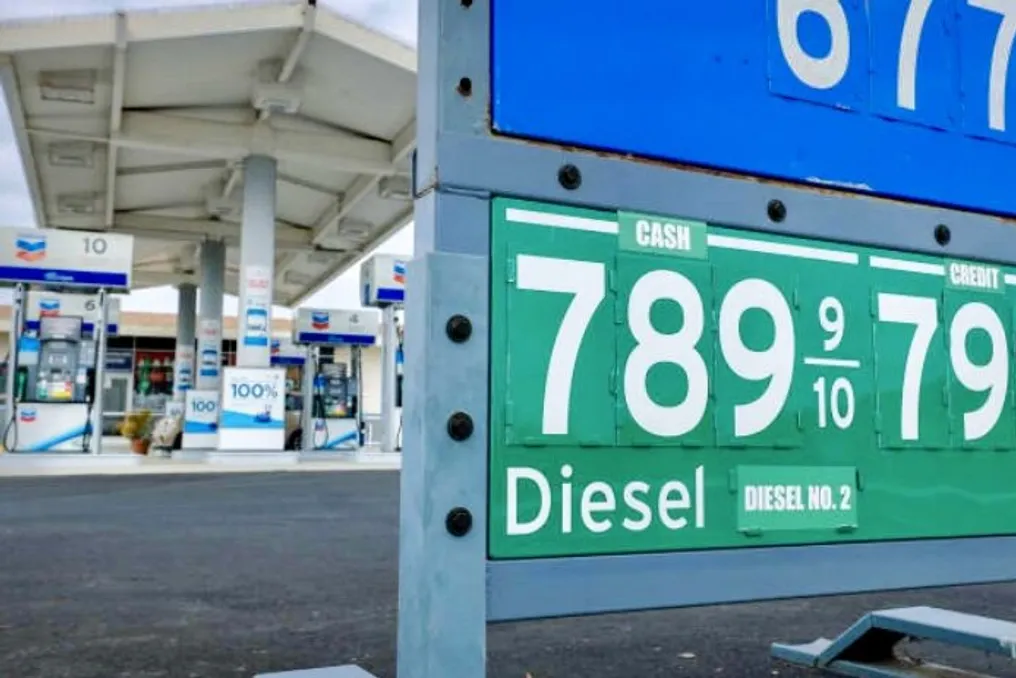
As diesel fuel prices reach record highs across three continents, confidence is growing that the military confrontation between the Trump administration and Iran, along with its inability to foresee disruptions in the Strait of Hormuz, has triggered a supply chain catastrophe threatening to plunge the global economy into recession.
According to CNBC data, this week diesel prices in the US reached an all-time high of $6.31 per gallon, while Reuters reports that the average price rose to $6.29, representing a staggering 68 percent increase compared to the previous year. In Europe, European Commission data shows that diesel fuel reached €2.159 per liter, the highest level since data registration began in 2005. These figures directly impact working families.
How the conflict with Iran affected global markets
The Trump administration's war against Iran, combined with the failure to prevent attacks on Saudi pipelines and ongoing disruptions in the Strait of Hormuz, has created what supply chain strategist Steve Blau calls a 'perfect storm.' The Financial Times reports that diesel fuel exports from West Asian refineries have dropped to about a quarter of pre-war levels, while attacks on Russian refining infrastructure have removed millions of barrels per day from global markets.
The consequences of this crisis are felt far beyond gas stations. The cost of fuel oil for heating private homes could rise by 31 percent this winter, which, according to energy assistance director Mark Wolfe, will require 'significant sacrifices' from low and middle-income families. Transport companies face losses of $10 million. Farmers, construction firms, and public transport systems will also face sharp increases in costs.
JPMorgan analysts acknowledged on Thursday: 'For the first time since the conflict with Iran, we lack a baseline understanding. The assumption of temporary disruptions is becoming harder to maintain.' More concerning is that Federal Reserve Chairman Kevin Warsh noted this crisis, citing refining spreads—the margin between crude oil and diesel fuel—as a key inflation factor. The Trump administration's failure to secure global energy supply chains has resulted in an economic war for American consumers that they did not ask for and cannot easily exit.