Iran and India explore ways to strengthen bilateral ties using BRICS potential
Read more
Tehran Times
www.tehrantimes.com

Iran and India explore ways to strengthen bilateral ties using BRICS potential

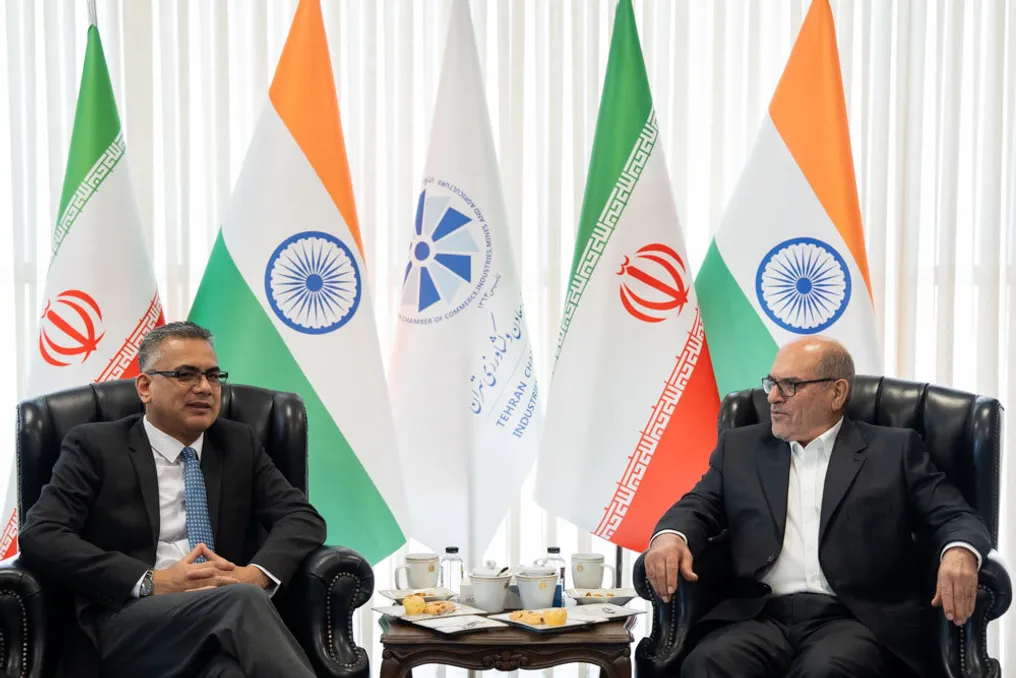
The new Indian ambassador to Iran visited the Tehran Chamber of Commerce and Industry (TCCIMA) at the beginning of his mission and met with its chairman. During this meeting, while discussing the economic potential and history of cooperation between Iran and India, both sides emphasized the need to resume and develop trade relations, as well as utilize the opportunities provided by BRICS.

On the agenda for both parties was developing a schedule for private sector negotiations, conducting specialized courses, exchanging trade delegations, and establishing a direct communication channel to monitor and implement agreements.

Vishvesh Negi, the new Indian ambassador to Iran, discussed mechanisms for strengthening economic interaction between the two countries during his meeting with Mohammad Najafi-Arab, Chairman of the Chamber, in the presence of Fereydoun Vardinajad, Secretary General, and Hossemeddin Khaladj, Deputy for International Affairs and Trade Development of the Chamber, Zeinab Davoudi, an expert on India from the Ministry of Foreign Affairs, as well as representatives from the commercial department of the Indian Embassy in Iran. He identified increasing awareness and synergy among private sector participants as one way to advance exchanges between Iran and India.

Mohammad Najafi-Arab, Chairman of the Chamber, began the meeting by referencing the historical experience of cultural and economic contacts, as well as the membership of Iran and India in BRICS, speaking about the importance of deepening interaction between the countries. He added that the Chamber recently joined the BRICS Trade Council, and its representatives recently participated in a BRICS Trade Council meeting in India, where they presented their views on various trade issues.

The Chairman of the Chamber stated the Chamber's readiness to increase cooperation with the Indian private sector. He noted that Iran and India possess significant potential for developing economic ties in areas such as pharmaceutical raw materials and medicine, food and agriculture, components, and industrial raw materials. However, the current trade volume between the countries, amounting to about $1.5 billion, is significantly lower than the available potential. Despite this, the private sectors of both countries can contribute to deepening economic relations and sustainably increasing bilateral trade through strengthening trade, joint investments, and industrial cooperation.

He also drew attention to the difficulties and challenges of trade with India under current conditions, stressing the need to develop and utilize alternative transport corridors and new logistics routes to accelerate and facilitate trade operations.

Vishvesh Negi, the Indian Ambassador to Iran, also described one of the objectives of his mission in his remarks as developing trade and economic relations between the two countries. He explained that previously, trade turnover between Iran and India reached approximately $20 billion, but this figure has significantly decreased, falling far short of the potential and prospects existing in both countries. He also pointed out some obstacles to trade and emphasized the need to find practical solutions to promote economic relations and utilize the potential of bilateral and multilateral cooperation.

The Indian Ambassador to Iran proposed several measures, such as holding B2B trade meetings and creating opportunities for joint cooperation between companies in the private sectors of Iran and India, stating that 'the development of economic exchanges between the two countries is possible through holding B2B trade meetings and creating opportunities for joint cooperation between companies in the private sectors of Iran and India.' Among the proposed measures were direct links between the embassy and chambers of commerce, providing opportunities for trade delegations to attend exhibitions, conducting webinars to understand market needs, and short-term training programs.

Vishvesh Negi considered the development of trade with Iran a strategic advantage for both countries. In another part of his speech, he mentioned the opportunities arising from multilateral cooperation and announced that the Indian Embassy in Tehran would soon hold a meeting to present BRICS achievements and programs for 2026, which would serve as a basis for synergy and establishing connections between Indian companies and Iranian economic entities interested in cooperation. He noted that the holding of over 420 expert meetings within BRICS and the final summit declaration demonstrate the diversity and high potential of trade cooperation, and he hopes that member countries will expand their trade horizons by utilizing this potential.

The Indian Ambassador officially invited members of the Tehran Chamber of Commerce to participate in this event, emphasizing that the presence of private sector economic actors at this meeting could be a prelude to defining joint projects and leveraging the economic advantages of BRICS member countries.

In another part of the meeting, Fereydoun Vardinajad, Secretary General of the Chamber, called for strengthening the link between the embassy and the Chamber as the parliament of the private sector and invited the Indian ambassador to visit Iran Expo 1405 to strengthen trade and economic partnership. Vardinajad also invited Vishvesh Negi to attend the opening of the Iran Pharma exhibition as one of the largest events in the pharmaceutical field, noting that Indian pharmaceutical companies would also be represented at this exhibition.

At the conclusion of the meeting, both sides agreed on the necessity of developing a schedule for trade negotiations between the private sectors of Iran and India, conducting specialized courses, exchanging trade delegations, and establishing a direct communication channel for subsequent monitoring of agreements, expressing hope for further development of economic cooperation.
Similar stories

Iran Concludes Agreements with BRICS Members on Cooperation in Various Fields
Read more
www.tehrantimes.com

Iran Concludes Agreements with BRICS Members on Cooperation in Various Fields

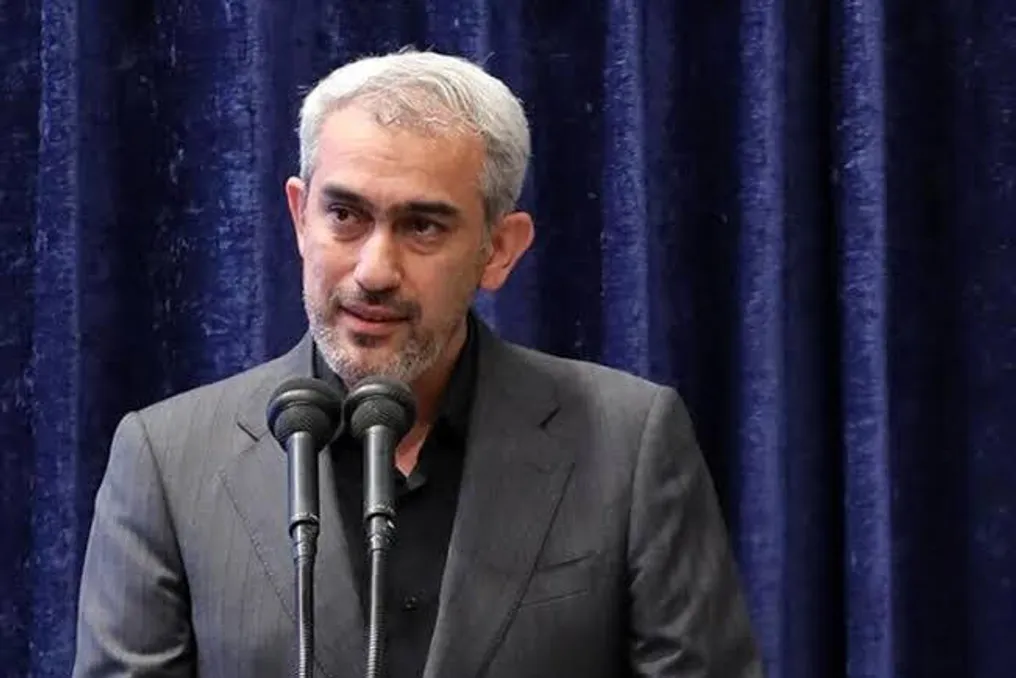
The Iranian Minister of Economic Affairs and Finance stated at the meeting of the Supreme Stock Exchange Council that positive feedback was received during the BRICS summit from both heads of member states and during meetings with participating countries. Numerous beneficial grounds for cooperation in various economic areas were identified and agreed upon.

According to a report by IRNA from the Ministry of Economic Affairs and Finance, the three hundred eighteenth meeting of the Supreme Stock Exchange Council was chaired by Seyed Ali Madanizadeh, the Minister of Economic Affairs and Finance. At this meeting, while reviewing the capital market situation, various agenda items were raised and approved.

At the beginning of the session, Madanizadeh presented the Supreme Council with a report on the results of his trip to Russia and India, as well as on the meeting of the economy ministers of BRICS countries. The Minister of Economic Affairs and Finance noted that the outcomes of the BRICS summit and the agreements reached during this meeting are being covered by the media.

He emphasized that very good reactions were received during these meetings from both the leaders of BRICS member countries and during negotiations with participating states, which allowed for the identification and agreement on significant opportunities for economic interaction. Madanizadeh also named creating conditions for interaction with banks of BRICS member countries, including Russian banks, another achievement of this trip, adding that these agreements will be groundbreaking for the private sector and the country's economy.

For Iran, BRICS represents more than just politics; it is an extensive market and a network of trade, financial, and transit routes. Although Iran joined in 2024, it is already actively trading with members of the bloc, exporting about $23.7 billion and importing $38.8 billion. The main obstacles are not buyers, but issues with payments, banking, insurance, and sanctions. Therefore, BRICS efforts to use local currencies and ensure payment connectivity are of great importance. China dominates Iran's trade with BRICS, so diversification is critical. Furthermore, Iran can become a transit route between North and South. Membership alone is not enough; real progress requires concluding contracts, making payments, investments, balanced high value-added trade, and actual trade turnover.

Iran consults with BRICS members to simplify entry into the New Development Bank
Read more
www.tehrantimes.com

Iran consults with BRICS members to simplify entry into the New Development Bank

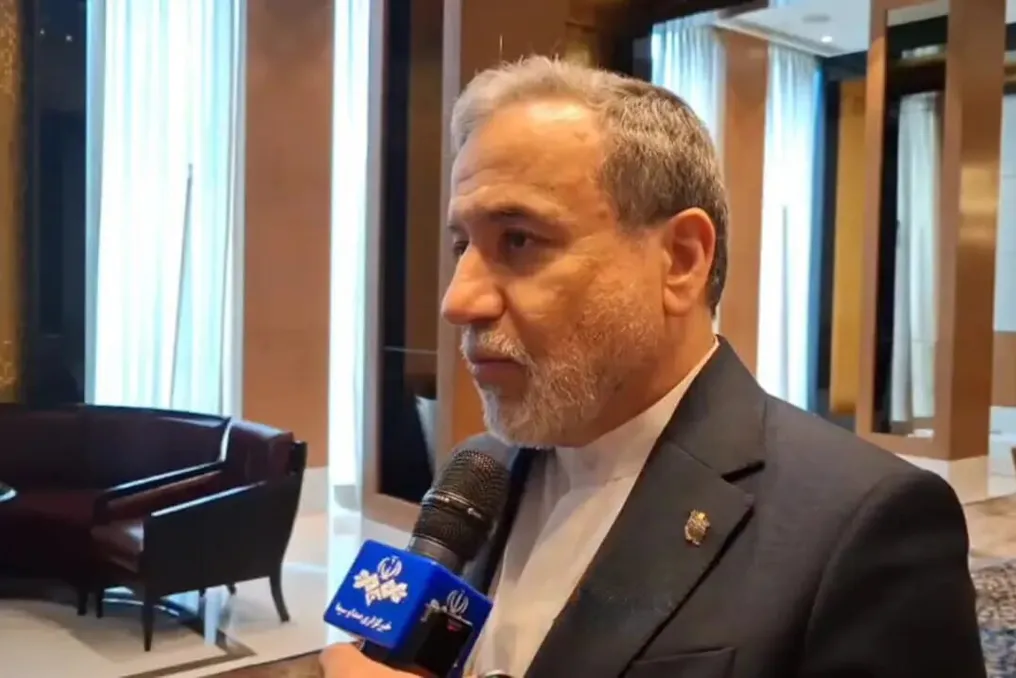
Iranian Foreign Minister Abbas Araghchi stated that Tehran is holding consultations with other BRICS countries to remove obstacles and facilitate its accession to the New Development Bank (NDB). This is part of Tehran's effort to gain broader access to multilateral financing and alternative financial channels through this bloc of developing economies.

During a meeting with his counterparts in New Delhi on Saturday, Araghchi said that Iran is negotiating with BRICS members to advance its application for membership in the development bank. According to reports from this meeting, Araghchi noted the existence of certain hurdles created by specific countries and stated that consultations are underway to resolve accumulated issues and support Iran's membership process.

Iran's attempt to join the NDB coincides with Tehran's increased focus on BRICS as a platform for expanding trade, investment, and financial cooperation outside traditional Western-dominated institutions. Araghchi also emphasized the significance of the BRICS Leaders' Summit and the parallel economic discussions taking place. He mentioned that the BRICS Business Council was established on Friday and highlighted the speeches by Russian President Vladimir Putin and Indian Prime Minister Narendra Modi.

Furthermore, Araghchi reported that Iranian President Masoud Pezeshkian's remarks on increasing the use of national and local currencies in trade among BRICS members garnered significant attention. Araghchi is currently in New Delhi with President Masoud Pezeshkian and Economy Minister Ali Madanizadeh to participate in the BRICS Leaders' Summit and related meetings.

The active promotion of national currency usage has become an increasingly important element of Iran's economic diplomacy as the country seeks to reduce its vulnerability to financial restrictions and payment channels susceptible to sanctions.

What is the New Development Bank?

The New Development Bank is a multilateral development bank founded by five original BRICS members—Brazil, Russia, India, China, and South Africa—in 2015. Its mission is to mobilize resources for infrastructure and sustainable development projects in emerging markets and developing countries, complementing existing regional and multilateral development institutions.

The NDB headquarters is located in Shanghai, and it has expanded beyond the five founding members. Among the current members, besides the five founding nations, are Bangladesh, the United Arab Emirates, Egypt, Algeria, and Uzbekistan. Uzbekistan became the tenth member of the bank in June 2026 and the first Central Asian country to join this organization.

The bank finances projects in areas such as transport, clean energy, water supply and sanitation, digital infrastructure, housing, and other forms of social and economic infrastructure. Its stated goal is to fill the financing gap in emerging economies while supporting sustainable economic development. According to the bank, the NDB holds international credit ratings of AA+ from S&P, AA from Fitch, and AAA from JCR.

For Iran, membership could potentially provide access to an additional source of development finance and create opportunities for closer participation in BRICS financial mechanisms. This also aligns with Tehran's broader ambition to expand economic ties with non-Western partners and develop alternatives to financial channels affected by US and European sanctions.

A Growing Economic Bloc

BRICS has transformed from an initial group comprising Brazil, Russia, India, and China into a broader forum for the Global South. South Africa joined in 2011, and in 2024, Egypt, Ethiopia, Iran, Saudi Arabia, and the United Arab Emirates joined the group. Indonesia officially became a full member in January 2025, bringing the total number of BRICS participants to 11.

The group functions as a political and diplomatic coordination platform rather than a traditional international organization with a charter, its own budget, or a permanent secretariat. Decisions among full members are made by consensus. The bloc's economic weight has significantly increased: according to BRICS sources, member countries account for about half of the world's population and approximately 39% of global GDP.

The expanding economic influence of BRICS, combined with the concentration of major energy producers, commodity exporters, manufacturers, and some of the world's fastest-growing economies, has made BRICS an increasingly important venue for discussing trade, investment, development finance, and the international monetary system. For Iran, gaining a seat in the NDB means more than just access to another development lender; it will deepen the country's institutional involvement in the financial architecture forming around BRICS, as Tehran seeks ways to diversify capital sources, expand trade in national currencies, and reduce the vulnerability of its foreign economic relations to Western financial constraints.

Head of ICCIMA and Mexican Ambassador to Tehran Discuss Expansion of Trade Ties and Joint Cooperation
Read more
www.tehrantimes.com

Head of ICCIMA and Mexican Ambassador to Tehran Discuss Expansion of Trade Ties and Joint Cooperation

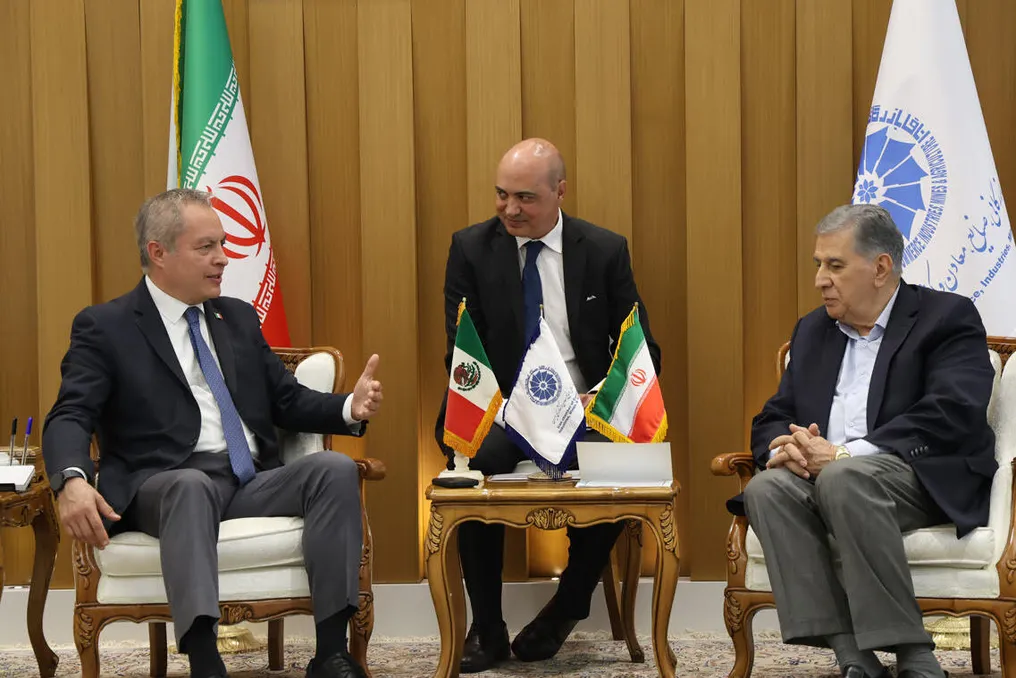
A meeting took place in Tehran between the head of the Iranian Chamber of Commerce, Industry, Mining and Agriculture (ICCIMA) and the Mexican Ambassador to Tehran. During the negotiations, the parties emphasized the importance of exchanging trade delegations for better acquaintance of economic actors with each other's opportunities. The need to create a joint committee for more effective coordination in developing trade and investment relations was also discussed.

Samad Hassanzadeh, President of ICCIMA, noted that the current level of exchanges and trade between the two countries is insignificant, despite the significant production and investment potential of both nations. He stated that relations must develop upwards through bilateral interaction.

Hassanzadeh mentioned the special circumstances of Iran arising from recent unjust aggressions. He stressed that Iran is a peaceful country and has always sought to develop economic ties with various states in accordance with available possibilities. Therefore, he proposed forming a joint committee with Mexico to strengthen trade relations, noting the Chamber's readiness to implement this idea.

The President of ICCIMA focused on the exchange of economic information by both parties within this committee, adding that through it, benefits could be gained from other countries that have ties with Mexico or Iran.

He spoke about Iran's activities in areas such as new agricultural technologies, industry, artificial intelligence, and others, and reported that the Chamber is ready to host a trade delegation from Mexico in these fields, provided the appropriate conditions are met. Furthermore, he touched upon technical and engineering services, the possibility of implementing large contracting projects, and the significant capabilities of Iranian companies in the field of medical equipment, noting the potential for joint cooperation in these sectors.

Hassanzadeh listed a wide range of goods that Iran can export, including petrochemical products, minerals, mining products, agricultural products, new agrotechnologies, confectionery and chocolate, carpets, chemical fertilizers, industrial equipment, technical and engineering services, as well as tourism and medical tourism. He also noted the availability of opportunities for joint investment, which is welcomed by the Iranian side.

He expressed hope for the early cessation of global conflicts, the advent of peace, security, and tranquility, as well as the resolution of transport and money transfer issues. Only under such stability, in his opinion, can Iran strengthen ties with other countries, including Mexico, as he believes that no country can develop alone.

Furthermore, Guillermo Puente Ordórika, the Mexican Ambassador to Tehran, expressed satisfaction with future cooperation between Iran and Mexico. He stated that both countries possess good potential for strengthening ties and acknowledged that past contacts were limited due to the current situation.

The Ambassador mentioned that he visited Iran during the COVID-19 pandemic, and that sanctions against Iran following this event hindered the development of cooperation. Nevertheless, he positively assessed the proposal to create a joint committee, believing that this approach would positively influence the expansion of relations. He also noted that the new Mexican government has developed an economic program for cooperation with all countries in the world, taking into account all factors for trade development.

Guillermo Puente Ordórika emphasized that the Mexican government's international trade program covers various sectors and includes attracting foreign investment. Therefore, the creation of a joint committee could be the first step towards expanding the partnership.

The Ambassador deemed it necessary to establish a link between ICCIMA and private Mexican companies based on the created structure and supported the idea of exchanging trade delegations. He noted that he is familiar with Iran's potential in the medical tourism sector, which could be a good area for cooperation. In turn, he pointed to Mexico's high potential in the automotive sector, auto parts manufacturing, and heavy industry, where Iran could find points of convergence.

The Ambassador proposed a phased plan: first, create a joint committee, then exchange trade delegations, and only after both sides have studied each other's opportunities and resources can they move on to the next steps.

}))

Popular